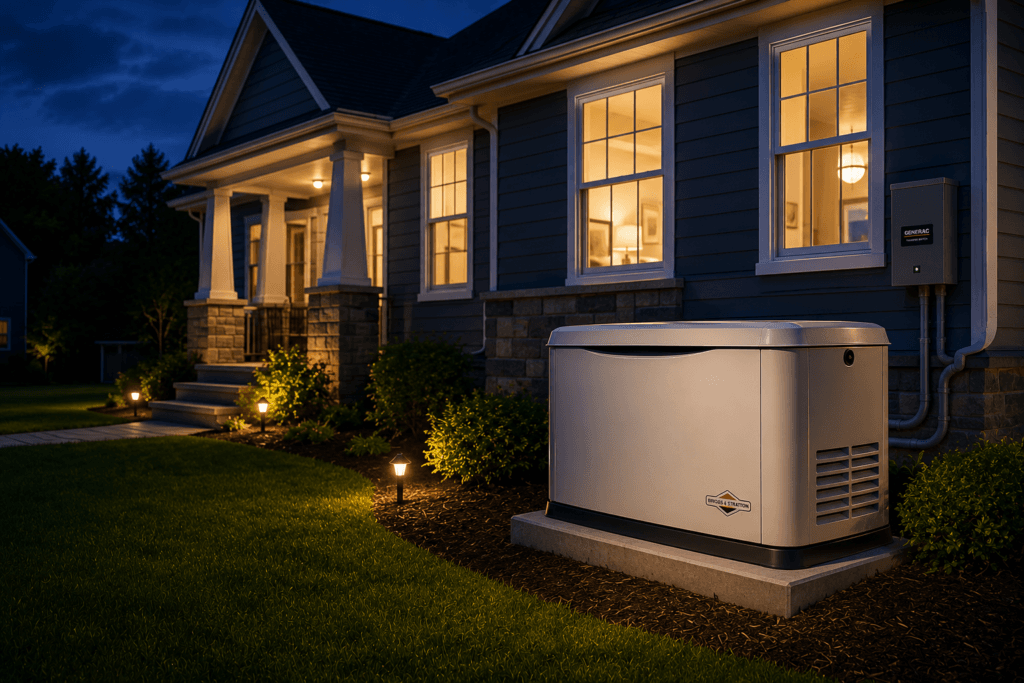
Power outages caused by storms, hurricanes, tornadoes, winter weather, and equipment failures often send homeowners rushing to start their backup generators. While generators provide valuable emergency electricity, using one incorrectly can result in carbon monoxide poisoning, fire, electrocution, or severe property damage.
According to the U.S. Consumer Product Safety Commission, portable generators are involved in numerous carbon monoxide poisoning deaths and injuries every year, making generator safety one of the most important topics every homeowner should understand. Following a few simple rules can dramatically reduce your risk while helping your family stay safe during a power outage. U.S. Consumer Product Safety Commission and Centers for Disease Control and Prevention both recommend operating portable generators only outdoors and well away from homes because carbon monoxide can quickly build up indoors.
In this guide, you’ll learn the seven most important generator safety rules, along with additional tips that every homeowner should know before the next power outage.
Why Generator Safety Matters
Generators can safely provide emergency electricity for:
- Refrigerators
- Freezers
- Furnaces
- Well pumps
- Sump pumps
- Medical equipment
- Internet equipment
- Lighting
However, improper use can create serious hazards including:
- Carbon monoxide poisoning
- Electrical shock
- Fire
- Burns
- Backfeeding utility lines
- Fuel explosions
Most generator accidents are entirely preventable with proper planning and operation.
Rule #1: Never Operate a Generator Indoors
This is the single most important generator safety rule.
Portable generators produce carbon monoxide (CO), an invisible, odorless gas that can become deadly within minutes.
Never operate a generator inside:
- Garage
- Basement
- Crawl space
- Shed
- Carport
- Porch
- Home
- RV
- Enclosed trailer
Even if doors or windows are open, dangerous carbon monoxide can quickly build up.
Always operate your generator outdoors in a well-ventilated area.

Rule #2: Keep Your Generator Away From Your Home
Generators should always be placed well away from:
- Doors
- Windows
- Vents
- Air conditioners
- Attached garages
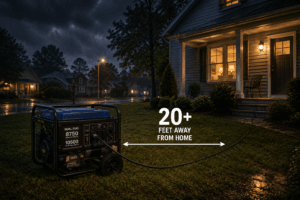
Current safety guidance recommends operating portable generators at least 20 feet (about 6 meters) from your home whenever possible, with the exhaust directed away from occupied areas. Follow your generator manufacturer’s instructions if they specify a greater distance.
Never point the exhaust toward your home.
Rule #3: Install Carbon Monoxide Detectors
Every home should have working carbon monoxide alarms.
Install CO detectors:
- Outside sleeping areas
- On every level of the home
- According to the manufacturer’s instructions
Test alarms regularly and replace batteries as recommended.
Even if your generator includes a built-in CO shutoff system, you should still have functioning carbon monoxide alarms inside your home.
Rule #4: Never Backfeed Your Home
Backfeeding occurs when homeowners plug a generator directly into a wall outlet.
This is extremely dangerous because it can:
- Electrocute utility workers
- Damage appliances
- Destroy your generator
- Cause fires
Instead, use:
- A properly installed transfer switch
- An approved interlock kit
- Heavy-duty extension cords rated for outdoor use (when appropriate)
Never attempt to power your home’s wiring through a standard household outlet.
Rule #5: Turn the Generator Off Before Refueling
Gasoline spilled onto a hot engine can ignite instantly.
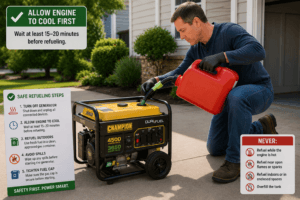
Always:
- Turn the generator off.
- Allow the engine to cool completely.
- Refuel outdoors.
- Clean up any fuel spills immediately.
- Store gasoline only in approved fuel containers.
Never add gasoline while the generator is running or while the engine is still hot.
Rule #6: Protect the Generator From Rain—Safely
Generators should never operate in standing water or be directly exposed to heavy rain.
If you expect wet weather:
- Use a generator canopy or cover specifically designed for safe generator operation.
- Place the generator on a dry, level surface.
- Keep extension cord connections off the ground.
- Never block cooling vents or exhaust openings.
Improper covers can cause overheating or create fire hazards.
Rule #7: Perform Regular Maintenance
A generator is only useful if it starts when you need it.
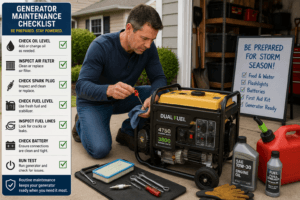
Routine maintenance should include:
- Changing engine oil
- Checking the air filter
- Inspecting the spark plug
- Testing the battery (electric-start models)
- Checking fuel lines
- Inspecting extension cords
- Running the generator about once each month under load
Following the manufacturer’s maintenance schedule helps improve reliability and extend engine life.
Common Generator Safety Mistakes
Avoid these common mistakes during a power outage.
Running a Generator Too Close to the House
Even if the generator is outdoors, carbon monoxide can enter your home through:
- Windows
- Doors
- Crawl-space vents
- Soffit vents
- Garage doors
Always position the generator well away from the home with the exhaust pointed away from occupied areas.
Using Damaged Extension Cords
Use only:
- Heavy-duty outdoor-rated extension cords
- Proper wire gauge
- Undamaged insulation
- Grounded plugs
Replace damaged cords immediately.
Overloading the Generator
Connecting too many appliances can:
- Trip breakers
- Damage appliances
- Stall the engine
- Shorten generator life
Calculate both:
- Running watts
- Starting watts
before connecting equipment.
Skipping Monthly Exercise
Generators that sit unused for months often develop problems.
Run your generator about once each month with an electrical load connected to:
- Lubricate engine components
- Keep fuel fresh
- Verify proper operation
- Maintain the electric-start battery
Storing Old Gasoline
Gasoline degrades over time.
To help avoid fuel-related problems:
- Use fuel stabilizer when appropriate.
- Rotate stored gasoline regularly.
- Drain old fuel if recommended by the manufacturer.
- Store fuel away from heat sources and open flames.
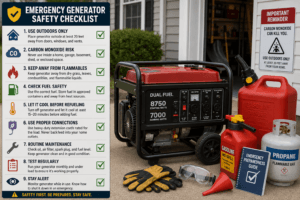
Emergency Generator Safety Checklist
Before the next outage:
✓ Read the owner’s manual
✓ Test your generator
✓ Check engine oil
✓ Inspect air filter
✓ Verify extension cords
✓ Test carbon monoxide alarms
✓ Store fresh fuel safely
✓ Know your generator’s wattage limits
✓ Confirm transfer switch operation
✓ Keep flashlights and batteries nearby
Frequently Asked Questions
Can I run a generator in my garage if the door is open?
No.
An open garage door does not provide enough ventilation to safely remove carbon monoxide. Portable generators should always be operated outdoors.
How far should a generator be from my house?
Follow your generator manufacturer’s instructions. A common safety recommendation is to place portable generators at least 20 feet away from the home whenever possible, with the exhaust directed away from doors, windows, and vents.
Can rain damage my generator?
Yes.
Portable generators should not operate in standing water or be directly exposed to heavy rain. Use only weather protection specifically designed for safe generator operation.
Do I need a transfer switch?
If you plan to power household circuits, a properly installed transfer switch or interlock kit is the safest method and helps prevent dangerous backfeeding.
How often should I service my generator?
Most manufacturers recommend:
- Monthly exercise
- Oil changes at specified intervals
- Annual inspection
- Air filter and spark plug replacement as needed
Always follow the maintenance schedule in your owner’s manual.
Is a carbon monoxide shutoff enough?
No.
A built-in CO shutoff adds an important layer of protection, but it does not replace proper outdoor placement or working carbon monoxide alarms inside your home.
Final Thoughts
A backup generator can be one of the most valuable tools for protecting your family during a power outage—but only when it’s used safely. Following these seven safety rules greatly reduces the risk of carbon monoxide poisoning, fire, electrical shock, and equipment damage while helping ensure reliable emergency power.
Before the next storm arrives, take time to inspect your generator, test your emergency equipment, verify that your carbon monoxide alarms are working, and review safe operating procedures with everyone in your household. A few minutes of preparation today can help protect both your home and your family when the lights go out.
📋 Copy Tags
generator safety, generator safety rules, portable generator safety, home backup generator safety, carbon monoxide generator safety, generator placement, transfer switch safety, generator maintenance, emergency generator tips, power outage safety, generator fueling safety, generator checklist, backup power guide, home emergency preparedness, portable generator guide, Power4Everything