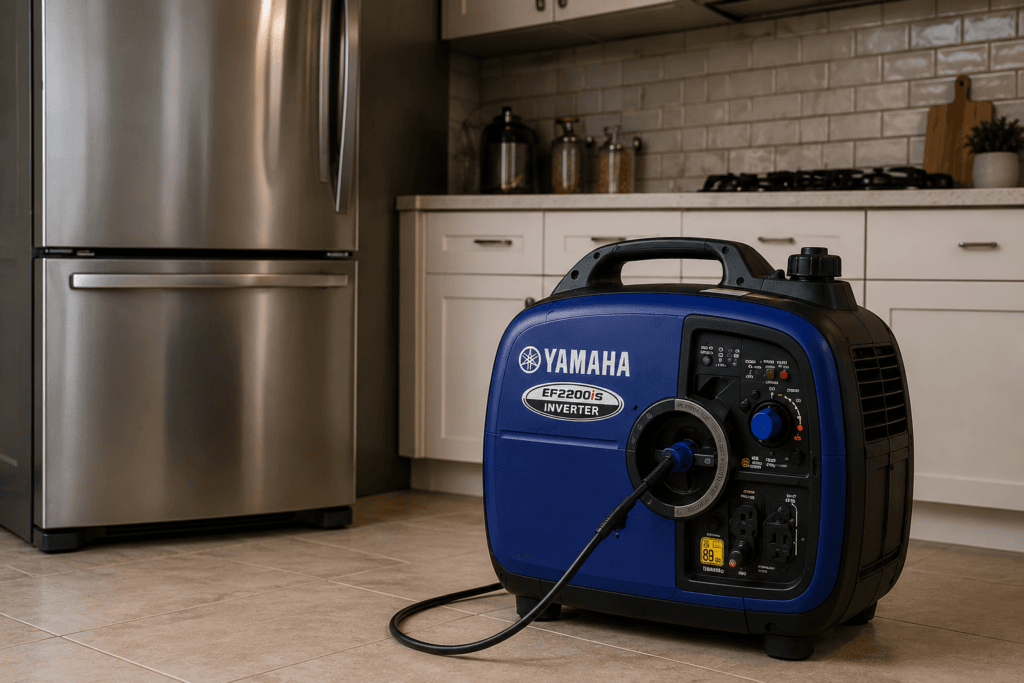
Power outages are becoming more frequent across the United States due to severe storms, aging electrical infrastructure, hurricanes, wildfires, winter weather, and increased demand on the power grid. As a result, many homeowners are looking for dependable backup power solutions that can keep their homes running when utility electricity fails.
Two of the most popular options are solar battery backup systems and whole-house standby generators. Both can provide automatic backup power, but they work in very different ways. Solar backup systems store electricity in batteries that can be recharged by rooftop solar panels or the electrical grid, while standby generators automatically produce electricity using natural gas or propane whenever the power goes out.
Each solution has distinct advantages and disadvantages. Solar battery systems offer quiet, emission-free operation with very little maintenance, while standby generators provide virtually unlimited runtime as long as fuel remains available. Choosing the right option depends on your budget, energy needs, location, and how long you typically experience outages. Recent industry comparisons continue to show that standby generators excel during long outages, while battery systems are attractive for homeowners prioritizing quiet operation and renewable energy integration. (energysage.com)
In this guide, we’ll compare solar backup systems vs. whole-house generators, explain the pros and cons of each, and help you determine which home backup power solution is the better choice in 2026.
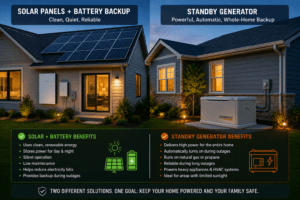
Quick Comparison
| Category | Winner | Why |
|---|---|---|
| Best Overall | Whole-House Generator | Long runtime and high power output |
| Best for Quiet Operation | Solar Backup | Silent operation |
| Best for Long Outages | Whole-House Generator | Continuous fuel supply |
| Best for Solar Homes | Solar Backup | Integrates with solar panels |
| Best Value | Whole-House Generator | More power per dollar |
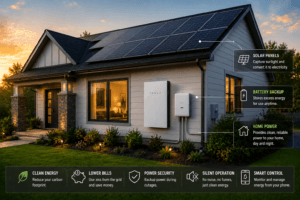
How Solar Backup Systems Work
Solar backup systems store electricity inside rechargeable batteries.
The batteries can be charged using:
- Rooftop solar panels
- Utility power
- Both (depending on system design)
When utility power fails, the battery automatically begins supplying electricity to selected household circuits.
Popular systems include:
- Tesla Powerwall 3
- EcoFlow DELTA Pro Ultra
- FranklinWH Home Power
- Enphase IQ Battery
How Whole-House Generators Work
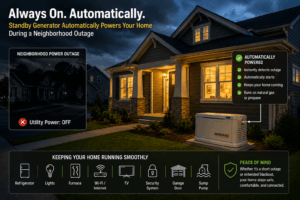
Whole-house generators are permanently installed outside the home.
When utility power is interrupted:
- Automatic transfer switch detects the outage
- Generator starts automatically
- Household circuits receive backup power within seconds
Most standby generators operate on:
- Natural gas
- Propane
Popular standby generator brands include:
- Generac
- Kohler
- Briggs & Stratton
- Cummins
 .]
.]
Advantages of Solar Backup Systems
Solar battery systems offer several important benefits.
Advantages
- Silent operation
- No gasoline required
- No exhaust emissions during operation
- Very little maintenance
- Automatic operation
- Excellent for solar-powered homes
- Indoor or garage installation
- Lower long-term operating costs
They’re especially attractive for homeowners who already have rooftop solar panels.
Advantages of Whole-House Generators
Standby generators remain one of the most dependable emergency backup solutions.
Advantages
- High power output
- Long runtime
- Automatic startup
- Powers entire homes
- Supports central air conditioning
- Runs as long as fuel remains available
- Excellent during multi-day outages
For homeowners in hurricane- or winter storm-prone regions, standby generators often provide the highest level of backup protection.
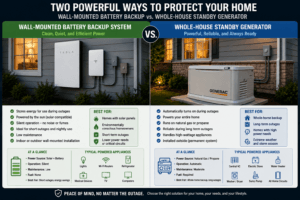
Which System Is Right for You?
Before choosing between solar backup and a standby generator, consider:
- Total electrical demand
- Length of typical outages
- Solar panel ownership
- Fuel availability
- Budget
- Noise preferences
- Maintenance requirements
- Long-term operating costs
Selecting the right system today can help keep your home safe, comfortable, and powered through future outages.
Continue to Part 2 for:
- Solar backup advantages and disadvantages
- Whole-house generator advantages and disadvantages
- Side-by-side comparison table
- Cost comparison
- Runtime comparison
- Best choice for different homeowners
Solar Backup Advantages
Modern home battery systems have become increasingly popular because they provide clean, quiet backup power with very little maintenance.
Advantages
- Silent operation
- Automatic backup
- No gasoline required
- No engine maintenance
- No exhaust emissions during operation
- Solar charging capability
- Smart energy monitoring
- Low operating costs
Many homeowners also appreciate that battery systems can reduce electricity costs by storing energy during off-peak hours and using it during expensive peak-rate periods.
Solar Backup Disadvantages
Despite their advantages, battery systems also have limitations.
Disadvantages
- Higher upfront cost
- Limited battery capacity
- Runtime depends on electrical load
- Large systems require multiple batteries
- Professional installation required
- Less practical for extended outages without solar charging
If several cloudy days follow a major storm, battery systems may require grid power to fully recharge unless additional charging options are available.
Whole-House Generator Advantages
Standby generators remain one of the most dependable emergency backup systems available.
Advantages
- Automatic startup
- Powers most or all household circuits
- Long runtime
- High power output
- Operates large appliances
- Supports central air conditioning
- Continuous operation with natural gas (where service remains available)
Standby generators are especially useful in regions that experience multi-day outages.
Whole-House Generator Disadvantages
There are also several factors homeowners should consider.
Disadvantages
- Higher installation cost
- Requires regular maintenance
- Produces engine noise
- Requires fuel supply
- Outdoor installation only
- Periodic servicing recommended
Although maintenance requirements are relatively low, standby generators still require oil changes, inspections, and routine exercise cycles.
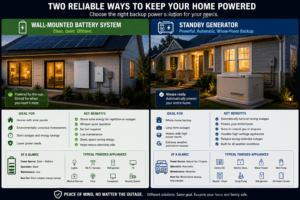
Solar Backup vs Whole-House Generator Comparison
| Feature | Solar Backup | Whole-House Generator |
|---|---|---|
| Automatic Operation | ✔ | ✔ |
| Quiet Operation | ★★★★★ | ★★☆☆☆ |
| Whole-Home Backup | Limited (depends on battery size) | Excellent |
| Long Runtime | Limited by battery capacity | Excellent |
| Solar Compatible | ✔ | ✘ |
| Fuel Required | No | Yes |
| Maintenance | Very Low | Moderate |
| Indoor Components | ✔ | ✘ |
| Central Air Support | Limited on many systems | Excellent |
Cost Comparison
Solar Backup System
Typical costs may include:
- Battery system
- Installation
- Electrical upgrades
- Optional solar panels
While the upfront investment is often higher, homeowners may reduce long-term electricity costs when paired with rooftop solar.
Whole-House Generator
Typical costs may include:
- Generator
- Automatic transfer switch
- Installation
- Gas or propane connection
- Periodic maintenance
Standby generators generally provide more backup power per dollar than battery systems.
Runtime Comparison
Solar Backup
Runtime depends on:
- Battery capacity
- Electrical demand
- Solar charging availability
Typical runtime ranges from several hours to more than a day for essential circuits, depending on battery size and usage.
Whole-House Generator
Runtime depends on:
- Fuel supply
- Engine maintenance
- Generator load
Natural gas standby generators can often continue operating for extended periods as long as gas service remains available.
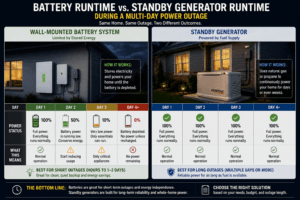
Which System Is Better?
Choose Solar Backup If:
- You already have rooftop solar panels
- Quiet operation is important
- You want very little maintenance
- You want clean indoor battery storage
- Shorter outages are common in your area
Choose a Whole-House Generator If:
- Long outages are common
- You want whole-home protection
- You need to power central air conditioning
- You have natural gas or propane available
- Maximum backup capacity is important
Choose Both If:
Many homeowners are now combining battery backup with a standby generator.
This combination provides:
- Silent battery operation during short outages
- Automatic generator support during long outages
- Lower fuel consumption
- Maximum reliability
- Excellent emergency preparedness
Hybrid systems are becoming increasingly popular for homeowners who want the advantages of both technologies.
Features to Look For
Choosing between a solar backup system and a whole-house generator involves much more than comparing price. The right backup power solution should match your home’s electrical needs, outage frequency, fuel availability, and long-term goals.
Here are the most important features to compare before making your decision.
Automatic Backup
One of the biggest advantages of both systems is automatic operation.
When utility power fails:
- Backup system detects the outage
- Automatic transfer equipment activates
- Household power is restored within seconds
Automatic backup provides peace of mind, especially when you’re away from home.
Whole-Home vs Essential Circuit Backup
Not every backup system powers an entire house.
Whole-House Generators
Can often operate:
- Central air conditioning
- Heating systems
- Refrigerators
- Freezers
- Well pumps
- Water heaters
- Lighting
- Most household circuits
Solar Battery Systems
Many battery systems prioritize:
- Refrigerators
- Freezers
- Internet equipment
- Medical devices
- Lighting
- Security systems
- Selected household circuits
Larger battery systems with multiple expansion batteries can support additional appliances, but available runtime depends on battery capacity and electrical demand.
Expandability
Many modern battery systems allow future expansion.
Benefits include:
- Additional battery storage
- Longer runtime
- Better future flexibility
- Easier upgrades
Some homeowners begin with one battery and add more as their energy needs increase.
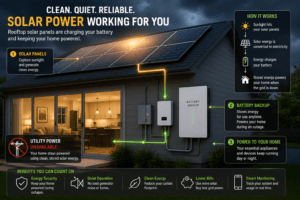
Solar Charging Capability
One of the biggest advantages of battery systems is renewable charging.
Benefits include:
- Renewable energy
- Reduced electricity costs
- Charging during daylight
- Lower fuel dependence
- Excellent for long-term energy independence
Solar charging becomes especially valuable during extended outages.
Fuel Supply
Standby generators rely on fuel.
Common fuel options include:
- Natural gas
- Propane
Natural gas provides:
- Continuous fuel supply
- No refueling
- Excellent for extended outages
Propane provides:
- Long shelf life
- Cleaner burning
- Reliable emergency storage
Noise Level
Solar Backup
- Nearly silent
- No engine noise
- Excellent for neighborhoods
Whole-House Generator
- Audible engine operation
- Louder under heavy loads
- Noise varies by generator model
If quiet operation is important, battery systems have a clear advantage.
Maintenance Requirements
Solar Backup
Requires very little maintenance.
Typical maintenance includes:
- Software updates
- Visual inspections
- Battery health monitoring
Whole-House Generator
Requires:
- Oil changes
- Air filter replacement
- Spark plug inspection
- Battery testing
- Scheduled exercise cycles
- Professional servicing when recommended
Common Buying Mistakes
Avoid these common mistakes before investing in backup power.
Buying Too Small
Many homeowners underestimate their electrical needs.
Calculate:
- Running watts
- Starting watts
- Air conditioning
- Well pumps
- Medical equipment
- Future electrical needs
Proper sizing prevents overloads during emergencies.
Buying More Than Necessary
Not every homeowner requires whole-home backup.
If your primary goal is operating:
- Refrigerator
- Internet
- Lighting
- Medical devices
A battery backup system may provide everything you need.
Ignoring Local Outage History
Think about how outages occur where you live.
If outages typically last:
- 1–4 hours
Battery backup may be sufficient.
If outages often last:
- Several days
A standby generator may provide better protection.
Forgetting Fuel Planning
Generator owners should plan for:
- Fuel availability
- Propane storage
- Natural gas service
- Maintenance schedules
Battery owners should consider:
- Battery capacity
- Solar charging capability
- Electrical load management
Waiting Until Storm Season
Demand for backup power often increases dramatically before:
- Hurricanes
- Ice storms
- Severe thunderstorms
- Wildfires
Purchasing early gives you:
- Better product availability
- More installation options
- Time to learn system operation
- Better contractor scheduling
Frequently Asked Questions
Which is better: solar backup or a whole-house generator?
Neither system is universally better.
Solar backup excels in:
- Quiet operation
- Low maintenance
- Renewable energy
- Daily energy savings
Whole-house generators excel in:
- Long outages
- Higher power output
- Whole-home operation
- Continuous runtime with available fuel
Can solar batteries power an entire home?
Some large battery systems can power most household circuits, especially when multiple batteries are installed.
However, runtime depends on:
- Battery size
- Electrical demand
- Solar production
- Weather conditions
Are standby generators worth the money?
For homeowners who experience frequent or extended outages, many find standby generators worthwhile because they provide automatic backup and can operate for long periods with a reliable fuel supply.
Can I have both a battery system and a standby generator?
Yes.
Many homeowners combine both systems for maximum reliability.
The battery provides:
- Silent operation
- Instant backup
- Lower daily energy costs
The generator provides:
- Long-duration backup
- High power output
- Automatic charging support for extended outages
Which system requires less maintenance?
Solar battery systems generally require significantly less maintenance because they have:
- No engine
- No oil changes
- No fuel storage
- Fewer moving parts
Which system lasts longer?
Both systems can provide many years of service when properly maintained.
Battery lifespan depends on charging cycles and manufacturer specifications, while standby generator lifespan depends on maintenance, usage, and operating conditions.
Final Thoughts
Both solar backup systems and whole-house generators provide dependable protection during power outages, but they are designed for different priorities.
If your goals include quiet operation, renewable energy, minimal maintenance, and integration with rooftop solar, a battery backup system is an excellent investment. Products such as the Tesla Powerwall 3, EcoFlow DELTA Pro Ultra, and FranklinWH Home Power offer reliable automatic backup while also helping many homeowners reduce electricity costs.
If your priority is powering an entire home during long outages, a whole-house standby generator remains the better choice. Systems from Generac, Kohler, Cummins, and Briggs & Stratton can automatically restore power within seconds and continue operating for days as long as an adequate fuel supply is available.
Ultimately, the best backup power solution depends on your home’s energy requirements, your local outage history, your budget, and your long-term goals. Some homeowners even choose a hybrid approach that combines battery storage with a standby generator, providing the quiet efficiency of battery power along with the long-duration capability of a generator. Regardless of which system you choose, preparing before the next outage is one of the best investments you can make in your home’s safety and resilience.