Small homes generally require less backup power than larger houses, but choosing the right generator is still essential. During a power outage, you’ll likely want to keep your refrigerator running, charge phones and laptops, power internet equipment, operate lights, run a furnace blower or space heater (where appropriate), and keep other essential appliances working.
Fortunately, homeowners with smaller houses often don’t need an oversized or expensive generator. A quality portable inverter generator, dual-fuel generator, or compact standby generator can provide dependable backup power while using less fuel and producing less noise than larger models. Many of today’s generators also include features such as electric start, remote start, carbon monoxide shutdown systems, and inverter technology for improved safety and convenience. Recent testing continues to show that inverter generators between roughly 3,000 and 7,000 watts are an excellent fit for many small homes, while standby generators remain ideal for homeowners wanting automatic whole-home protection.
In this guide, we’ll compare the best generators for small homes in 2026, explain which features matter most, and help you choose the right backup power solution for your home.
[IMAGE PLACEHOLDER – Featured image showing a small single-story home safely powered by a portable generator during a neighborhood power outage.]
Quick Picks: Best Generators for Small Homes
| Category | Generator | Best For |
|---|---|---|
| Best Overall | Honda EU7000iS | Quiet whole-home essentials |
| Best Dual-Fuel | Westinghouse iGen5000DFc | Flexible home backup |
| Best Portable Generator | Champion 7500-Watt Dual Fuel Generator | Reliable emergency power |
| Best Standby Generator | Generac Guardian 14kW | Automatic backup |
| Best Budget | WEN GN625i Inverter Generator | Affordable backup power |
Why Small Homes Need a Backup Generator
Even a small home depends on electricity for many daily essentials.
A backup generator can power:
- Refrigerator
- Freezer
- Internet modem and router
- Lighting
- Television
- Furnace blower
- Sump pump
- Medical equipment
- Phone chargers
- Small kitchen appliances
For many homeowners, powering these essentials is enough to remain comfortable until utility service returns.
[IMAGE PLACEHOLDER – Family comfortably using lights, refrigerator, and internet inside a small home during a power outage.]
Best Overall
Honda EU7000iS
[IMAGE PLACEHOLDER – Honda EU7000iS Inverter Generator]
Why We Picked It
The Honda EU7000iS remains one of the best generators for small homes because it combines quiet inverter technology, exceptional reliability, clean electricity, and excellent fuel efficiency.
It can comfortably power refrigerators, freezers, internet equipment, televisions, lighting, and many additional household essentials while producing significantly less noise than traditional portable generators.
Pros
- Extremely quiet
- Clean inverter power
- Excellent fuel economy
- Electric start
- Legendary reliability
- Outstanding resale value
Cons
- Premium purchase price
- Gasoline only
Best For
- Small homes
- Home offices
- Sensitive electronics
- Overnight operation
Best Dual-Fuel Generator
Westinghouse iGen5000DFc
[IMAGE PLACEHOLDER – Westinghouse iGen5000DFc Dual Fuel Inverter Generator]
Why We Picked It
The Westinghouse iGen5000DFc provides quiet inverter power while offering the flexibility of operating on either gasoline or propane. It delivers enough output for refrigerators, lighting, internet equipment, televisions, microwaves, and many other household essentials.
Its dual-fuel capability gives homeowners additional options during extended outages.
Pros
- Dual-fuel capability
- Quiet inverter operation
- Clean electricity
- Electric start
- Fuel efficient
- Long runtime
Cons
- Lower output than larger portable generators
- Premium price compared with conventional models
Best For
- Small homes
- Quiet neighborhoods
- Emergency preparedness
- Sensitive electronics
[IMAGE PLACEHOLDER – Portable generator safely connected to a small home’s transfer switch during a power outage.]
Choosing the Right Generator for a Small Home
Before purchasing a generator, consider:
- Running watts
- Starting watts
- Number of appliances
- Fuel type
- Runtime
- Noise level
- Inverter technology
- Portability
- Future electrical needs
A properly sized generator can provide dependable backup power without the extra fuel consumption and cost of an oversized unit.
Best Portable Generator
Champion 7500-Watt Dual Fuel Generator
[IMAGE PLACEHOLDER – Champion 7500-Watt Dual Fuel Generator]
Why We Picked It
The Champion 7500-Watt Dual Fuel Generator offers an excellent balance of power, affordability, and versatility for small homeowners. It can comfortably operate refrigerators, freezers, furnaces, lighting, televisions, internet equipment, sump pumps, and many other household essentials during a power outage.
Its dual-fuel capability allows operation on either gasoline or propane, giving homeowners greater flexibility during emergencies.
Pros
- Dual-fuel capability
- Electric start
- Reliable engine
- Long runtime
- Excellent value
- Easy maintenance
Cons
- Louder than inverter generators
- Larger than compact inverter models
Best For
- Small homes
- Emergency backup
- First-time generator owners
- Extended outages
Best Standby Generator
Generac Guardian 14kW
[IMAGE PLACEHOLDER – Generac Guardian 14kW Standby Generator]
Why We Picked It
The Generac Guardian 14kW provides automatic backup power without requiring homeowners to manually start a generator. It continuously monitors utility power and automatically starts within seconds when an outage occurs.
For many small homes, a 14kW standby generator offers enough capacity to power most household circuits while operating on natural gas or propane.
Pros
- Automatic startup
- Whole-home backup
- Natural gas or propane
- Remote monitoring
- Long runtime
- Reliable performance
Cons
- Professional installation required
- Higher upfront cost
Best For
- Automatic home backup
- Frequent outages
- Families
- Permanent installations
Best Budget Generator
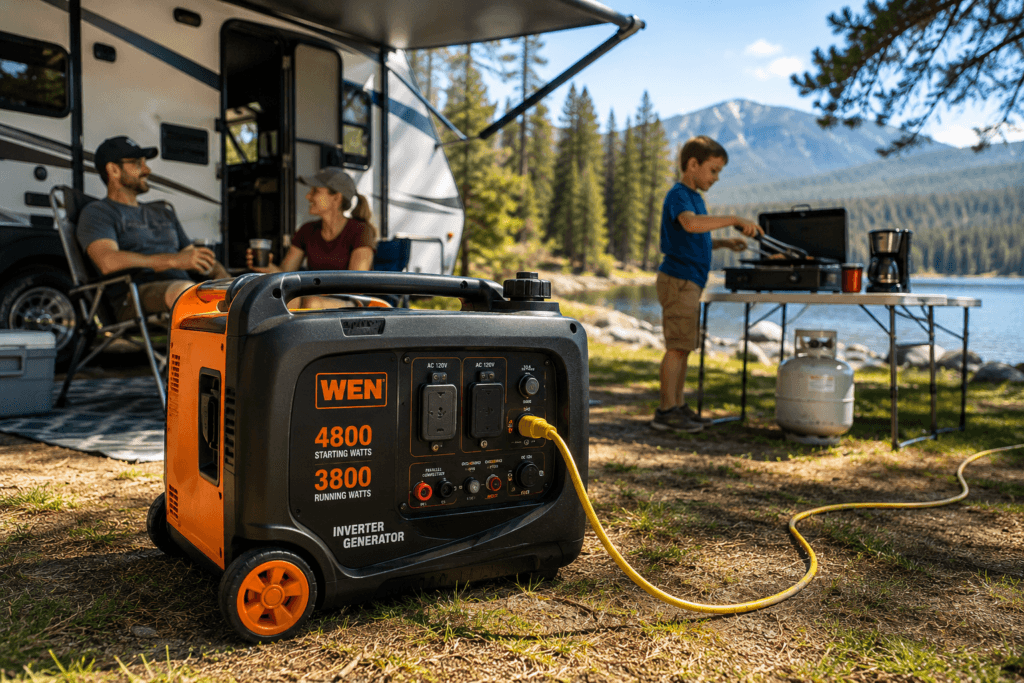
WEN GN625i Inverter Generator
[IMAGE PLACEHOLDER – WEN GN625i Inverter Generator]
Why We Picked It
The WEN GN625i offers clean inverter power at an affordable price, making it an excellent option for homeowners with modest backup power needs. It can operate refrigerators, lights, televisions, internet equipment, fans, and other everyday essentials while remaining quieter than most conventional portable generators.
Pros
- Affordable
- Quiet inverter technology
- Clean electricity
- Fuel efficient
- Lightweight
- Easy portability
Cons
- Lower output than larger generators
- Not suitable for whole-home backup
Best For
- Apartments
- Small homes
- Weekend cabins
- Budget-conscious homeowners
[IMAGE PLACEHOLDER – Small home powered by a portable generator while essential appliances continue operating during an outage.]
Generator Comparison
| Generator | Fuel Type | Inverter | Best For |
|---|---|---|---|
| Honda EU7000iS | Gasoline | ✔ | Best Overall |
| Westinghouse iGen5000DFc | Gasoline / Propane | ✔ | Best Dual-Fuel |
| Champion 7500 Dual Fuel | Gasoline / Propane | ✘ | Best Portable |
| Generac Guardian 14kW | Natural Gas / Propane | N/A | Automatic Backup |
| WEN GN625i | Gasoline | ✔ | Best Budget |
For many small homes, inverter generators provide an excellent balance of quiet operation, fuel efficiency, and enough power to run essential appliances during outages. (consumerreports.org)
Fuel Options
Gasoline
Advantages:
- Widely available
- High power output
- Easy to transport
Disadvantages:
- Limited shelf life
- Requires fuel stabilizer
- Needs periodic rotation
Propane
Advantages:
- Long shelf life
- Cleaner burning
- Lower maintenance
- Excellent emergency storage
Disadvantages:
- Slightly lower power output
- Requires propane cylinders
Natural Gas
Advantages:
- Continuous fuel supply
- No refueling required
- Ideal for standby generators
Disadvantages:
- Requires natural gas service
- Not available in every neighborhood
Generator Sizing Tips
Most small homes do not need oversized generators.
Typical appliances include:
- Refrigerator
- Freezer
- Internet modem
- Wi-Fi router
- Television
- Microwave
- Furnace blower
- Lights
- Phone chargers
- Medical devices
Always total both the running watts and starting watts of the equipment you plan to operate simultaneously. Leaving extra capacity helps accommodate future appliances and prevents overloads.
[IMAGE PLACEHOLDER – Homeowner using a watt meter and generator sizing chart to calculate power requirements for a small home.]
Which Generator Is Best?
Choose the Honda EU7000iS If:
- Quiet operation is important
- You want premium reliability
- You use sensitive electronics
- Fuel efficiency matters
Choose the Westinghouse iGen5000DFc If:
- You want dual-fuel flexibility
- Quiet inverter power is important
- You have moderate backup needs
- Long runtime matters
Choose the Champion 7500-Watt Dual Fuel Generator If:
- You want dependable portable backup
- Budget is important
- You need higher power output
- You want propane capability
Choose the Generac Guardian 14kW If:
- You want automatic backup
- Whole-home convenience is important
- You experience frequent outages
- You prefer a permanent installation
Choose the WEN GN625i If:
- You have a limited budget
- Your backup needs are modest
- Portability is important
- You mainly power essential electronics
Features to Look For
Small homes typically don’t require the largest generator available, but choosing the right features can make a significant difference during a power outage. The best generator should provide enough electricity for your essential appliances while remaining easy to operate, fuel-efficient, and reliable.
Here are the most important features to consider before purchasing a generator for a small home.
Inverter Technology
Many homeowners choose inverter generators because they produce cleaner, more stable electricity.
Benefits include:
- Quiet operation
- Better fuel efficiency
- Stable voltage
- Safe for sensitive electronics
- Lower engine wear
Inverter generators are ideal for powering:
- Computers
- Televisions
- Internet equipment
- Medical devices
- Phone chargers
- Modern appliances
For neighborhoods with close neighbors, quieter inverter generators are often the preferred choice.
Dual-Fuel Capability
Dual-fuel generators can operate on:
- Gasoline
- Propane
Benefits include:
- Greater flexibility
- Easier fuel storage
- Longer emergency operation
- Cleaner propane combustion
Propane is especially useful because it stores for years without degrading like gasoline.
Electric Start
Electric start provides:
- Push-button operation
- Faster startup
- Easier cold-weather starting
- Greater convenience
Many homeowners appreciate electric start during nighttime outages or severe weather.
Long Runtime
Choose a generator that can operate for several hours before refueling.
Compare:
- Fuel tank size
- Runtime at 25% load
- Runtime at 50% load
Longer runtime means fewer interruptions during extended outages.
[IMAGE PLACEHOLDER – Quiet inverter generator safely powering a small home during a nighttime outage.]
Carbon Monoxide (CO) Shutdown
Many modern portable generators include built-in carbon monoxide detection.
If dangerous CO levels are detected around the generator, the engine automatically shuts down.
Always operate portable generators outdoors in a well-ventilated location. Never operate a generator inside a garage, basement, crawl space, shed, or enclosed structure. Position it well away from doors, windows, and vents.
Low-Oil Shutdown
Low-oil shutdown automatically protects the engine.
Benefits include:
- Longer engine life
- Lower repair costs
- Greater reliability
This feature is especially valuable during long outages when the generator may run for many hours.
Portability
Small homeowners often store generators in garages or sheds.
Helpful portability features include:
- Built-in wheels
- Folding handles
- Lightweight construction
- Compact footprint
These features make moving and storing the generator much easier.
Transfer Switch Compatibility
A transfer switch or interlock kit allows a generator to safely power household circuits.
Benefits include:
- Safe connection to the home
- Reduced extension cord use
- Easier operation
- Protection against dangerous backfeeding
Even smaller portable generators benefit from a properly installed transfer switch.
Common Buying Mistakes
Avoid these common mistakes before purchasing a generator.
Buying Too Small
Many homeowners only calculate running watts.
Always include:
- Starting watts
- Refrigerator startup
- Furnace blower
- Sump pump
- Future electrical needs
Adding a safety margin helps prevent overloads.
Buying Too Large
Oversized generators:
- Cost more
- Consume more fuel
- Take up additional storage space
For many small homes, a properly sized generator is a better investment than the largest model available.
Ignoring Noise Level
If you live in:
- A subdivision
- A townhouse
- A neighborhood with close homes
A quieter inverter generator may be much more pleasant for both you and your neighbors.
Forgetting Fuel Storage
Prepare before outages occur.
Gasoline:
- Requires stabilizer
- Should be rotated regularly
Propane:
- Stores for years
- Burns cleaner
- Excellent for emergency backup
Skipping Maintenance
Routine maintenance keeps generators dependable.
Regularly:
- Change engine oil
- Replace air filters
- Inspect spark plugs
- Test electric start batteries
- Exercise the generator monthly
- Inspect fuel lines
Preventive maintenance greatly improves long-term reliability.
[IMAGE PLACEHOLDER – Homeowner performing routine maintenance on a portable generator before storm season.]
Waiting Until a Storm Is Forecast
Generators often become difficult to find before:
- Hurricanes
- Ice storms
- Severe thunderstorms
- Winter storms
Buying early allows you to:
- Compare more models
- Learn safe operation
- Install a transfer switch
- Store emergency fuel
- Test the generator before an outage occurs
Frequently Asked Questions
What size generator is best for a small home?
Many small homes can comfortably power essential appliances with a generator in the 3,000 to 7,500 running watt range. Homes with central air conditioning, well pumps, or multiple large appliances may require additional capacity.
Can a portable generator power my refrigerator?
Yes.
Most portable generators with sufficient running and starting wattage can easily operate a refrigerator along with several additional household essentials.
Are inverter generators worth it?
For many homeowners, yes.
Benefits include:
- Quiet operation
- Better fuel economy
- Clean power
- Safe electricity for electronics
- Lower noise levels
Is propane better than gasoline?
Both fuels work well.
Propane offers:
- Longer shelf life
- Cleaner combustion
- Lower maintenance
Gasoline offers:
- Slightly higher power output
- Easy availability
Dual-fuel generators provide the flexibility to use either fuel.
How often should I exercise my generator?
Run your generator approximately once a month under load to help maintain engine lubrication, verify proper operation, and keep electric-start batteries charged on applicable models.
Can I power my entire small home?
Possibly.
Many small homes can be powered completely by a properly sized generator connected through a transfer switch or interlock kit. Your actual requirements depend on the total electrical load and the appliances you want to operate simultaneously.
Final Thoughts
A dependable generator provides valuable peace of mind during power outages, allowing you to keep essential appliances operating while protecting your family’s comfort and safety. Fortunately, many small homes can achieve excellent backup power without the expense of oversized equipment.
For homeowners seeking premium performance, the Honda EU7000iS remains one of the best overall choices thanks to its quiet inverter technology, exceptional reliability, and clean power. The Westinghouse iGen5000DFc is an excellent option for homeowners wanting quiet operation with dual-fuel flexibility, while the Champion 7500-Watt Dual Fuel Generator offers outstanding value and dependable emergency performance. Those who prefer automatic backup should consider the Generac Guardian 14kW, and budget-conscious buyers may find the WEN GN625i Inverter Generator provides everything they need for essential home backup.
Before making your purchase, calculate your home’s running and starting wattage requirements, decide which appliances are most important during an outage, and choose a generator with enough capacity for both your current and future needs. Investing in the right generator today can provide years of dependable backup power whenever severe weather or unexpected outages occur.