Construction sites depend on reliable electricity to keep projects moving. Whether you’re building a new home, remodeling a commercial property, framing a house, or operating heavy-duty equipment, the right generator can power everything from circular saws and air compressors to welders, concrete mixers, and jobsite lighting.
Unlike home backup generators, construction site generators must withstand dust, vibration, rough handling, changing weather conditions, and long daily operating hours. Durability, high surge capacity, long runtime, and easy portability are often more important than quiet operation. Modern jobsite generators also include valuable safety features such as GFCI-protected outlets, electric start, carbon monoxide shutdown systems, and heavy-duty steel frames. Experts generally recommend generators in the 8,000–15,000 watt range for many medium to large construction applications, although smaller jobsites may require far less power.
In this guide, we’ll compare the best generators for construction sites in 2026, explain which features matter most, and help you choose the right generator for your tools, crew, and workload.
Quick Picks: Best Generators for Construction Sites
| Category | Generator | Best For |
|---|---|---|
| Best Overall | DuroMax XP13000HXT Tri-Fuel Generator | Large jobsites |
| Best Professional Jobsite Generator | DEWALT DXGNR8000 | Contractors |
| Best Inverter Generator | Honda EU7000iS | Quiet jobsites and electronics |
| Best Value | Champion 7500-Watt Dual Fuel Generator | Small contractors |
| Best Heavy-Duty Generator | Westinghouse WGen11500DFc | High-demand tools |
Why Construction Sites Need a Generator
Many construction projects begin before utility power is available.
A generator can power:
- Circular saws
- Table saws
- Air compressors
- Nail guns
- Rotary hammers
- Concrete mixers
- Welders (with compatible generators)
- Jobsite lighting
- Battery chargers
- Temporary offices
A properly sized generator improves productivity while reducing downtime.
Best Overall
DuroMax XP13000HXT Tri-Fuel Generator

Why We Picked It
The DuroMax XP13000HXT combines outstanding power output with the flexibility of operating on gasoline, propane, or natural gas. Its high surge capacity makes it capable of handling demanding startup loads from compressors, saws, pumps, and other construction equipment.
Its rugged design and fuel flexibility make it one of the best overall generators for professional contractors and demanding jobsites.
Pros
- Tri-fuel capability
- High surge capacity
- Electric start
- Heavy-duty frame
- Excellent runtime
- Outstanding overall value
Cons
- Heavy
- Louder than inverter generators
Best For
- Large construction sites
- Contractors
- Remodeling crews
- Heavy equipment
Best Professional Jobsite Generator
DEWALT DXGNR8000

Why We Picked It
The DEWALT DXGNR8000 is designed specifically for demanding professional environments. Its rugged construction, reliable engine, and strong power output make it well suited for operating compressors, power tools, lighting, and temporary jobsite power throughout a full workday.
Pros
- Durable contractor-grade construction
- Electric start
- Heavy-duty steel frame
- Reliable engine
- Multiple outlets
- Built for daily use
Cons
- Gasoline only
- Heavier than smaller portable models
Best For
- Professional contractors
- Framing crews
- Roofing
- Commercial construction
Choosing the Right Generator for Construction Sites
Before purchasing a jobsite generator, consider:
- Running watts
- Starting watts
- Number of tools used simultaneously
- Fuel type
- Runtime
- Portability
- GFCI outlet protection
- Electric start
- Frame durability
- Future expansion
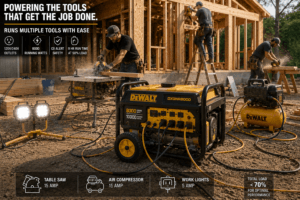
A properly sized generator reduces overloads and keeps crews productive throughout the workday. Construction experts also recommend generous surge capacity because many power tools draw several times their running wattage when starting.
Best Inverter Generator
Honda EU7000iS

Why We Picked It
The Honda EU7000iS is one of the best inverter generators available for construction professionals who need clean, reliable power. It’s ideal for powering battery chargers, laser levels, office trailers, computers, inspection equipment, and other sensitive electronics while remaining much quieter than traditional open-frame generators.
Its legendary reliability and excellent fuel economy make it a favorite among contractors who work in residential neighborhoods where lower noise levels are appreciated.
Pros
- Extremely quiet
- Clean inverter power
- Excellent fuel efficiency
- Electric start
- Reliable Honda engine
- Outstanding resale value
Cons
- Premium price
- Lower maximum output than large open-frame generators
Best For
- Remodeling
- Residential construction
- Jobsite offices
- Battery charging
- Sensitive electronics
Best Value Generator
Champion 7500-Watt Dual Fuel Generator

Why We Picked It
The Champion 7500-Watt Dual Fuel Generator delivers dependable jobsite performance at an affordable price. It provides enough power for circular saws, air compressors, drills, lighting, and many additional construction tools while allowing operation on either gasoline or propane.
Its combination of reliability, electric start, and dual-fuel capability makes it an outstanding value for small contractors and remodeling crews.
Pros
- Affordable
- Dual-fuel capability
- Electric start
- Reliable engine
- Excellent customer support
- Strong value
Cons
- Louder than inverter generators
- Less power than larger contractor models
Best For
- Remodeling
- Small contractors
- Home renovations
- Residential jobsites
Best Heavy-Duty Generator
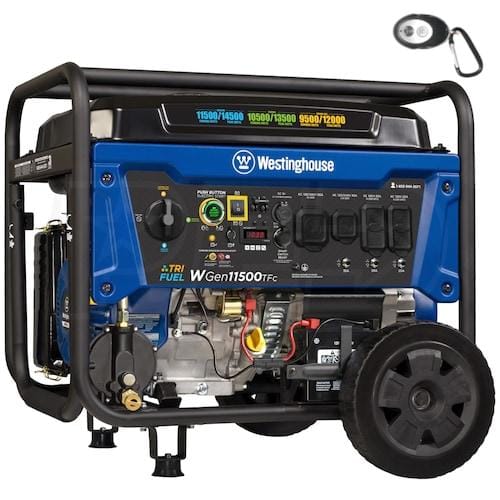
Westinghouse WGen11500DFc

Why We Picked It
The Westinghouse WGen11500DFc offers exceptional power for demanding construction projects. Its high surge capacity allows it to handle startup loads from large compressors, saws, pumps, and other heavy-duty equipment.
Its remote electric start and long runtime make it well suited for full workdays on larger construction sites.
Pros
- High power output
- Dual-fuel capability
- Remote electric start
- Long runtime
- Rugged construction
- Excellent surge capacity
Cons
- Heavy
- Large footprint
Best For
- Large construction sites
- Commercial projects
- Multiple power tools
- Heavy-duty equipment
Generator Comparison
| Generator | Fuel Type | Electric Start | Best For |
|---|---|---|---|
| DuroMax XP13000HXT | Tri-Fuel | ✔ | Best Overall |
| DEWALT DXGNR8000 | Gasoline | ✔ | Professional Contractors |
| Honda EU7000iS | Gasoline | ✔ | Quiet Jobsites |
| Champion 7500 Dual Fuel | Dual Fuel | ✔ | Best Value |
| Westinghouse WGen11500DFc | Dual Fuel | ✔ | Heavy-Duty Work |
Fuel Options
Gasoline
Advantages:
- Widely available
- High power output
- Easy to transport
- Common on most construction sites
Disadvantages:
- Limited shelf life
- Requires fuel stabilizer
- Must be stored safely
Propane
Advantages:
- Long shelf life
- Cleaner burning
- Lower maintenance
- Excellent backup fuel
Disadvantages:
- Slightly lower power output
- Requires propane cylinders
Natural Gas
Advantages:
- Continuous fuel supply
- No refueling required
- Lower operating costs
Disadvantages:
- Limited to locations with natural gas service
- Rarely practical on temporary construction sites
Construction Site Safety Tips
Safe generator operation protects workers and equipment.
Always:
- Operate generators outdoors only
- Keep generators away from doors and windows
- Use heavy-duty extension cords rated for outdoor use
- Protect generators from standing water
- Refuel only after the engine has cooled
- Inspect cords and outlets daily
- Follow all local safety regulations
Modern generators with GFCI outlets provide additional protection against electrical shock on construction sites.
Which Generator Is Best?
Choose the DuroMax XP13000HXT If:
- You need maximum power
- Large equipment is used daily
- Fuel flexibility is important
- You operate multiple tools simultaneously
Choose the DEWALT DXGNR8000 If:
- You’re a professional contractor
- Durability is your top priority
- You work full-time on jobsites
- Rugged construction is important
Choose the Honda EU7000iS If:
- Quiet operation matters
- You power sensitive electronics
- Fuel efficiency is important
- You work in residential neighborhoods
Choose the Champion 7500-Watt Dual Fuel Generator If:
- Budget is important
- You need dependable jobsite power
- You want propane capability
- You’re a small contractor
Choose the Westinghouse WGen11500DFc If:
- You need maximum surge capacity
- You operate large compressors
- Multiple crews share one generator
- Long runtime is important
Features to Look For
Construction site generators operate in demanding environments. They often run for long hours, power multiple tools simultaneously, and endure dust, vibration, rain, mud, and rough transportation.
Here are the most important features to consider before purchasing a construction generator.
High Starting Wattage
Many construction tools require a large surge of electricity when starting.
Examples include:
- Air compressors
- Table saws
- Concrete mixers
- Rotary hammers
- Circular saws
- Welders (compatible models)
- Water pumps
Choose a generator with enough starting watts to handle these temporary power surges without overloading.
Heavy-Duty Steel Frame
Construction generators should be built to withstand daily abuse.
Look for:
- Steel roll cage
- Reinforced frame
- Large wheels
- Folding handles
- Durable powder-coated finish
A rugged frame helps protect the engine and electrical components during transportation and daily use.
Electric Start
Electric start simplifies operation.
Benefits include:
- Push-button starting
- Faster startup
- Less physical effort
- Easier operation during cold weather
Many contractor-grade generators now include electric start as standard equipment.
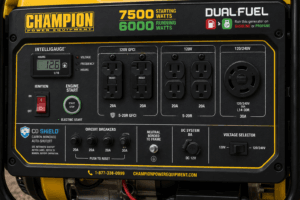
Multiple Outlet Types
Construction sites often power several tools at once.
Look for generators with:
- 120V household outlets
- 240V outlets
- Twist-lock outlets
- GFCI-protected receptacles
Having multiple outlet options increases flexibility on busy jobsites.
Long Runtime
Construction crews often work full eight- to ten-hour shifts.
Compare:
- Fuel tank size
- Runtime at 50% load
- Runtime at 25% load
Longer runtime reduces interruptions for refueling.
Fuel Flexibility
Dual-fuel and tri-fuel generators provide additional flexibility.
Dual-Fuel
- Gasoline
- Propane
Tri-Fuel
- Gasoline
- Propane
- Natural gas
Propane can reduce maintenance because it burns cleaner than gasoline and stores for long periods.
Low-Oil Shutdown
Low-oil shutdown automatically protects the engine.
Benefits include:
- Longer engine life
- Lower repair costs
- Improved reliability
This feature is especially valuable for generators that operate daily.
Hour Meter
Many contractor-grade generators include an hour meter.
Benefits include:
- Easier maintenance scheduling
- Accurate oil change intervals
- Better engine monitoring
- Improved long-term reliability
Carbon Monoxide (CO) Shutdown
Many newer portable generators include built-in carbon monoxide detection.
If unsafe CO levels are detected around the generator, the engine automatically shuts down.
Always operate generators outdoors in a well-ventilated area. Never operate a generator inside a building, garage, trailer, or enclosed work area. Keep it well away from doors, windows, and air intakes.
Common Buying Mistakes
Avoid these common mistakes before purchasing a construction site generator.
Buying Too Small
Many contractors underestimate startup wattage.
Always calculate:
- Running watts
- Starting watts
- Number of tools operating simultaneously
- Future equipment needs
Buying additional capacity helps prevent overloads.
Ignoring Surge Loads
Power tools often require two to three times their running wattage during startup.
Always verify:
- Generator surge watts
- Tool startup requirements
Forgetting Portability
A powerful generator is only useful if it can be moved easily.
Look for:
- Never-flat wheels
- Folding handles
- Balanced weight distribution
- Lift points for equipment trailers
Using Undersized Extension Cords
Undersized cords can cause:
- Voltage drop
- Reduced tool performance
- Overheating
- Equipment damage
Use heavy-duty outdoor-rated extension cords that match the generator’s capacity and the connected equipment.
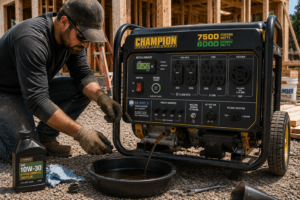
Skipping Maintenance
Construction generators require regular service.
Routine maintenance includes:
- Oil changes
- Air filter cleaning
- Spark plug inspection
- Fuel system inspection
- Battery testing
- Cooling system inspection
Daily inspections can prevent costly downtime.
Waiting Until Equipment Fails
Many contractors purchase generators only after an existing unit breaks down.
Planning ahead allows you to:
- Compare models
- Take advantage of sales
- Avoid project delays
- Reduce downtime
- Improve productivity
Having dependable backup equipment keeps projects on schedule.
Frequently Asked Questions
What size generator do contractors usually need?
Many contractors choose generators between 7,000 and 12,000 running watts, depending on the number and type of tools being used. Larger commercial projects may require even higher-capacity generators.
Can one generator power multiple tools?
Yes.
As long as the combined running and starting wattage of all connected tools stays within the generator’s rated capacity, one generator can safely power several tools at the same time.
Are inverter generators good for construction?
Yes, especially for:
- Battery chargers
- Office trailers
- Laser levels
- Sensitive electronics
- Residential remodeling
Traditional open-frame generators generally provide higher power output for heavy equipment.
Is propane better than gasoline?
Both fuels have advantages.
Propane stores much longer and burns cleaner, while gasoline generally provides slightly higher power output and is widely available.
Dual-fuel generators allow contractors to use either fuel depending on availability.
How often should a construction generator be serviced?
Follow the manufacturer’s maintenance schedule. Generators used daily on construction sites typically require more frequent oil changes, air filter inspections, and general maintenance than generators used only for occasional emergency backup.
Can construction generators be used in the rain?
No.
Portable generators should never operate where they can become wet from rain or standing water. If weather protection is needed, use a generator canopy or enclosure specifically designed to provide protection while maintaining proper ventilation.
Final Thoughts
Construction sites require dependable power to keep crews productive and projects on schedule. Choosing the right generator helps ensure your tools operate efficiently, minimizes downtime, and provides reliable electricity even when utility power isn’t available.
For most contractors, the DuroMax XP13000HXT Tri-Fuel Generator remains one of the best overall choices thanks to its impressive power output, fuel flexibility, and rugged construction. Professional crews looking for a dedicated jobsite machine should consider the DEWALT DXGNR8000, while the Honda EU7000iS is an excellent option for quieter residential work and powering sensitive electronics. Contractors on a tighter budget will appreciate the dependable performance of the Champion 7500-Watt Dual Fuel Generator, and those needing maximum output for demanding equipment should look closely at the Westinghouse WGen11500DFc.
Before purchasing, calculate the total running and starting wattage of your tools, consider future equipment needs, and choose a generator with enough capacity to grow with your business. A well-sized, well-maintained generator is one of the most valuable investments you can make for a productive and efficient construction site.