Living in a rural area offers peace, privacy, and space—but it often comes with one significant challenge: power outages. Rural homes are frequently served by longer utility lines, making them more vulnerable to outages caused by severe weather, fallen trees, equipment failures, or high winds. In some areas, restoring electricity can take hours or even days.
For many rural homeowners, electricity powers far more than lights. A power outage can shut down well pumps, septic systems, furnaces, freezers, livestock equipment, internet service, security systems, and medical devices, making reliable backup power an essential investment.
Fortunately, today’s backup power solutions range from affordable portable generators to fully automatic standby generators, expandable portable power stations, and whole-home battery systems. Choosing the right system depends on your home’s electrical needs, available fuel sources, budget, and how long outages typically last in your area. Portable generators remain one of the most cost-effective options for extended rural outages, while battery systems provide quiet indoor backup for essential electronics.
In this guide, we’ll compare the best backup power systems for rural homes in 2026, explain the advantages and disadvantages of each option, and help you choose the right emergency power solution for your property.
Quick Picks: Best Backup Power Systems for Rural Homes
| Category | Product | Best For |
|---|---|---|
| Best Overall | DuroMax XP13000HXT Tri-Fuel Generator | Large rural homes with well pumps |
| Best Standby Generator | Generac 24kW Guardian | Automatic whole-home protection |
| Best Portable Power Station | EcoFlow DELTA Pro 3 | Quiet indoor backup |
| Best Budget Generator | Champion 7500-Watt Dual Fuel Generator | Affordable rural preparedness |
| Best Home Battery System | Tesla Powerwall 3 | Solar-powered rural homes |
Why Rural Homes Need Backup Power
Unlike many suburban homes, rural properties often depend on electricity for critical systems beyond lighting and appliances.
Backup power can keep:
- Private well pumps operating
- Septic systems functioning
- Refrigerators and freezers cold
- Heating systems running
- Livestock watering equipment powered
- Security cameras online
- Internet service available
- Medical equipment operating
Extended outages can quickly become much more serious when your water supply and wastewater systems depend on electricity.
Best Overall
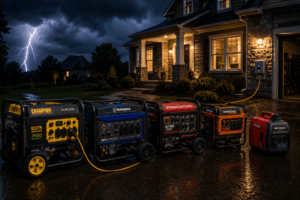
DuroMax XP13000HXT Tri-Fuel Generator
[IMAGE PLACEHOLDER – DuroMax XP13000HXT Tri-Fuel Generator]
Why We Picked It
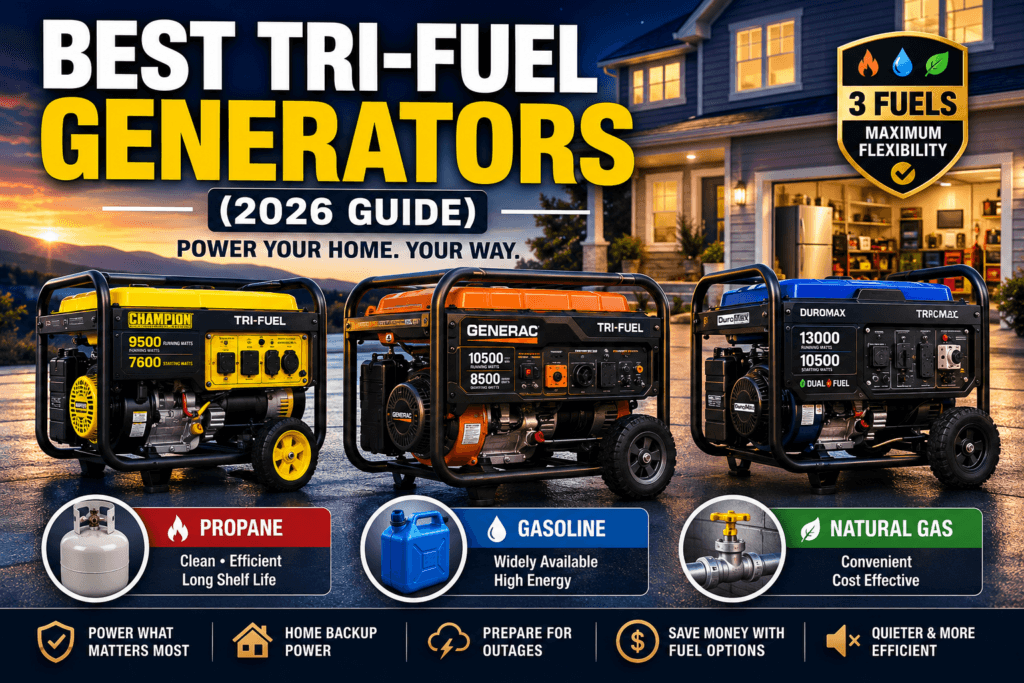
The DuroMax XP13000HXT is exceptionally well suited for rural homes because of its tri-fuel capability. Homeowners can operate it using gasoline, propane, or natural gas (where available), providing valuable flexibility during long outages.
Its high power output allows it to operate well pumps, septic systems, refrigerators, freezers, furnaces, lighting, central air conditioning, and many additional household circuits when connected through a properly installed transfer switch.
Pros
- Tri-fuel capability
- Excellent surge capacity
- High power output
- Electric start
- Transfer switch compatible
- Outstanding emergency preparedness
Cons
- Heavy generator
- Louder than enclosed inverter generators
Best For
- Rural homes
- Well pumps
- Septic systems
- Large properties
- Extended outages
Best Standby Generator
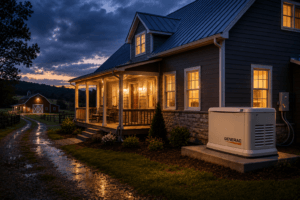
Generac 24kW Guardian

Why We Picked It
The Generac 24kW Guardian provides fully automatic backup power for rural homeowners. When utility power fails, it automatically starts within seconds and restores electricity without requiring manual intervention.
It is capable of powering large household loads including HVAC systems, well pumps, refrigerators, freezers, lighting, and other critical circuits for as long as fuel remains available.
Pros
- Automatic operation
- Whole-home protection
- Runs on natural gas or propane
- Long runtime
- Reliable performance
- No manual startup
Cons
- Higher purchase and installation cost
- Professional installation required
Best For
- Whole-home backup
- Farms
- Rural properties
- Homes with frequent outages
Choosing the Right Backup Power System
Before purchasing backup power equipment, consider:
- Total running watts
- Starting watts
- Well pump size
- Septic system requirements
- Fuel availability
- Runtime
- Noise level
- Budget
- Future electrical needs
Choosing the right system today will help ensure your rural home remains safe, comfortable, and fully functional during future power outages.
Best Portable Power Station
EcoFlow DELTA Pro 3

Why We Picked It
The EcoFlow DELTA Pro 3 is one of the most capable portable power stations available for rural homeowners. It delivers clean, silent power indoors and can operate refrigerators, freezers, internet equipment, televisions, CPAP machines, lights, and many other essential household devices.
It can also be expanded with additional batteries and paired with solar panels, making it an excellent backup solution for homes located far from town.
Pros
- Silent operation
- Indoor safe
- Solar charging compatible
- Expandable battery capacity
- Fast recharging
- Clean power for electronics
Cons
- Higher purchase price
- Limited runtime without expansion batteries
Best For
- Indoor emergency backup
- Solar-powered homes
- Sensitive electronics
- Quiet operation
- Remote cabins
Best Budget Generator
Champion 7500-Watt Dual Fuel Generator

Why We Picked It
The Champion 7500-Watt Dual Fuel Generator provides dependable emergency power at an affordable price. It offers enough output to run refrigerators, freezers, well pumps, sump pumps, furnaces, lighting, and many additional household essentials.
Its dual-fuel capability allows homeowners to switch between gasoline and propane depending on fuel availability during extended outages.
Pros
- Affordable
- Dual-fuel capability
- Electric start
- Reliable engine
- Excellent customer support
- Strong overall value
Cons
- Louder than inverter generators
- Lower power output than premium models
Best For
- Budget-conscious homeowners
- Rural emergency preparedness
- Small and medium-sized homes
- Portable backup power
Best Home Battery Backup System
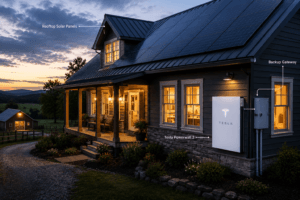
Tesla Powerwall 3

Why We Picked It
The Tesla Powerwall 3 provides seamless automatic backup power without gasoline, engine maintenance, or generator noise. It stores electricity from either the utility grid or rooftop solar panels and automatically powers selected household circuits when utility power is interrupted.
For rural homeowners with solar panels, it offers one of the most convenient backup solutions available.
Pros
- Automatic backup
- Silent operation
- Solar compatible
- Low maintenance
- No fuel storage
- Smart energy management
Cons
- Higher installation cost
- Professional installation required
- Limited runtime without solar recharging
Best For
- Solar-powered homes
- Quiet backup
- Automatic operation
- Long-term energy savings
Rural Backup Power Comparison
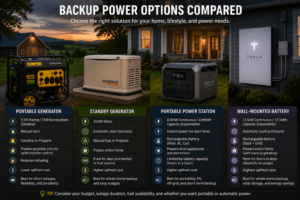
| Backup Solution | Automatic | Indoor Use | Fuel Required | Best For |
|---|---|---|---|---|
| Portable Generator | No | No | Yes | Affordable long-term backup |
| Standby Generator | Yes | No | Natural Gas/Propane | Whole-home protection |
| Portable Power Station | No | Yes | No | Quiet indoor backup |
| Home Battery System | Yes | Yes | No | Solar-powered homes |
| Solar Generator | No | Yes | Solar | Off-grid cabins and remote properties |
Generator vs Battery Backup
Portable Generators
Advantages
- Lower purchase price
- Long runtime with fuel
- High power output
- Powers well pumps and septic systems
- Excellent for extended outages
Disadvantages
- Outdoor use only
- Engine maintenance required
- Fuel storage required
- Louder operation
Portable Power Stations
Advantages
- Silent operation
- Indoor safe
- No gasoline
- No engine maintenance
- Clean electricity
Disadvantages
- Limited battery capacity
- Higher cost per watt-hour
- Must be recharged
Standby Generators
Advantages
- Automatic operation
- Whole-home protection
- Long runtime
- No manual setup
Disadvantages
- Higher installation cost
- Permanent installation
- Professional servicing recommended
Home Battery Systems
Advantages
- Silent
- Automatic
- Solar compatible
- No emissions
- Minimal maintenance
Disadvantages
- Expensive installation
- Limited storage without expansion batteries
- Best performance when paired with solar panels
Fuel Options for Rural Homes
Gasoline
Advantages:
- Widely available
- High power output
- Easy to transport
Disadvantages:
- Shorter shelf life
- Requires fuel stabilizer
- Must be rotated regularly
Propane
Advantages:
- Long shelf life
- Cleaner burning
- Excellent for long-term storage
Disadvantages:
- Requires propane tanks
- Slightly lower power output
Natural Gas
Advantages:
- Continuous fuel supply
- No refueling
- Excellent for standby generators
Disadvantages:
- Not available in many rural areas
- Requires permanent connection
Solar Power
Advantages:
- Renewable energy
- Quiet operation
- No fuel costs
- Excellent with battery storage
Disadvantages:
- Weather dependent
- Higher initial investment
Which Backup Power System Is Best?
Choose a Portable Generator If:
- You need to power a well pump
- You expect multi-day outages
- Maximum power is important
- You want the best value
Choose a Standby Generator If:
- Automatic operation is important
- You frequently lose power
- You want whole-home protection
- You have propane or natural gas available
Choose a Portable Power Station If:
- Quiet indoor backup is your priority
- You need clean power for electronics
- You have a smaller home or cabin
- You want zero emissions
Choose a Home Battery System If:
- You already have solar panels
- Automatic backup is important
- Low maintenance is a priority
Features to Look For
Whether you choose a portable generator, standby generator, portable power station, or home battery backup system, selecting the right features can make a huge difference during a prolonged power outage.
Here are the most important features rural homeowners should compare before making a purchase.
High Starting Wattage
Many rural homes rely on appliances that require high startup power.
Examples include:
- Well pumps
- Septic pumps
- Sump pumps
- Air compressors
- Refrigerators
- Freezers
- Furnace blowers
Choose a backup system that provides enough surge wattage to start these appliances without overloading.
Dual-Fuel or Tri-Fuel Capability
Fuel flexibility is extremely valuable during long outages.
Dual-Fuel Generators
Operate on:
- Gasoline
- Propane
Tri-Fuel Generators
Operate on:
- Gasoline
- Propane
- Natural gas
Benefits include:
- Better emergency preparedness
- Easier fuel management
- Longer operating time
- Greater flexibility during fuel shortages
For rural homeowners without natural gas service, propane often provides the best long-term fuel storage option.
Automatic Transfer Switch
Standby generators and many battery systems can automatically restore power.
Benefits include:
- Detects outages automatically
- Starts backup power within seconds
- Restores utility power automatically
- No manual startup required
This feature is especially valuable for homeowners who travel frequently or own livestock.
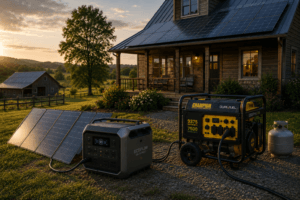
Solar Charging
Portable power stations and home battery systems often support solar charging.
Advantages include:
- Renewable energy
- Quiet operation
- Lower operating costs
- Excellent for remote properties
- Continuous charging during daylight
Solar charging can significantly extend battery runtime during multi-day outages.
 .]
.]Electric Start
Electric start makes operating larger generators much easier.
Benefits include:
- Push-button startup
- Faster operation
- Less physical effort
- Easier use during severe weather
Many premium portable generators now include electric start as standard equipment.
Carbon Monoxide (CO) Shutdown
Most modern portable generators include carbon monoxide detection.
If dangerous CO levels are detected around the generator, the engine automatically shuts down.
Always operate generators outdoors in an open, well-ventilated location. Never run a generator inside a garage, barn, shed, basement, crawl space, or enclosed building. Keep it well away from doors, windows, and vents.
Long Runtime
Long runtime is one of the most important features for rural properties.
Compare:
- Fuel tank size
- Battery capacity
- Runtime at 25% load
- Runtime at 50% load
Longer runtime reduces the need for frequent refueling or battery charging during extended outages.
Transfer Switch Compatibility
Portable generators should be compatible with a transfer switch or interlock kit.
Benefits include:
- Safe home connection
- Reduced extension cords
- Easier operation
- Protection against dangerous backfeeding
Common Buying Mistakes
Avoid these common mistakes before investing in backup power.
Buying Too Small
Many homeowners underestimate how much electricity their rural home requires.
Always include:
- Well pump
- Septic pump
- Refrigerators
- Freezers
- Heating systems
- Water heaters (if applicable)
- Future electrical needs
Buying slightly more generator capacity helps prevent overloads.
Ignoring Fuel Storage
Long outages require careful fuel planning.
Consider:
- Gasoline shelf life
- Propane storage
- Natural gas availability
- Solar charging capability
Fuel planning is one of the most important parts of emergency preparedness.
Forgetting Well Pumps
Private wells stop delivering water when electricity is lost.
Always verify that your backup system can start and operate your well pump.
This is one of the most common mistakes rural homeowners make.
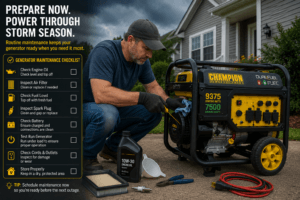
Skipping Routine Maintenance
Generators require regular maintenance.
Perform routine:
- Oil changes
- Air filter replacement
- Spark plug inspection
- Monthly exercise runs
- Fuel inspections
- Battery testing
Proper maintenance greatly improves long-term reliability.
Waiting Until Severe Weather Arrives
Generators often sell out before:
- Hurricanes
- Ice storms
- Tornado season
- Major thunderstorms
- Winter weather
Buying early allows you to:
- Compare more models
- Install transfer equipment
- Learn proper operation
- Store emergency fuel
- Test the system before an outage
Preparation is always less stressful than scrambling after the power goes out.
Frequently Asked Questions
What is the best backup power system for a rural home?
For most rural homeowners, a high-capacity portable generator offers the best balance of affordability, flexibility, and long runtime.
Homes experiencing frequent outages may benefit from a permanently installed standby generator.
Can a portable generator run a well pump?
Yes.
Many portable generators with sufficient starting wattage can operate residential well pumps, along with refrigerators, freezers, lighting, and other essential household circuits.
Are portable power stations enough for rural homes?
Portable power stations work well for:
- Electronics
- Refrigerators
- Medical equipment
- Lighting
- Internet equipment
However, they may not provide enough power for large well pumps, central air conditioning, or heavy electrical loads unless using high-capacity expandable systems.
Should rural homeowners choose propane or gasoline?
Both have advantages.
Gasoline is widely available, while propane stores much longer and is often easier to maintain for emergency preparedness.
Many rural homeowners prefer dual-fuel generators for maximum flexibility.
Is a standby generator worth it?
If your home experiences frequent outages or relies heavily on electric well pumps, septic systems, livestock equipment, or medical devices, a standby generator can provide outstanding convenience and peace of mind.
Can solar panels provide emergency backup?
Yes.
When paired with a compatible battery storage system, solar panels can continue charging batteries during daylight hours, extending backup power without requiring fuel.
Final Thoughts
Reliable backup power is especially important for rural homeowners because electricity often supports essential systems such as well pumps, septic systems, freezers, heating equipment, livestock operations, and internet service. Choosing the right backup solution before an emergency can make a tremendous difference in your family’s comfort and safety.
For most rural properties, the DuroMax XP13000HXT Tri-Fuel Generator remains one of the best overall choices thanks to its high output and ability to operate on gasoline, propane, or natural gas. Homeowners who want automatic whole-home protection should consider the Generac 24kW Guardian, while those looking for quiet indoor backup will appreciate the EcoFlow DELTA Pro 3. Homes equipped with rooftop solar panels can benefit from the seamless operation of the Tesla Powerwall 3, and budget-conscious buyers will find excellent value in the Champion 7500-Watt Dual Fuel Generator.
Before making your purchase, calculate your home’s electrical requirements, identify your critical appliances, and consider how long outages typically last in your area. Investing in the right backup power system today will help ensure your rural home stays safe, comfortable, and operational no matter what the weather brings.