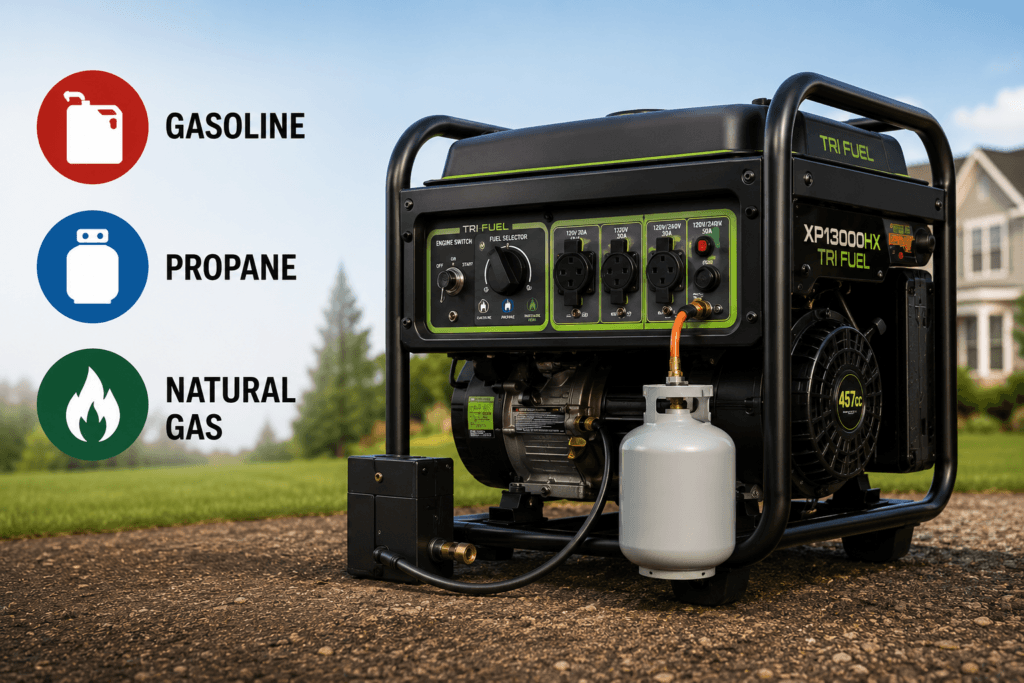
If you’re asking “What size generator do I need for central air?”, you’re not alone. One of the biggest concerns during a summer power outage is keeping your home cool and comfortable. Unfortunately, central air conditioning systems are among the most power-hungry appliances in a house.
Many homeowners make the mistake of choosing a generator based only on the running wattage of their air conditioner. The real challenge is the startup surge. When the compressor kicks on, a central AC unit can require two to three times its normal operating power for a few seconds.
The good news is that once you understand your AC size and electrical requirements, choosing the right generator becomes much easier.
In this guide, you’ll learn:
- What size generator for central air
- Generator sizing charts by AC tonnage
- Generator requirements for 2-ton, 3-ton, 4-ton, and 5-ton AC units
- Portable vs standby generators
- How soft-start kits reduce generator size requirements
- Best generators for central air conditioning in 2026
By the end, you’ll know exactly what generator size is needed to keep your central air running during a power outage.
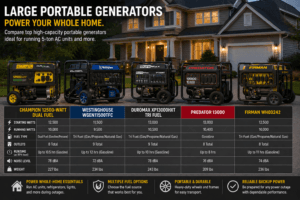
Quick Answer
For most homes:
| Central AC Size | Recommended Generator |
|---|---|
| 2 Ton | 6,500–7,500 Watts |
| 3 Ton | 9,500–10,500 Watts |
| 4 Ton | 12,000–15,000 Watts |
| 5 Ton | 15,000–20,000 Watts |
| Multiple AC Units | 22kW–38kW Standby Generator |
Most homeowners with a typical 3-ton central air conditioner should consider a 9,500 to 12,000-watt generator.
Why Central Air Requires a Large Generator
Central air conditioners contain compressors that require a large amount of electricity when starting.
There are two power requirements:
Running Watts
The electricity needed after the system is running.
Starting Watts
The surge of electricity needed when the compressor starts.
For example:
A central AC may use:
- 4,000 running watts
- 8,000–12,000 starting watts
This startup surge is often the determining factor when sizing a generator.
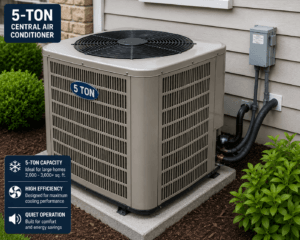
Central Air Generator Sizing Chart
| AC Size | Running Watts | Starting Watts | Recommended Generator |
|---|---|---|---|
| 2 Ton | 2,500–3,500 | 5,000–7,000 | 6,500–7,500W |
| 3 Ton | 3,500–5,000 | 7,000–10,000 | 9,500–10,500W |
| 4 Ton | 5,000–6,500 | 10,000–13,000 | 12,000–15,000W |
| 5 Ton | 6,000–8,000 | 12,000–16,000 | 15,000–20,000W |
Always verify the specifications on your specific unit.
What Size Generator for a 2-Ton Central Air Conditioner?
A 2-ton AC system is common in smaller homes, condos, and townhouses.
Typical requirements:
- Running Watts: 2,500–3,500
- Starting Watts: 5,000–7,000
Recommended Generator
- 6,500–7,500 watts
Popular choices:
- Champion 7500 Dual Fuel
- Westinghouse WGen7500
- DuroMax XP8500EH
These generators often leave enough capacity for lights and refrigeration as well.
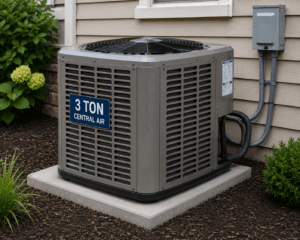
What Size Generator for a 3-Ton Central Air Conditioner?
A 3-ton unit is one of the most common residential HVAC sizes.
Typical requirements:
- Running Watts: 3,500–5,000
- Starting Watts: 7,000–10,000
Recommended Generator
- 9,500–10,500 watts
Top options:
- Westinghouse WGen9500DF
- DuroMax XP13000HXT
- Champion 201417
For many homeowners, this is the sweet spot for central air backup power.
What Size Generator for a 4-Ton Central Air Conditioner?
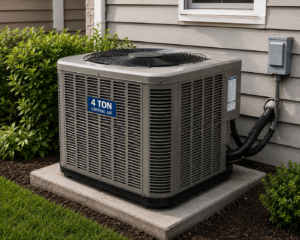
A 4-ton AC requires considerably more startup power.
Typical requirements:
- Running Watts: 5,000–6,500
- Starting Watts: 10,000–13,000
Recommended Generator
- 12,000–15,000 watts
Best options:
- DuroMax XP15000HXT
- Westinghouse WGen11500DFc
- Generac GP15000E
What Size Generator for a 5-Ton Central Air Conditioner?
A 5-ton system is commonly found in larger homes.
Typical requirements:
- Running Watts: 6,000–8,000
- Starting Watts: 12,000–16,000+
Recommended Generator
- 15,000–20,000 watts
Many homeowners with 5-ton systems eventually choose standby generators.
What Size Whole House Generator for Central Air?
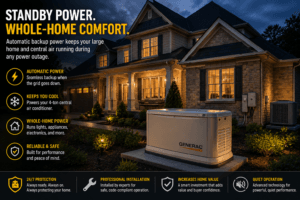
If you want automatic backup power, a standby generator is often the best solution.
Typical Recommendations
| Home Size | Generator Size |
|---|---|
| Small Home | 18kW |
| Average Home | 22kW |
| Large Home | 24kW–30kW |
| Multiple AC Units | 30kW–38kW |
Standby generators can automatically start within seconds of a power outage.
Can a Portable Generator Run Central Air?
Absolutely.
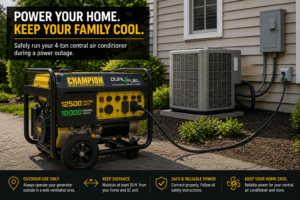
Many portable generators can run central air conditioning if properly sized.
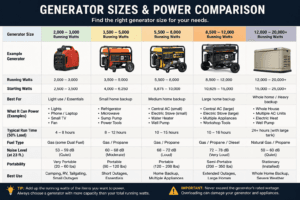
Popular portable generator sizes include:
- 7,500 watts
- 9,500 watts
- 12,000 watts
- 15,000 watts
The key is accounting for startup surge.
Soft Start Kits Can Reduce Generator Requirements
One of the best upgrades for homeowners is a soft-start kit.
A soft-start device gradually ramps up compressor power instead of demanding full power instantly.
Benefits include:
- Reduced startup surge
- Smaller generator requirements
- Lower fuel consumption
- Reduced wear on equipment
Many homeowners reduce compressor startup current by 50% or more.
Generator Size for Central Air and the Rest of the House
Most people don’t want to run only the air conditioner.
Additional loads often include:
- Refrigerator
- Freezer
- Lighting
- Internet
- Television
- Sump pump
- Well pump
This is why it’s important to size beyond the AC unit alone.
Example:
3-ton AC:
- 4,500 running watts
Additional home loads:
- 2,500 watts
Recommended generator:
- 9,500–12,000 watts
Best Generators for Central Air in 2026
Best Overall
DuroMax XP13000HXT
Why it stands out:
- Tri-fuel operation
- Excellent surge capacity
- Great value
Best Dual Fuel Generator
Westinghouse WGen11500DFc
Excellent for:
- 3-ton and 4-ton AC systems
- Home backup power
Best High-Power Portable Generator
Generac GP17500E
Ideal for:
- Large homes
- Heavy HVAC loads
Best Whole House Generator
Generac Guardian 24kW
One of the most popular standby generators available.
Best Premium Standby Generator
Kohler 26RCA
Known for:
- Reliability
- Fast startup
- Long lifespan
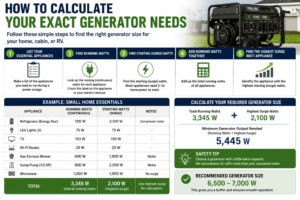
Step 1
Locate your AC unit’s data plate.
Find:
- Voltage
- Amperage
- Locked Rotor Amps (LRA)
Step 2
Calculate running watts.
Formula:
Volts × Amps = Running Watts
Example:
240V × 18A = 4,320 watts
Step 3
Estimate startup surge.
Multiply running watts by:
- 2x to 3x
Step 4
Add household loads.
Include:
- Refrigeration
- Lighting
- Electronics
- Pumps
Step 5
Add a 20% safety margin.
This ensures reliable operation.
Common Generator Sizing Mistakes
Buying Based on Running Watts Only
The biggest mistake homeowners make.
Ignoring Startup Surge
Compressors require significantly more power during startup.
Forgetting Other Appliances
Most people want more than cooling during an outage.
Buying Too Small
A slightly larger generator often provides much better flexibility.
Frequently Asked Questions
Can a 7500-Watt Generator Run Central Air?
Yes.
Many 2-ton systems and some smaller 3-ton systems can operate on a properly sized 7,500-watt generator.
Can a 9500-Watt Generator Run a 3-Ton AC?
In many cases, yes.
This is one of the most common generator sizes used for residential central air.
Can a 12000-Watt Generator Run a 4-Ton AC?
Usually yes.
This size is often ideal for larger residential systems.
Can a Generator Run Central Air and a Refrigerator?
Absolutely.
As long as the generator is properly sized for both loads.
Final Verdict
For most homeowners asking, “What size generator for central air?” the answer depends primarily on AC tonnage and startup surge requirements.
General recommendations:
- 2-ton AC: 6,500–7,500 watts
- 3-ton AC: 9,500–10,500 watts
- 4-ton AC: 12,000–15,000 watts
- 5-ton AC: 15,000–20,000 watts
For many homes, a generator in the 10,000–12,000 watt range provides the best balance of cost, capability, and comfort during outages.
Always size your generator based on startup surge rather than running watts alone. Doing so will ensure your central air conditioner starts reliably and keeps your home cool when the power goes out.