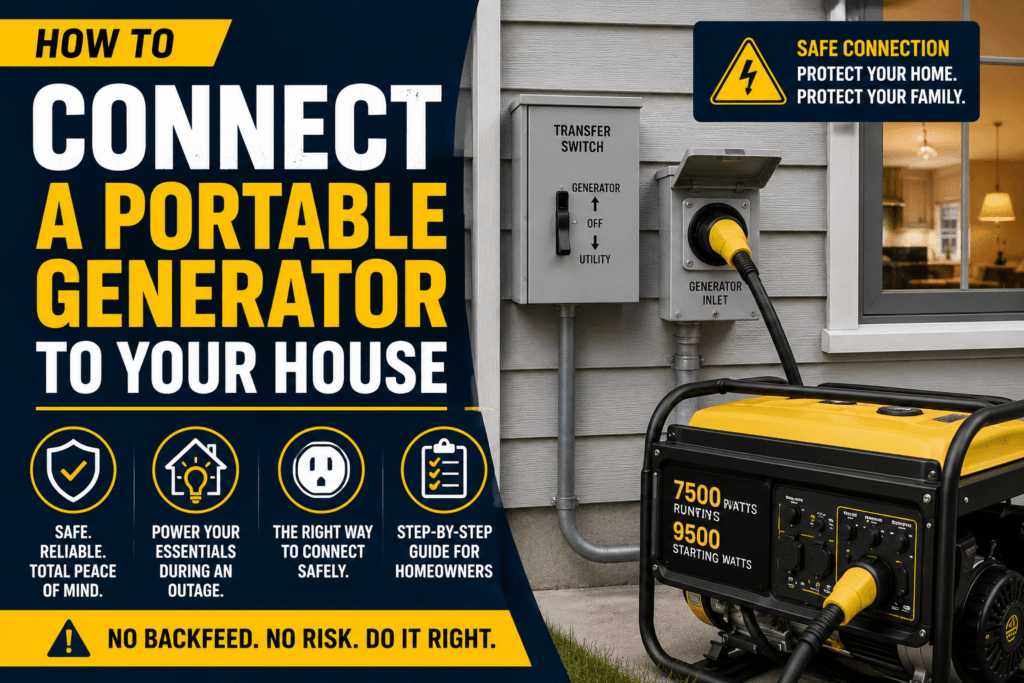
A portable generator can keep your home running during a power outage, but connecting it the wrong way can be extremely dangerous. Improper generator connections can lead to electrocution, carbon monoxide poisoning, equipment damage, or deadly backfeeding that puts utility workers at risk.
This guide explains the safe and proper ways to connect a portable generator to your house, the equipment you’ll need, and common mistakes to avoid.
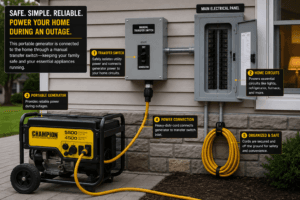
Why Safe Generator Connection Matters
When the power goes out, it’s tempting to plug a generator into your home’s electrical system using homemade methods. However, unsafe connections can:
- Damage your home’s electrical system
- Destroy appliances and electronics
- Cause generator overload
- Create fire hazards
- Send electricity back into utility lines (backfeeding)
- Put utility workers and neighbors at serious risk
The safest approach is to use equipment specifically designed for generator connections.
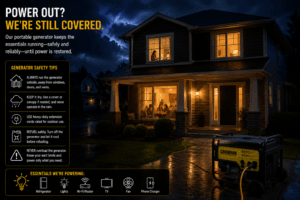
Three Safe Ways to Power Your Home
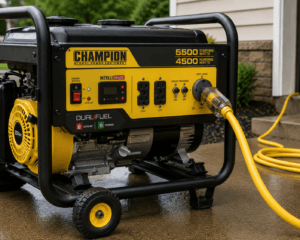
1. Extension Cords (Best for a Few Appliances)
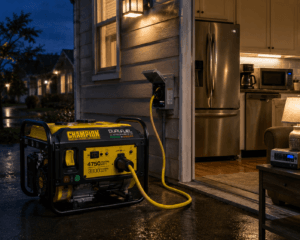
The simplest method is plugging appliances directly into the generator using heavy-duty outdoor-rated extension cords.
Best for powering:
- Refrigerator
- Freezer
- Sump pump
- Lights
- Fans
- Phone chargers
- Small appliances
Pros
- Lowest cost
- No electrician required
- Easy to set up
Cons
- Cords throughout the house
- Cannot power built-in circuits
- Limited convenience
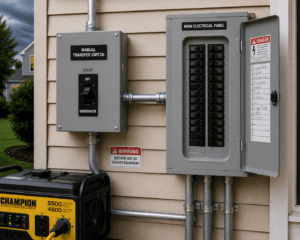
2. Manual Transfer Switch (Best Overall)
A manual transfer switch allows you to safely power selected circuits in your home’s electrical panel.
Common circuits include:
- Refrigerator
- Furnace
- Lights
- Garage door
- Internet equipment
- Well pump
Advantages
- Safe
- Easy to operate
- Prevents backfeeding
- Cleaner installation
- No extension cords inside the house
Most homeowners find this to be the best long-term solution for portable generators.
3. Interlock Kit
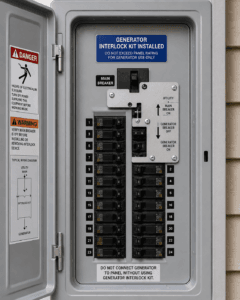
An interlock kit works with your existing breaker panel to ensure the main breaker and generator breaker cannot be turned on at the same time.
Benefits include:
- Powers more household circuits
- Often costs less than a transfer switch
- Uses your existing electrical panel
- Prevents dangerous backfeeding when installed correctly
Interlock kits must be compatible with your electrical panel and should be installed according to local electrical codes.
Equipment You’ll Need
Depending on your setup, you may need:
- Portable generator
- Heavy-duty generator extension cord
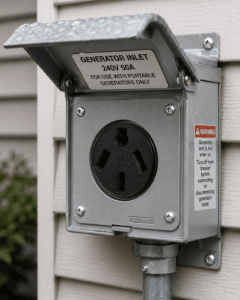
- Generator inlet box
- Manual transfer switch or interlock kit
- Proper generator power cord
- Carbon monoxide detector
- Fuel supply
- Fuel stabilizer for long-term storage
Never Backfeed Your House
One of the most dangerous mistakes is using a homemade “suicide cord” to plug a generator into a wall outlet.
Never do this.
Backfeeding can:
- Energize utility power lines
- Seriously injure or kill utility workers
- Damage your generator
- Cause fires
- Violate electrical codes
Always use approved equipment designed for generator connections.
Step-by-Step: Connecting with a Transfer Switch
- Move the generator outdoors.
- Place it on a dry, level surface.
- Keep it at least 20 feet from doors, windows, and vents.
- Check the oil and fuel levels.
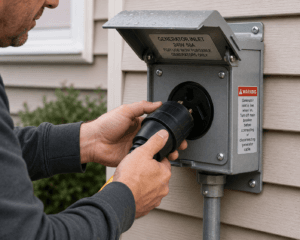
- Connect the generator cord to the inlet box.
- Start the generator.
- Let it warm up for a few minutes.
- Switch the transfer switch from Utility to Generator.
- Turn on only the circuits you need.
- Monitor the generator’s load to avoid overloading.
When utility power returns:
- Turn off household loads.
- Switch the transfer switch back to Utility.
- Shut down the generator.
- Disconnect the generator cord after it has cooled.
Generator Placement Is Critical
Never operate a generator:
- Inside a garage
- Inside the house
- On a porch
- Under open windows
- In a basement
- In enclosed spaces
Instead:
- Place it outdoors.
- Keep it at least 20 feet from occupied areas when possible.
- Point the exhaust away from the home.
- Operate it on a dry, stable surface.
Carbon monoxide is odorless, colorless, and can become deadly within minutes.
How Much Can a Portable Generator Power?
It depends on the generator’s running wattage.
Typical appliances include:
| Appliance | Approximate Running Watts |
|---|---|
| Refrigerator | 600–800 W |
| Freezer | 500–700 W |
| Sump Pump | 800–1,500 W |
| Furnace Blower | 600–1,200 W |
| LED Lighting | 100–300 W |
| Wi-Fi Router | 10–30 W |
| Microwave | 1,000–1,500 W |
| Window Air Conditioner | 800–1,500 W |
Remember that many appliances require additional starting watts when they first turn on.
Safety Tips
Always:
- Install working carbon monoxide detectors.
- Read your generator owner’s manual.
- Keep spare oil and fuel on hand.
- Use heavy-duty outdoor-rated cords.
- Keep the generator dry.
- Allow the engine to cool before refueling.
- Test your generator monthly.
- Store gasoline in approved fuel containers.
Common Mistakes to Avoid
Avoid these common errors:
- Running the generator indoors
- Plugging into a wall outlet
- Overloading the generator
- Using undersized extension cords
- Ignoring oil changes
- Refueling while the engine is hot
- Operating in standing water
- Skipping monthly maintenance
Frequently Asked Questions
Can I plug my generator directly into a wall outlet?
No. This creates dangerous backfeeding and should never be done.
Do I need a transfer switch?
If you want to safely power household circuits through your electrical panel, a transfer switch or an approved interlock kit is the safest solution.
Can I run my generator in the garage with the door open?
No. Carbon monoxide can quickly build up, even with the garage door open.
How far should a generator be from my house?
Follow your generator manufacturer’s instructions. A common recommendation is to operate it outdoors and at least 20 feet from doors, windows, and vents whenever possible, with the exhaust directed away from the home.
Can I power my whole house with a portable generator?
Some large portable generators can power most essential household circuits, but very few can run every appliance in a modern home at the same time. Calculate your wattage needs before purchasing a generator.
Final Thoughts
Connecting a portable generator to your home safely is one of the best ways to prepare for power outages. Whether you choose heavy-duty extension cords, a manual transfer switch, or an interlock kit, using the proper equipment protects your family, your home, and utility workers.
Never use unsafe backfeeding methods, keep your generator outdoors with plenty of ventilation, and perform regular maintenance so it’s ready when the next outage strikes. Investing in a safe connection today provides reliable backup power and valuable peace of mind for years to come.