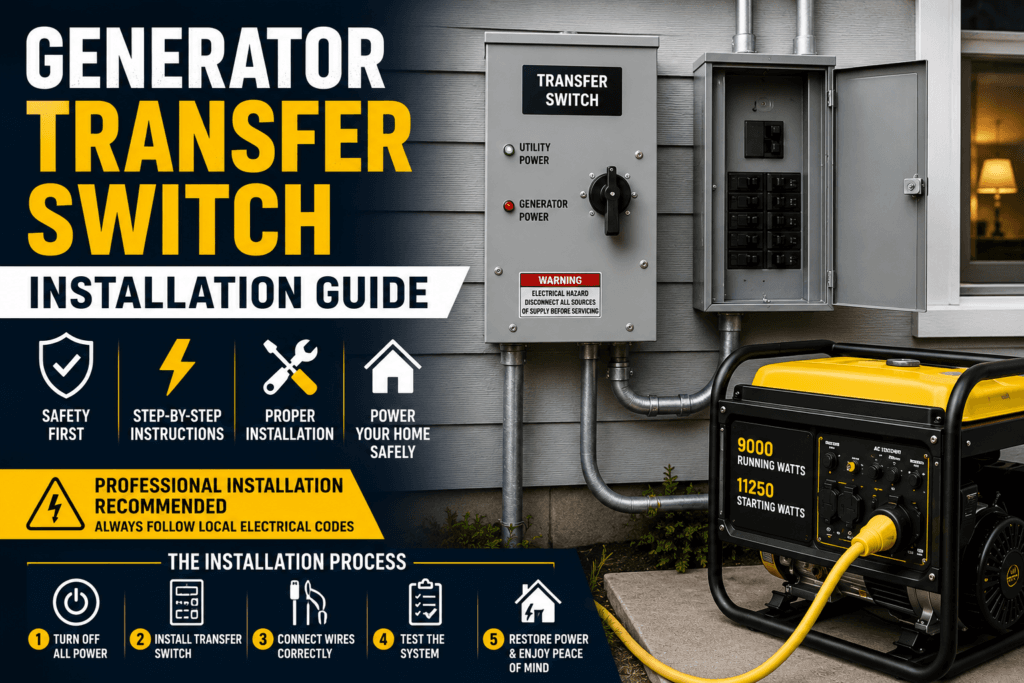
Installing a generator transfer switch is one of the safest and most convenient ways to connect a portable generator to your home’s electrical system. A transfer switch allows you to power essential household circuits during an outage while preventing dangerous backfeeding into utility lines.
Whether you’re preparing for severe storms, winter outages, or unexpected power failures, this guide explains how generator transfer switches work, the different types available, installation considerations, costs, and important safety tips.
What Is a Generator Transfer Switch?
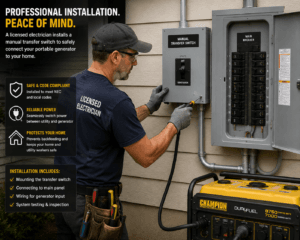
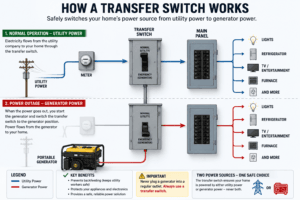
A generator transfer switch is a device that safely switches your home’s electrical supply from the utility company to your generator.
Instead of running extension cords throughout your home, a transfer switch allows selected circuits to receive power directly from your generator.
Typical circuits include:
- Refrigerator
- Freezer
- Furnace
- Sump pump
- Lights
- Internet equipment
- Medical equipment
- Garage door opener
Why Install a Transfer Switch?
A transfer switch provides several important benefits.
Safety
The biggest advantage is preventing dangerous backfeeding that could injure utility workers or damage your electrical system.
Convenience
Simply plug your generator into the exterior inlet box and switch selected circuits over to generator power.
Protects Your Appliances
A properly installed transfer switch delivers power safely to your home’s electrical panel without improvised wiring methods.
Code Compliance
Transfer switches are designed to meet electrical safety standards when installed correctly and in accordance with local codes.
Types of Generator Transfer Switches
Manual Transfer Switch
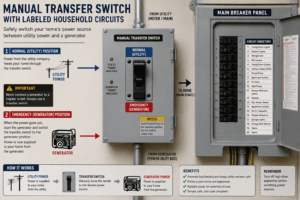
A manual transfer switch requires you to manually move selected circuits from utility power to generator power.
Advantages
- Lower cost
- Simple operation
- Excellent for portable generators
- Reliable
- Popular with homeowners
Best For
- Portable generators
- Emergency backup power
- Essential household circuits
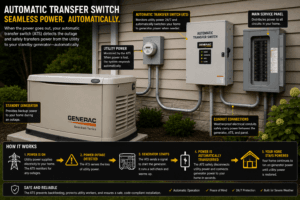
Automatic Transfer Switch (ATS)
An automatic transfer switch detects a power outage and starts the generator automatically (when paired with a compatible standby generator).
Advantages
- Fully automatic
- Fast restoration of power
- Ideal for whole-house standby systems
Best For
- Standby generators
- Whole-home backup
- Homeowners wanting automatic operation
📷 IMAGE PLACEHOLDER
Transfer Switch vs. Interlock Kit
Many homeowners compare these two options.
| Feature | Transfer Switch | Interlock Kit |
|---|---|---|
| Easy to operate | ✅ | ✅ |
| Prevents backfeeding | ✅ | ✅ |
| Powers selected circuits | ✅ | Varies |
| Lower installation cost | ❌ | ✅ |
| Dedicated labeled circuits | ✅ | ❌ |
| Compatible with portable generators | ✅ | ✅ |
Both can be excellent solutions when properly installed.
Choosing the Right Size Transfer Switch
Transfer switches are available in several sizes.
Common options include:
- 30-amp
- 50-amp
- 100-amp
- 200-amp
The correct size depends on:
- Generator output
- Number of circuits
- Home electrical service
- Future expansion plans
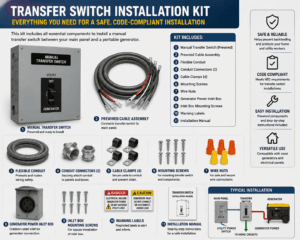
Equipment You’ll Need
Typical installation components include:
- Generator transfer switch
- Outdoor generator inlet box
- Generator power cord
- Circuit breakers (if required)
- Electrical conduit
- Wire and connectors
- Mounting hardware
📷 IMAGE PLACEHOLDER
Basic Installation Overview
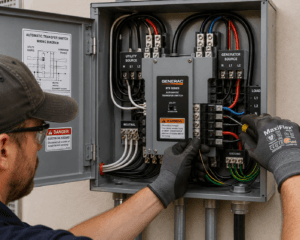
Important: Installing a transfer switch involves working with your home’s electrical system. If you’re not experienced with residential electrical work, hiring a qualified electrician is the safest choice.
A typical installation includes:
- Turn off electrical power.
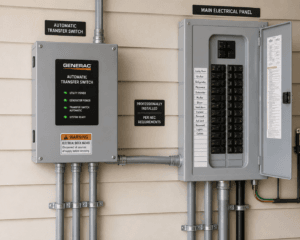
- Mount the transfer switch near the main electrical panel.
- Install the outdoor generator inlet box.
- Route wiring between the inlet box and transfer switch.
- Connect the selected branch circuits.
- Install the generator breaker.
- Label all circuits.
- Test the system with the generator.
Always follow the manufacturer’s instructions and applicable electrical codes.
📷 IMAGE PLACEHOLDER
How to Use a Transfer Switch
When the power goes out:
- Move the generator outdoors.
- Check oil and fuel.
- Start the generator.
- Connect the generator cord to the inlet box.
- Move the transfer switch from Utility to Generator.
- Turn on only the circuits you need.
- Monitor generator load.
When utility power returns:
- Turn off household loads.
- Move the transfer switch back to Utility.
- Shut down the generator.
- Disconnect the power cord after the generator has cooled.
Typical Installation Costs
Costs vary depending on:
- Transfer switch size
- Number of circuits
- Electrical panel layout
- Local labor rates
- Permit requirements
A professionally installed manual transfer switch generally costs several hundred to over a thousand dollars, depending on the complexity of the installation and the equipment selected.
📷 IMAGE PLACEHOLDER
Safety Tips
Always:
- Install carbon monoxide detectors.
- Operate generators outdoors only.
- Keep generators dry.
- Allow the engine to cool before refueling.
- Test the system regularly.
- Inspect cords for damage.
- Follow all manufacturer instructions.
- Use properly rated generator cords.
Common Installation Mistakes
Avoid these common errors:
- Installing the wrong size transfer switch
- Overloading the generator
- Using undersized wiring
- Skipping required permits where applicable
- Failing to label circuits
- Running the generator indoors
- Ignoring maintenance
- Attempting unsafe backfeeding
Frequently Asked Questions
Can I install a transfer switch myself?
Some experienced homeowners may be able to install one, but because the work involves your home’s electrical system, many people choose to have a qualified electrician perform the installation.
Is a transfer switch required?
If you’re connecting a generator to your home’s electrical panel, a transfer switch or another approved method that prevents backfeeding—such as a properly installed interlock kit—is generally required for safe operation.
How many circuits can a transfer switch power?
It depends on the model. Some switches power six circuits, while larger models can handle ten, twelve, or more.
Can I power my entire home?
Some large transfer switches paired with appropriately sized generators can support most or all household circuits, but the generator must have enough capacity to handle the connected loads.
How often should I test my transfer switch?
It’s a good practice to test your generator and transfer switch about once a month to make sure everything is operating properly.
Final Thoughts
A generator transfer switch is one of the smartest upgrades you can make for reliable home backup power. It offers a safe, code-conscious way to connect a portable generator, eliminates the hassle of running extension cords throughout your home, and helps protect both your electrical system and utility workers from the dangers of backfeeding.
Combined with regular generator maintenance and routine testing, a properly installed transfer switch ensures you’re ready for the next power outage with confidence.