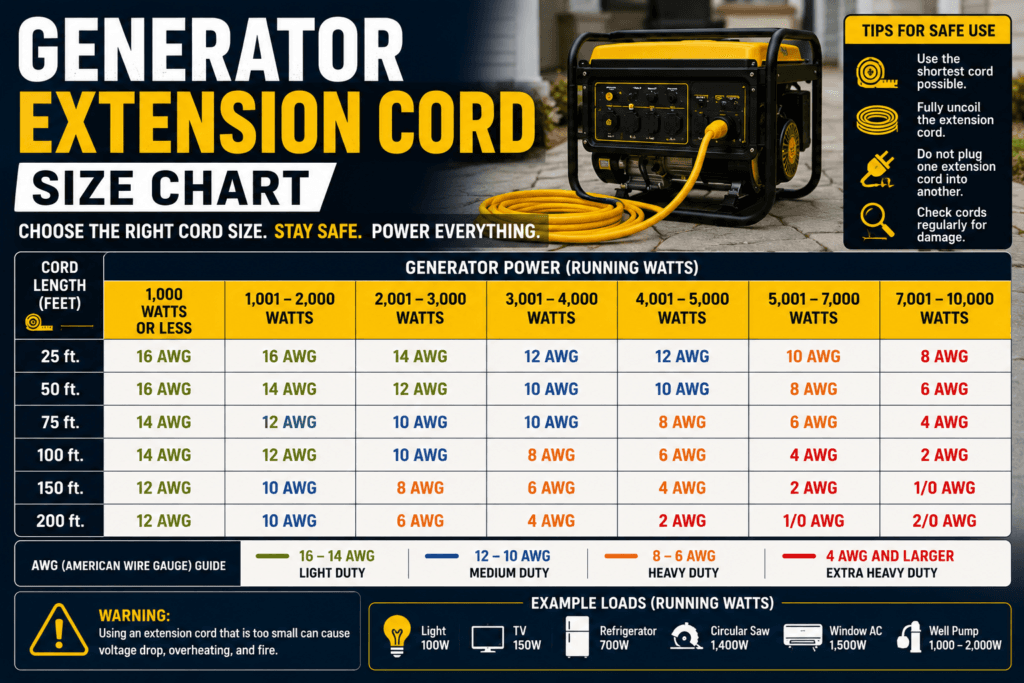
Choosing the right extension cord for your generator is just as important as choosing the generator itself. An undersized extension cord can cause voltage drop, overheating, reduced appliance performance, and even fire hazards.
In this guide, you’ll learn how to choose the correct generator extension cord size, understand wire gauge (AWG), determine the proper cord length, and avoid common mistakes that can damage your equipment.
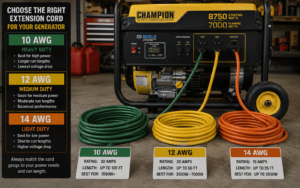
Why Extension Cord Size Matters
Every extension cord has a maximum amount of electricity it can safely carry.
If the cord is too small for the electrical load, it can:
- Overheat
- Melt insulation
- Damage appliances
- Reduce generator performance
- Cause voltage drop
- Create a fire hazard
Using the correct wire gauge helps ensure your generator delivers power safely and efficiently.
Understanding Wire Gauge (AWG)
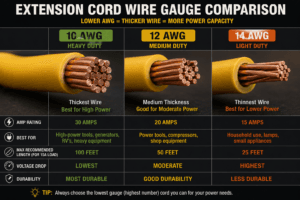
Extension cords are rated using American Wire Gauge (AWG).
Here’s the important rule:
The lower the AWG number, the thicker the wire.
Examples:
- 10 AWG = Very thick
- 12 AWG = Thick
- 14 AWG = Medium
- 16 AWG = Thin
Thicker wire carries more current and allows for longer cable runs with less voltage drop.
Generator Extension Cord Size Chart
| Wire Gauge | Maximum Recommended Load | Typical Uses |
|---|---|---|
| 10 AWG | Up to 30 amps | Large portable generators, transfer switches, RV connections |
| 12 AWG | Up to 20 amps | Refrigerators, freezers, sump pumps, power tools |
| 14 AWG | Up to 15 amps | Lights, TVs, fans, small appliances |
| 16 AWG | Up to 10 amps | Phone chargers, lamps, electronics only |
Always verify that both your extension cord and generator are rated for the load you’re connecting.
Choosing the Right Cord Length
As extension cords get longer, voltage drop increases.
General recommendations:
| Cord Length | Recommended Minimum Wire Gauge |
|---|---|
| Up to 25 ft | 14 AWG (light loads), 12 AWG (heavier loads) |
| 25–50 ft | 12 AWG |
| 50–100 ft | 10 AWG |
| Over 100 ft | 10 AWG or consult manufacturer recommendations |
If you need a longer run, use a heavier-gauge cord rather than connecting multiple cords together.
Best Extension Cord for Common Appliances
| Appliance | Recommended Cord |
|---|---|
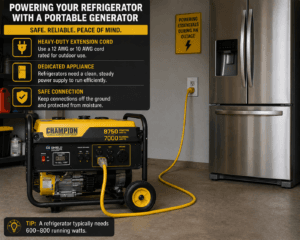
| Refrigerator | 12 AWG |
| Freezer | 12 AWG |
| Sump Pump | 12 AWG or 10 AWG |
| Furnace Blower | 12 AWG |
| Microwave | 12 AWG |
| Window Air Conditioner | 10 AWG or 12 AWG |
| Power Tools | 12 AWG |
| LED Lights | 14 AWG |
| Television | 14 AWG |
| Internet Router | 14 AWG |
Indoor vs Outdoor Extension Cords
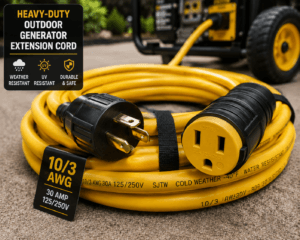
Always use extension cords that are:
- Rated for outdoor use
- Heavy-duty
- Weather resistant
- Grounded (3-prong)
- UL or ETL listed
Outdoor cords have thicker insulation that better withstands moisture, sunlight, and abrasion.
Generator Cord vs Household Extension Cord
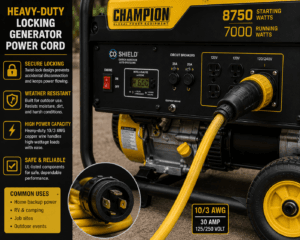
Generator cords are designed for higher electrical loads and typically include:
- Larger wire sizes
- Locking connectors
- Weather-resistant jackets
- Higher amp ratings
Standard household extension cords are not intended for powering an entire generator load.
Signs Your Extension Cord Is Too Small
Stop using the cord if you notice:
- Cord feels hot
- Plug becomes hot
- Lights dim
- Generator struggles under load
- Breakers trip
- Burning smell
- Cord insulation softens
These are signs that the cord may be overloaded or undersized.
Tips for Safe Generator Cord Use
Always:
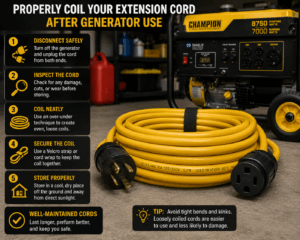
- Fully uncoil extension cords before use.
- Inspect cords for cuts or damage.
- Keep cords away from standing water.
- Protect connectors from rain.
- Use grounded (3-prong) cords.
- Replace damaged cords immediately.
- Store cords dry after use.
Common Mistakes to Avoid
Avoid these common errors:
- Using lightweight indoor extension cords
- Connecting multiple extension cords together
- Using damaged cords
- Overloading one extension cord
- Running cords through standing water
- Pinching cords in doors or windows
- Ignoring the cord’s amp rating
- Buying the cheapest cord instead of the correct gauge
Frequently Asked Questions
Can I use a regular household extension cord with my generator?
Only if the cord is properly rated for the electrical load and is approved for outdoor use. Many standard household cords are too light-duty for generator applications.
Is a thicker extension cord better?
Generally, yes. Thicker cords (lower AWG numbers) handle higher electrical loads and reduce voltage drop over longer distances.
Can I connect two extension cords together?
It’s best to avoid it. Using one properly sized cord of the required length is safer and helps minimize voltage drop.
Should generator extension cords have three prongs?
Yes. For most household applications, use grounded three-prong extension cords that match the generator’s receptacles.
How often should I inspect my generator cords?
Inspect them before every use for cuts, cracked insulation, damaged plugs, loose connectors, or signs of overheating.
Final Thoughts
Using the correct generator extension cord is essential for safe and reliable backup power. A heavy-duty outdoor-rated cord with the proper wire gauge helps protect your generator, appliances, and home from unnecessary risks.
When in doubt, choose a thicker (lower AWG) extension cord that’s rated for your generator’s output and the distance you’ll be running it. It’s a small investment that can improve both safety and performance during every power outage.