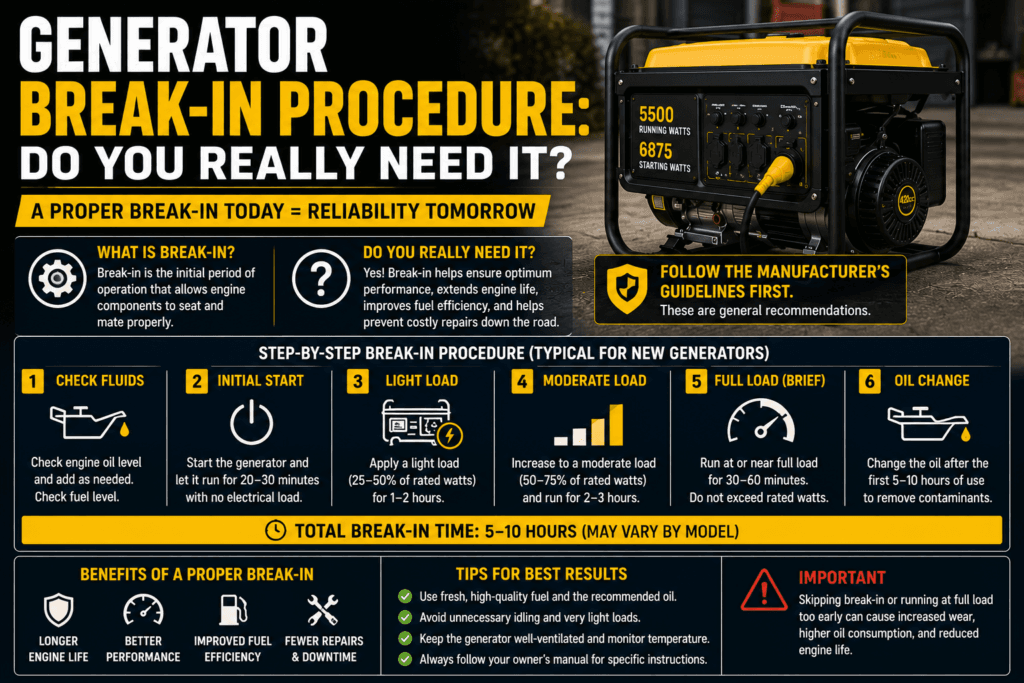
If you’ve just purchased a new portable generator, you’ve probably heard someone mention the “break-in period.” Some owners follow a detailed break-in procedure before putting their generator into regular service, while others simply add oil, fuel it up, and start using it.
So, do you really need to break in a new generator?
In most cases, yes. A proper break-in helps engine components wear in correctly, removes tiny metal particles created during the first few hours of operation, and can contribute to long-term reliability. While every manufacturer has its own recommendations, understanding the purpose of the break-in process can help you get the best performance from your generator.
In this guide, we’ll explain what a generator break-in is, why it matters, and the general steps commonly recommended for many portable gasoline generators.
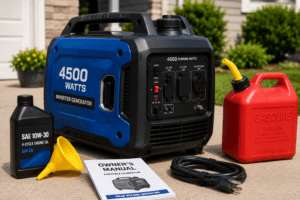
What Is a Generator Break-In?
A generator break-in is the initial operating period during which internal engine parts begin to seat and wear together properly.
During the first few hours of operation:
- Piston rings seat against the cylinder wall.
- Bearings begin wearing into their normal contact surfaces.
- Valvetrain components settle into place.
- Tiny manufacturing particles may collect in the engine oil.
This is why many manufacturers recommend an early oil change after the first several hours of operation.
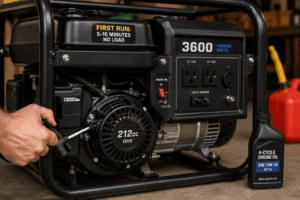
Why Is Breaking In a Generator Important?
Proper break-in may help:
- Extend engine life
- Improve compression
- Reduce long-term engine wear
- Improve fuel efficiency
- Remove metal particles from the engine oil
- Improve long-term reliability
Although today’s engines are manufactured with tighter tolerances than older models, the break-in period is still important for many small gasoline engines.
Should Every Generator Be Broken In?
Many portable gasoline generators benefit from a break-in period, but the exact procedure varies by manufacturer.
Some inverter generators and standby generators have different recommendations, so always read your owner’s manual before operating a new generator.
If your manufacturer provides specific instructions, those recommendations should take priority over general advice.
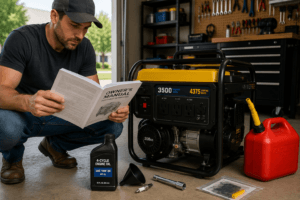
General Generator Break-In Procedure
While procedures differ between brands, many manufacturers recommend a process similar to the following:
Step 1: Add the Correct Engine Oil
Before starting the generator:
- Fill the crankcase with the recommended type and amount of oil.
- Double-check the oil level.
- Never start the engine without oil.
Step 2: Add Fresh Fuel
Use clean, fresh gasoline with the octane rating recommended by the manufacturer.
Avoid stale or contaminated fuel.
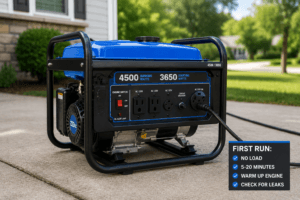
Step 3: Start the Generator
Move the generator outdoors to a well-ventilated location.
Allow the engine to warm up for several minutes before applying any electrical load.
Step 4: Operate Under a Moderate Load
Many manufacturers recommend running the generator with a moderate electrical load during much of the break-in period rather than operating it with no load for extended periods.
Examples include:
- A few lights
- A fan
- A refrigerator
- Small household appliances
Avoid overloading the generator.
Step 5: Vary the Load
Instead of running one constant load for hours, periodically changing the electrical demand allows the engine to experience different operating conditions during break-in.
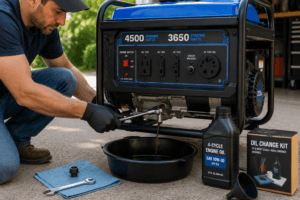
Step 6: Perform the First Oil Change
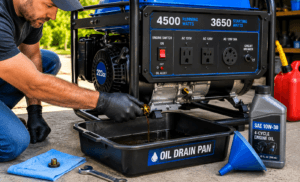
One of the most important break-in steps is changing the oil after the initial operating period recommended by the manufacturer.
The first oil change helps remove tiny metal particles that naturally occur as new engine components wear in.
What Happens If You Skip the Break-In?
Your generator will probably still operate, but skipping the manufacturer’s recommended break-in procedure may:
- Leave metal particles circulating in the engine oil longer than necessary.
- Reduce long-term engine efficiency.
- Increase engine wear over time.
- Affect warranty coverage if maintenance requirements are not followed.
Following the manufacturer’s recommendations is generally the safest approach.
Common Break-In Mistakes
Avoid these common errors:
- Running the generator without oil
- Ignoring the owner’s manual
- Overloading the generator immediately
- Running at full power for extended periods during the initial operating hours
- Forgetting the first oil change
- Using old gasoline
- Operating indoors
After the Break-In
Once the initial break-in period is complete:
Continue following your regular maintenance schedule.
Typical maintenance includes:
- Oil changes
- Air filter inspections
- Spark plug inspections
- Monthly exercise runs
- Fuel stabilizer for stored gasoline
- Annual inspections
Proper maintenance is far more important over the life of the generator than the break-in alone.
Signs Your Generator Is Running Properly
After the break-in period, your generator should:
- Start easily
- Idle smoothly
- Produce stable electrical power
- Respond well to changing electrical loads
- Consume oil at normal levels
- Operate without unusual noises or excessive smoke
If you notice abnormal vibration, smoke, or performance issues, inspect the generator or consult a qualified service technician.
Frequently Asked Questions
Do inverter generators need a break-in period?
Many inverter generators also have break-in recommendations, but the procedures may differ by manufacturer. Always check your owner’s manual.
When should I change the oil for the first time?
Many portable generator manufacturers recommend an early oil change after the initial break-in period. Refer to your owner’s manual for the exact interval.
Can I run my generator at full power during break-in?
It’s generally better to avoid prolonged operation at maximum load during the initial break-in period unless your manufacturer specifically recommends otherwise.
Should I use synthetic oil during break-in?
Use the oil type recommended in your owner’s manual. Some manufacturers specify conventional oil for the initial break-in, while others allow synthetic oil from the beginning.
Is breaking in a generator worth it?
Yes. Spending a little extra time during the first few hours of operation may help improve long-term reliability and is usually well worth the effort.
Final Thoughts
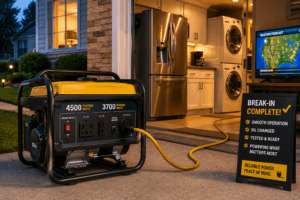
Breaking in a new generator is a simple process that can help set the stage for years of dependable service. By following your manufacturer’s recommendations, using fresh oil and fuel, avoiding excessive loads during the initial operating period, and performing the first oil change on schedule, you’ll give your generator the best possible start.
Whether you’re preparing for storm season, camping trips, or emergency backup power, a properly broken-in generator is more likely to deliver reliable performance when you need it most.