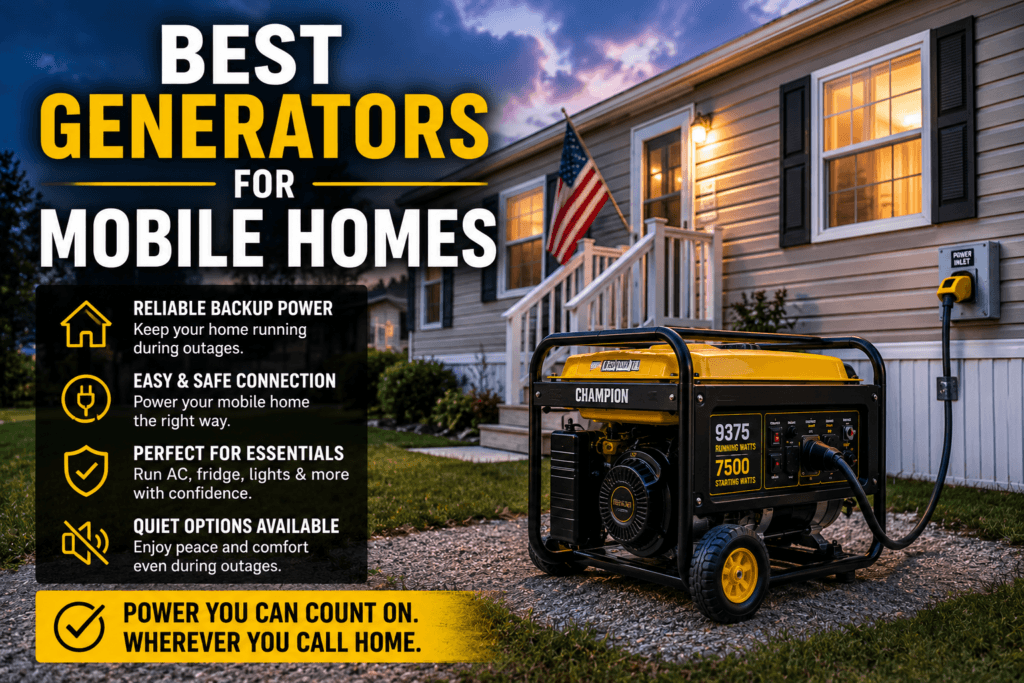
Power outages can be especially disruptive for mobile homeowners. Whether you’re dealing with severe storms, winter weather, or utility failures, having the right generator can keep your lights on, your refrigerator cold, and your heating or cooling system running.
The best generator for a mobile home depends on your electrical needs, fuel preference, and whether you want to power only the essentials or nearly the entire home.
In this guide, we’ll cover the best generators for mobile homes in 2026, explain what size generator you need, and help you choose the best backup power solution for your budget.
What Size Generator Do You Need for a Mobile Home?
Most mobile homes require between 5,000 and 10,000 running watts to operate essential appliances.
Typical running watt requirements include:
| Appliance | Approximate Running Watts |
|---|---|
| Refrigerator | 600–800 W |
| Freezer | 500–700 W |
| Furnace Blower | 600–1,200 W |
| Window Air Conditioner | 800–1,500 W |
| Microwave | 1,000–1,500 W |
| Lighting | 100–400 W |
| Television | 100–300 W |
| Wi-Fi Router | 10–30 W |
| Well Pump (if applicable) | 1,000–2,000 W |
Remember to include starting watts, since appliances with electric motors require extra power when they first start.
What Makes a Great Mobile Home Generator?
Look for these features:
- Reliable engine
- Dual-fuel capability
- Electric start
- Low fuel consumption
- Carbon monoxide shutdown
- Long runtime
- Multiple household outlets
- Transfer switch compatibility
Dual-fuel generators are especially popular because they can run on either gasoline or propane, providing additional flexibility during emergencies.
Our Top Picks
Best Overall
This generator offers enough power for most mobile homes, electric start, dual-fuel flexibility, and excellent customer reviews.
Best Quiet Generator
Ideal for homeowners who want quiet operation while powering essential appliances.
Best Budget Generator
A great entry-level option for keeping refrigerators, lights, fans, and small appliances running during short outages.
Best Large Home Backup
Excellent for larger mobile homes or homeowners wanting additional flexibility with gasoline, propane, or natural gas.
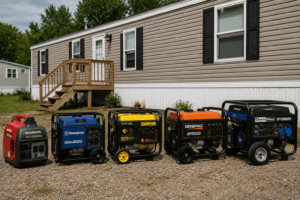
Portable Generator vs. Standby Generator
Portable Generator
Advantages:
- Lower purchase cost
- Portable
- Flexible fuel options
- Great for occasional outages
Disadvantages:
- Manual setup
- Requires refueling
- Must be started manually
Standby Generator
Advantages:
- Starts automatically
- Powers the home without manual intervention
- Connected to natural gas or propane
Disadvantages:
- Higher purchase and installation costs
- Professional installation required
For many mobile homeowners, a quality portable generator paired with a transfer switch or interlock kit provides an excellent balance between cost and convenience.
Fuel Options
Gasoline
Pros:
- Widely available
- Lower generator cost
- Easy to refill
Cons:
- Shorter storage life
- Requires fuel stabilizer
Propane
Pros:
- Long storage life
- Cleaner burning
- Easier long-term storage
Cons:
- Slightly reduced power output
Tri-Fuel
Pros:
- Gasoline
- Propane
- Natural gas
Excellent for homeowners wanting maximum flexibility during extended outages.
Transfer Switch or Extension Cords?
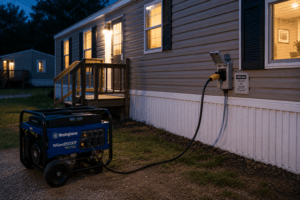
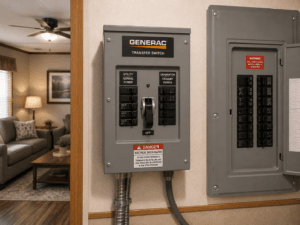
For mobile homes, a properly installed transfer switch or compatible interlock kit is often the safest and most convenient solution.
Benefits include:
- Safe connection
- No extension cords throughout the home
- Prevents dangerous backfeeding
- Easier operation during emergencies
If you’re only powering a few appliances, heavy-duty outdoor-rated extension cords can also be a practical option.
Generator Safety Tips
Always:
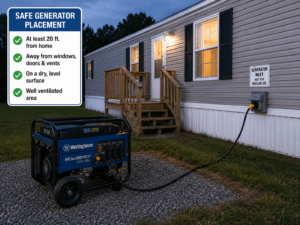
- Operate generators outdoors.
- Keep them away from doors, windows, and vents.
- Install carbon monoxide detectors.
- Store fuel safely.
- Test your generator monthly.
- Change the oil according to the manufacturer’s maintenance schedule.
Never run a fuel-powered generator inside a mobile home, under skirting, or in an enclosed porch because of the serious risk of carbon monoxide poisoning.
Common Mistakes to Avoid
Avoid these common errors:
- Buying a generator that’s too small
- Forgetting starting watts
- Running the generator indoors
- Overloading the generator
- Using undersized extension cords
- Storing untreated gasoline
- Ignoring routine maintenance
- Waiting until an outage to test the generator
Frequently Asked Questions
What size generator is best for a mobile home?
For many mobile homes, a generator in the 7,500 to 9,500 running watt range is enough to power essential appliances, lighting, and HVAC equipment. Larger homes or higher electrical demands may require more capacity.
Is a dual-fuel generator worth it?
Yes. Dual-fuel generators provide the flexibility to run on gasoline or propane, which can be valuable during extended outages when one fuel type becomes difficult to obtain.
Can I power my entire mobile home?
Many larger portable generators can power most essential circuits, but your actual capacity depends on the generator’s output and your home’s electrical load.
Should I install a transfer switch?
Yes. A transfer switch or approved interlock kit provides one of the safest ways to connect a generator to your home’s electrical system.
How often should I maintain my generator?
Follow the manufacturer’s maintenance schedule, including regular oil changes, air filter inspections, monthly exercise runs, and fuel system maintenance.
Final Thoughts
The best generator for your mobile home is one that matches your electrical needs without being unnecessarily oversized. For most homeowners, a 7,500–10,000-watt dual-fuel portable generator offers an excellent combination of power, flexibility, and value. Pair it with a properly installed transfer switch or interlock kit, maintain it regularly, and you’ll have dependable backup power whenever the next outage occurs.
With a little planning today, your mobile home can remain safe, comfortable, and powered through storms, grid failures, and unexpected emergencies.