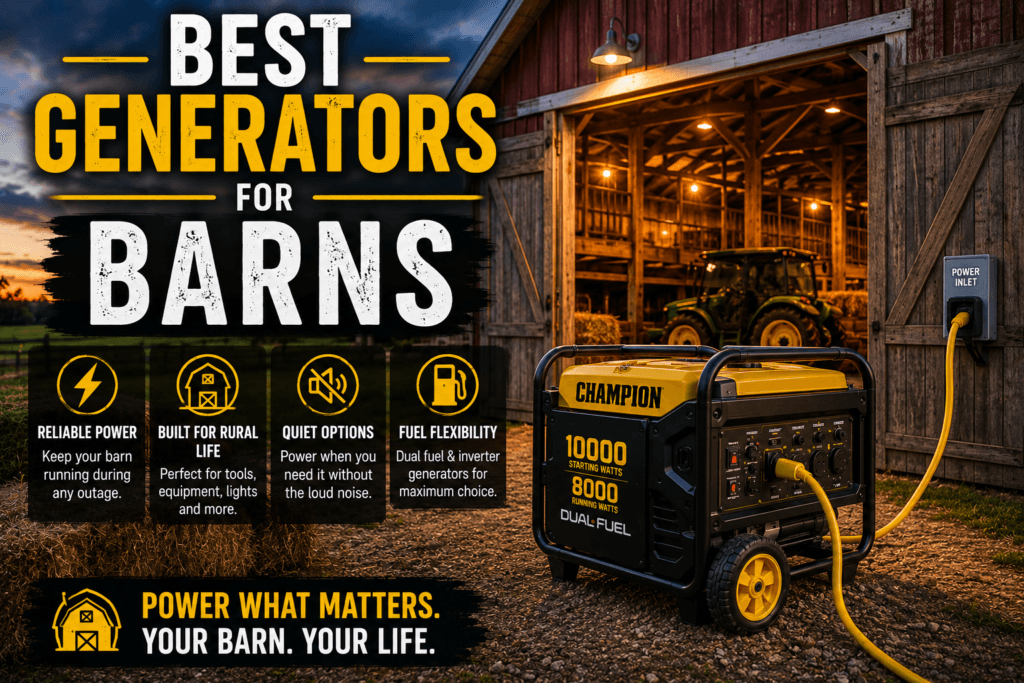
Whether you own a horse barn, livestock barn, hobby farm, or agricultural workshop, losing power can quickly become a serious problem. Water pumps stop working, lights go out, ventilation fans shut down, and freezers, tools, or security systems may stop operating.
A reliable generator can keep your barn functioning during outages and protect both your animals and equipment.
In this guide, we’ll cover the best generators for barns in 2026, explain what size generator you need, and help you choose the right backup power solution for your property.
Why Every Barn Should Have a Backup Generator
A power outage can affect much more than lighting.
A generator can keep essential systems running, including:
- Well pumps
- Livestock water systems
- Barn lighting
- Ventilation fans
- Freezers
- Security cameras
- Electric fences
- Feed equipment
- Battery chargers
- Workshop tools
Choosing the correct generator starts with calculating the running and starting wattage of the equipment you need to operate.
What Size Generator Does a Barn Need?
The right size depends on the equipment you plan to run.
Typical power requirements include:
| Equipment | Approximate Running Watts |
|---|---|
| LED Barn Lights | 100–500 W |
| Water Pump | 1,000–2,000 W |
| Deep Well Pump | 1,500–3,000 W |
| Ventilation Fan | 500–1,500 W |
| Refrigerator | 600–800 W |
| Chest Freezer | 500–700 W |
| Battery Charger | 100–500 W |
| Small Air Compressor | 1,500–2,000 W |
| Power Tools | 800–2,000 W |
Remember that motors require additional starting watts, which should be included when sizing your generator.
What to Look for in a Barn Generator
A quality barn generator should offer:
- High running wattage
- Long runtime
- Electric start
- Dual-fuel or tri-fuel capability
- Multiple 120V and 240V outlets
- Carbon monoxide shutdown
- Heavy-duty wheels
- Durable steel frame
If your barn uses a well pump or larger motors, make sure the generator has enough surge capacity for startup.
Our Top Picks
Best Overall
Westinghouse WGen9500DF
Why we like it:
- Dual-fuel operation
- Excellent runtime
- Electric start
- Plenty of power for most barns
- Transfer switch compatible
Best for:
- Horse barns
- Hobby farms
- Small livestock operations
Best Large Barn Generator
DuroMax XP13000HXT Tri-Fuel
Why we like it:
- Tri-fuel capability
- High starting wattage
- Excellent for wells and large pumps
- Long runtime
- Heavy-duty construction
Best for:
- Large barns
- Farms
- Workshops
- Multiple buildings
Best Quiet Option
Honda EU7000iS Inverter Generator
Why we like it:
- Extremely quiet
- Excellent fuel efficiency
- Clean power for electronics
- Reliable electric start
Best for:
- Horse barns
- Residential properties
- Noise-sensitive areas
Best Budget Generator
Champion 6500-Watt Dual Fuel Generator
Why we like it:
- Affordable
- Reliable
- Easy to transport
- Good balance of power and price
Best for:
- Small barns
- Weekend properties
- Hobby farms
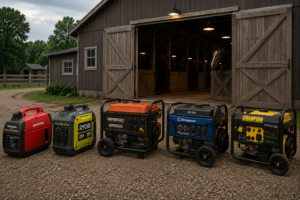
Portable vs. Standby Generator
Portable Generator
Advantages:
- Lower purchase price
- Easy to move
- Works for multiple buildings
- Available in gasoline, propane, and dual-fuel models
Best for:
- Most homeowners
- Hobby farms
- Seasonal barns
Standby Generator
Advantages:
- Automatic startup
- Permanently installed
- Can operate for extended outages
- Connected to natural gas or propane
Best for:
- Commercial farms
- Large livestock operations
- Barns with critical electrical systems
Best Fuel Type
Gasoline
Pros:
- Easy to find
- Lower generator cost
- High power output
Cons:
- Limited storage life
- Requires fuel rotation
Propane
Pros:
- Cleaner burning
- Long shelf life
- Easier long-term storage
Cons:
- Slightly lower power output
Tri-Fuel
Many barn owners appreciate tri-fuel generators because they can run on gasoline, propane, or natural gas, providing flexibility during extended emergencies.
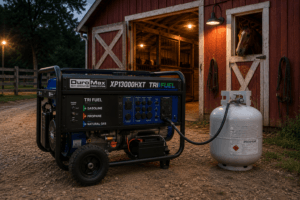
Connecting a Generator to Your Barn
For the safest installation, many barn owners choose:
- Manual transfer switch
- Interlock kit (when compatible)
- Exterior generator inlet box
These methods allow you to power existing electrical circuits safely while preventing dangerous backfeeding.
Avoid plugging a generator into a wall outlet or using homemade connection methods.
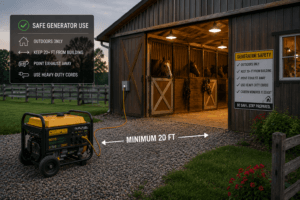
Generator Safety Around Animals
Always:
- Operate generators outdoors only.
- Keep generators away from hay, straw, bedding, and other flammable materials.
- Point the exhaust away from animal housing.
- Allow plenty of ventilation.
- Install carbon monoxide detectors where appropriate.
- Protect cords from chewing and tripping hazards.
- Keep curious animals away from hot engine and exhaust components.
Never run a gasoline, propane, or diesel generator inside a barn because carbon monoxide can accumulate quickly and become deadly.
Common Mistakes to Avoid
Avoid these common errors:
- Buying a generator that’s too small
- Forgetting starting watts
- Running the generator inside the barn
- Using undersized extension cords
- Ignoring routine maintenance
- Storing untreated gasoline
- Waiting until an outage to test the generator
- Failing to protect the generator from weather while maintaining proper ventilation
Frequently Asked Questions
What size generator is best for a horse barn?
Many horse barns do well with generators in the 7,500 to 12,000 running watt range, depending on whether you’re powering pumps, fans, lights, or additional equipment.
Should I buy a dual-fuel generator?
Yes. Dual-fuel generators provide flexibility by allowing you to use gasoline or propane during extended outages.
Can I power my entire barn?
Yes, if your generator is properly sized and connected through a transfer switch or approved interlock kit.
Are inverter generators good for barns?
Yes, especially if quiet operation is important or you’re powering sensitive electronics. Conventional generators are often better for large motors and heavy equipment.
How often should I maintain my generator?
Follow the manufacturer’s maintenance schedule, including oil changes, air filter inspections, spark plug checks, monthly exercise runs, and fuel system maintenance.
Final Thoughts
The best generator for your barn depends on the equipment you need to keep running during a power outage. For most property owners, a 7,500–12,000-watt dual-fuel portable generator offers an excellent balance of power, flexibility, and value. Larger farms or barns with multiple pumps and heavy electrical loads may benefit from a high-capacity tri-fuel or standby generator.
By selecting the right generator, maintaining it regularly, and following safe operating practices, you’ll help ensure your barn, livestock, and equipment remain protected whenever the power goes out.