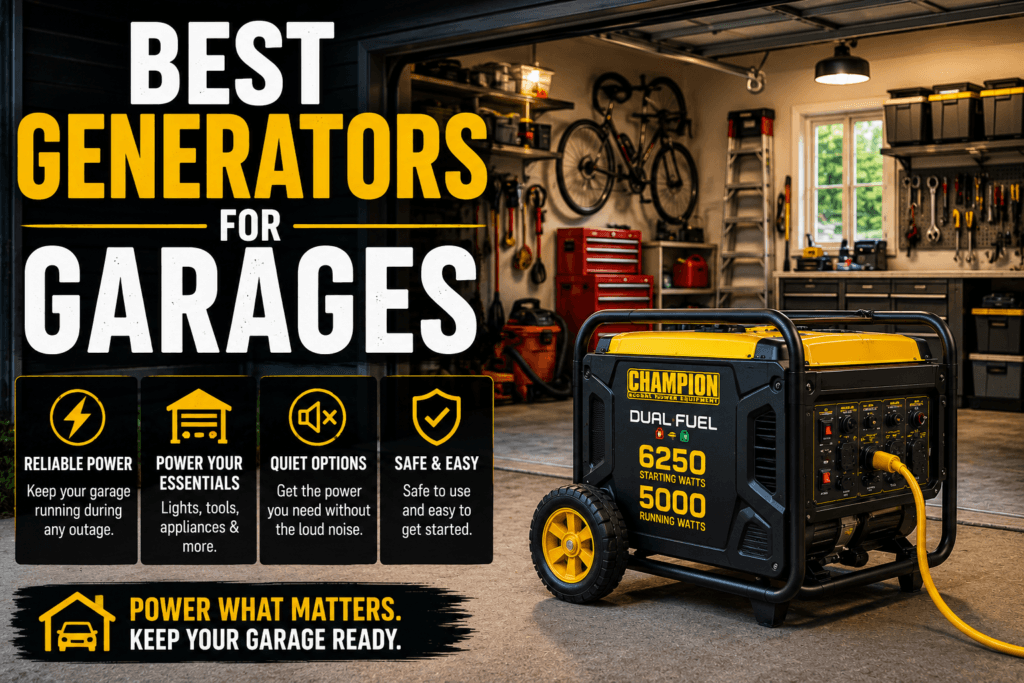
Whether you use your garage as a workshop, home gym, storage area, or place to work on vehicles, a power outage can bring everything to a halt. A reliable generator can keep your garage lights on, power your tools, charge batteries, and even keep your garage door opener working during emergencies.
The best generator for your garage depends on what you plan to power. A homeowner who only needs lighting and a freezer has very different needs than someone running air compressors, welders, or woodworking equipment.
In this guide, we’ll help you choose the best generator for your garage in 2026 and explain which features matter most.
What Size Generator Does a Garage Need?
Most garages require 2,000 to 9,500 running watts, depending on the equipment being used.
Typical power requirements include:
| Equipment | Approximate Running Watts |
|---|---|
| LED Garage Lights | 100–300 W |
| Garage Door Opener | 350–600 W |
| Refrigerator | 600–800 W |
| Chest Freezer | 500–700 W |
| Air Compressor | 1,500–3,000 W |
| Shop Vacuum | 800–1,500 W |
| Battery Charger | 100–500 W |
| Circular Saw | 1,200–1,800 W |
| Table Saw | 1,500–2,000 W |
| Space Heater | 1,500 W |
Always calculate both running watts and starting watts before purchasing a generator. Larger tools with electric motors require additional power when starting.
What Makes a Great Garage Generator?
Look for these features:
- Reliable engine
- Long runtime
- Electric start
- Quiet operation
- Dual-fuel capability
- Multiple household outlets
- 120V and 240V receptacles
- Carbon monoxide shutdown
- Heavy-duty wheels
- Easy maintenance
For garages that include computers, battery chargers, or other sensitive electronics, an inverter generator provides cleaner electrical power.
Our Top Picks
Best Overall
Why we like it:
- Powerful enough for most home garages
- Runs on gasoline or propane
- Electric start
- Long runtime
- Excellent value
- Transfer switch compatible
Best for:
- Home garages
- Automotive work
- Woodworking
- Backup power
Best Quiet Garage Generator
Why we like it:
- Extremely quiet
- Clean inverter power
- Excellent fuel efficiency
- Highly reliable
- Lightweight and portable
Perfect for battery chargers, lighting, garage door openers, and electronics. Honda continues to be regarded as one of the industry’s most reliable portable generator brands.
Best Mid-Size Choice
Why we like it:
- Quiet inverter technology
- Long runtime
- Electric start
- Clean power
- Easy portability
Excellent for homeowners who want enough power for tools while keeping noise levels low.
Best Heavy-Duty Garage Generator
Why we like it:
- Runs on gasoline, propane, or natural gas
- High starting wattage
- Excellent for large compressors and heavy-duty tools
- Remote electric start
Ideal for serious workshops and garages with high electrical demands.
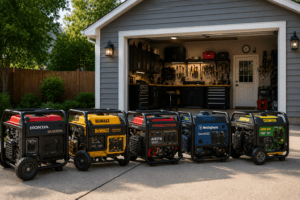
Inverter vs Conventional Generators
Inverter Generators
Advantages:
- Quiet operation
- Better fuel efficiency
- Clean electricity
- Lightweight
- Ideal for electronics
Best for:
- Battery chargers
- Garage lighting
- Home workshops
- Computers
- Small power tools
Conventional Generators
Advantages:
- Higher power output
- Lower cost per watt
- Excellent for heavy-duty tools
- Better for large startup loads
Best for:
- Air compressors
- Large saws
- Welders (if generator capacity is sufficient)
- Multiple power tools
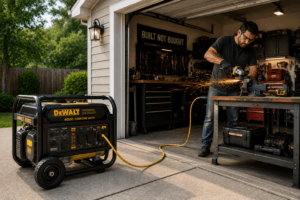
Should You Choose a Dual-Fuel Generator?
For many homeowners, the answer is yes.
Dual-fuel generators provide:
- Gasoline or propane operation
- Longer emergency fuel options
- Cleaner operation on propane
- More flexibility during extended outages
If gasoline becomes difficult to find after a storm, propane can be an excellent backup fuel.
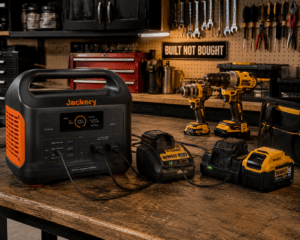
Portable Generator vs. Portable Power Station
Portable power stations work well for:
- Charging cordless tool batteries
- Laptops
- LED lighting
- Phones
- Small electronics
Fuel-powered generators remain the better choice for high-demand equipment like compressors, saws, and large shop vacuums.
Generator Safety for Garages
One of the most important safety rules is:
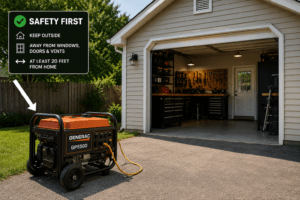
Never operate a gasoline, propane, or diesel generator inside a garage—even if the garage door is open.
Generators produce carbon monoxide, an odorless, colorless gas that can quickly become deadly.
Always:
- Operate generators outdoors.
- Place them at least 20 feet from doors, windows, and vents whenever possible.
- Point the exhaust away from occupied areas.
- Install carbon monoxide detectors.
- Use heavy-duty outdoor-rated extension cords.
- Store fuel in approved containers.
Common Mistakes to Avoid
Avoid these common errors:
- Running a generator inside the garage
- Buying too little generator capacity
- Ignoring starting watts
- Overloading the generator
- Using lightweight extension cords
- Skipping oil changes
- Using stale gasoline
- Waiting until an outage to test your generator
Frequently Asked Questions
What size generator is best for a garage?
For most homeowners, a 4,500 to 7,500 running watt generator is enough to power lights, a garage door opener, refrigerators, and many power tools.
Can a generator run an air compressor?
Yes. Just make sure the generator has enough starting wattage to handle the compressor’s startup surge.
Are inverter generators good for garages?
Yes. They’re quieter, more fuel-efficient, and produce clean electricity that’s ideal for battery chargers, electronics, and precision tools.
Should I buy a dual-fuel generator?
If you want the flexibility of using gasoline or propane during emergencies, a dual-fuel generator is an excellent choice.
Can I run a generator inside my garage if I leave the door open?
No. Even with the garage door open, dangerous levels of carbon monoxide can build up. Always operate fuel-powered generators outdoors.
Final Thoughts
The best generator for your garage depends on how you use the space. For most homeowners, a 4,500–9,500-watt dual-fuel generator offers an excellent combination of power, flexibility, and value. If you mainly power electronics or lighter tools, a quiet inverter generator is an outstanding choice.
No matter which generator you choose, always operate it outdoors, maintain it regularly, and size it correctly for your equipment. With the right backup power solution, your garage will remain productive and functional even during extended power outages.