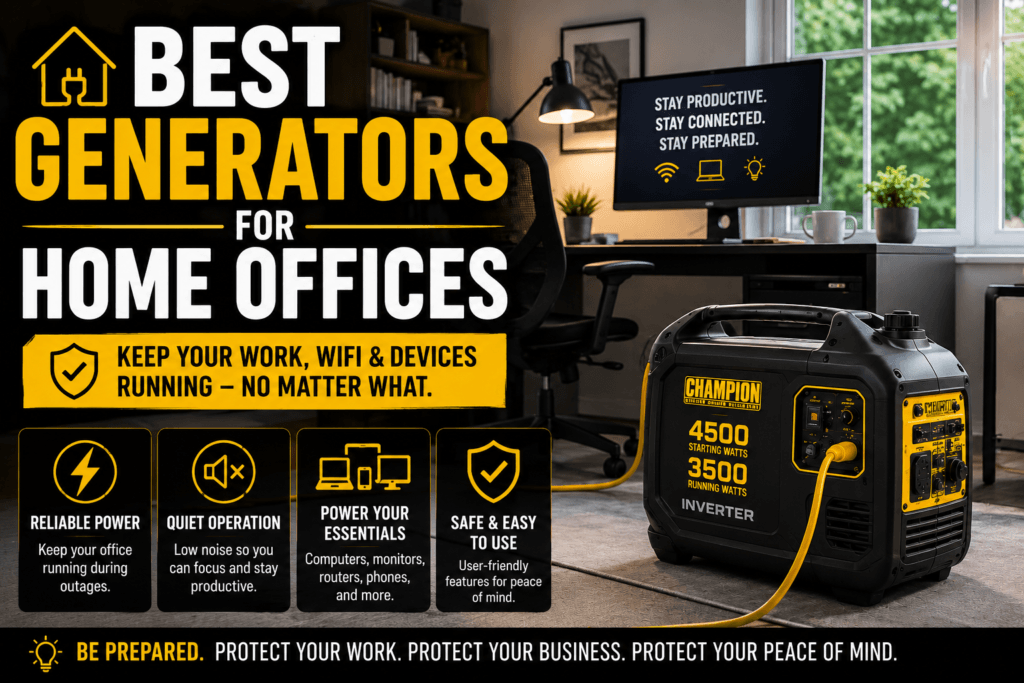
Working from home has become the new normal for millions of people, and a power outage can instantly bring your workday to a halt. Losing electricity means no internet, no computer, no monitors, and no way to attend meetings or meet deadlines.
Whether you’re a remote employee, freelancer, small business owner, or full-time entrepreneur, having reliable backup power for your home office can keep you productive when the grid goes down.
In this guide, we’ll cover the best generators and portable power stations for home offices, explain what size backup power you need, and help you choose the right solution for your workspace.
How Much Power Does a Home Office Need?
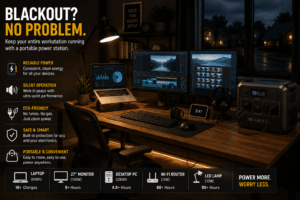
Most home offices require 300 to 2,000 running watts, depending on the equipment being used.
Typical power requirements include:
| Device | Approximate Running Watts |
|---|---|
| Laptop | 50–100 W |
| Desktop Computer | 200–500 W |
| Dual Monitors | 60–150 W |
| Wi-Fi Router | 10–30 W |
| Printer | 100–600 W |
| Desk Lamp | 10–50 W |
| Phone Charger | 10–20 W |
| External Hard Drive | 10–25 W |
| Small Space Heater | 1,500 W |
Most home office equipment doesn’t require a large generator, making smaller inverter generators and portable power stations excellent choices
What Makes a Great Home Office Generator?
The best home office backup power solution should provide:
- Clean electricity for sensitive electronics
- Quiet operation
- Reliable runtime
- Fuel efficiency
- Easy portability
- Fast startup
- Low maintenance
For most people working from home, a portable power station or inverter generator is a better fit than a large conventional generator because it produces cleaner electricity for computers and networking equipment. Modern portable power stations also offer fast UPS-style switchover on many models, helping keep computers and networking gear running during brief outages.
Our Top Picks
Best Overall Portable Power Station
Why we like it:
- Quiet operation
- Fast charging
- Excellent UPS capability
- Plenty of capacity for laptops, monitors, routers, and office equipment
- Safe for indoor use
Best Budget Portable Power Station
Why we like it:
- Compact
- Affordable
- Perfect for laptops, phones, routers, and small office equipment
- Lightweight
Best Portable Generator
Why we like it:
- Quiet inverter technology
- Clean sine wave power
- Fuel efficient
- Excellent for powering office equipment when operated outdoors
Best Premium Generator
Why we like it:
- Extremely quiet
- Outstanding reliability
- Long runtime
- Clean power for computers and electronics
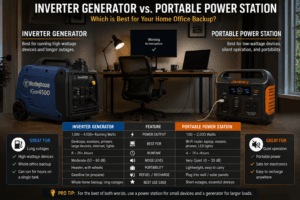
Portable Power Station vs. Generator
Portable Power Station
Advantages:
- Safe for indoor use
- Silent operation
- No gasoline required
- No exhaust fumes
- Minimal maintenance
- Excellent for electronics
Best for:
- Laptops
- Desktop computers
- Wi-Fi routers
- Monitors
- Printers
- Phone charging
Inverter Generator
Advantages:
- Longer runtime with refueling
- Higher power output
- Excellent for extended outages
- Can power additional household appliances
Remember that fuel-powered generators must always be operated outdoors, never inside your home or garage.
Should You Buy a UPS?
A UPS (Uninterruptible Power Supply) is different from a generator.
A UPS:
- Keeps your computer running for several minutes
- Prevents data loss
- Gives you time to save your work
- Bridges the gap until your generator or power station takes over
Many remote workers use both a UPS and a generator or portable power station for maximum protection.
Choosing the Right Generator Size
If your goal is only to power a home office, you usually don’t need a large generator.
General recommendations:
- 300–600 watts: Laptop, router, phone charging
- 600–1,200 watts: Desktop computer, dual monitors, networking equipment
- 1,500–2,500 watts: Entire office plus refrigerator or additional appliances
Buying more power than you need increases cost, fuel consumption, and noise.
Generator Safety Tips
Always:
- Operate gasoline or propane generators outdoors only.
- Keep generators away from doors, windows, and vents.
- Install carbon monoxide detectors.
- Use heavy-duty extension cords.
- Test your backup power system regularly.
- Keep fuel stored safely in approved containers.
Portable power stations, by contrast, produce no exhaust fumes and are designed for indoor operation.
Common Mistakes to Avoid
Avoid these common errors:
- Buying an oversized generator
- Running a fuel-powered generator indoors
- Forgetting to test backup equipment
- Ignoring battery maintenance
- Overloading the generator
- Using lightweight extension cords
- Waiting until an outage to learn how your backup system works
Frequently Asked Questions
What is the best backup power for a home office?
For most remote workers, a portable power station provides the best combination of quiet operation, clean electricity, and indoor safety.
Can a portable power station run my computer all day?
Depending on its battery capacity and your computer’s power consumption, many portable power stations can keep a typical home office running for several hours. Larger models can provide even longer runtime.
Are inverter generators safe for computers?
Yes. Quality inverter generators produce clean, stable electricity that’s suitable for sensitive electronics when used according to the manufacturer’s instructions.
Should I buy a UPS and a generator?
If you work from home full-time, combining a UPS with either a portable power station or an inverter generator provides excellent protection against both brief and extended outages.
Can I use a gasoline generator inside my home office?
No. Fuel-powered generators should never be operated indoors because they produce carbon monoxide. Always use them outdoors in accordance with the manufacturer’s instructions.
Final Thoughts
For most people working from home, a portable power station is the best overall backup power solution because it’s quiet, produces no emissions, and is safe to use indoors. If you need longer runtime or want to power additional household appliances during extended outages, a quiet inverter generator is an excellent choice when operated safely outdoors.
With the right backup power system in place, you’ll be able to stay connected, protect your equipment, and continue working even when the power goes out.