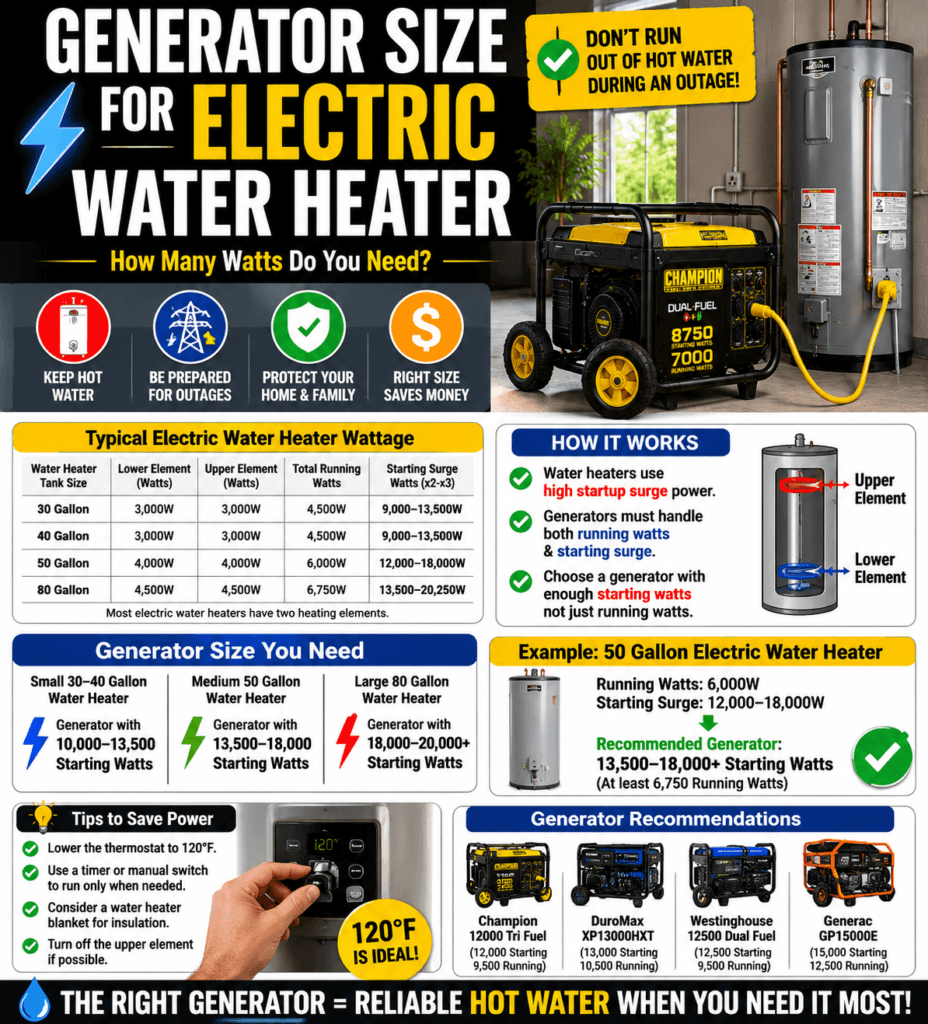
If you’re planning for a power outage, one of the biggest questions homeowners ask is:
“What size generator do I need to run my electric water heater?”
Electric water heaters are among the largest power-consuming appliances in most homes. While many portable generators can easily power lights, refrigerators, and electronics, an electric water heater often requires significantly more capacity.
In this guide, we’ll explain how many watts an electric water heater uses, what size generator you’ll need, and which generators are the best options in 2026.
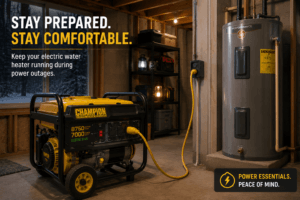
How Many Watts Does an Electric Water Heater Use?
Most residential electric water heaters use between 3,000 and 5,500 watts while heating water.
Here are common sizes:
| Water Heater Size | Typical Wattage |
|---|---|
| Small (20–30 Gallon) | 3,000–3,500 W |
| Medium (40 Gallon) | 4,500 W |
| Large (50 Gallon) | 4,500–5,500 W |
| Large (80 Gallon) | 5,500 W |
Most standard residential electric water heaters use 4,500-watt heating elements. Many models contain two heating elements, but only one element normally operates at a time. (energy.gov)
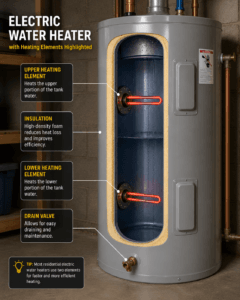
What Size Generator Do You Need?
The right generator depends on whether you want to power only the water heater or additional household appliances.
Water Heater Only
For a typical 4,500-watt electric water heater, a generator with at least:
- 6,000–7,500 running watts
is generally recommended to provide a safety margin.
Water Heater Plus Other Appliances
If you also want to power:
- Refrigerator
- Freezer
- Lights
- Internet
- Television
- Microwave
You’ll likely need a generator with:
- 8,000–12,000 running watts
depending on your total electrical load.
Always calculate the combined running watts of everything you plan to operate at the same time.
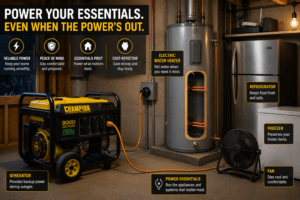
Do Electric Water Heaters Have Starting Watts?
Unlike appliances with electric motors, a standard resistance electric water heater does not have a large compressor-style startup surge.
However:
- Heating elements draw substantial continuous power.
- Other appliances running simultaneously may increase your total generator requirements.
- Breaker sizes and wiring must still match the manufacturer’s specifications.
Our Top Picks
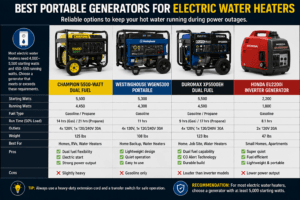
Best Overall
Westinghouse WGen9500DFc Dual Fuel Portable Generator
Why we like it:
- Plenty of power for most 4,500-watt water heaters
- Runs on gasoline or propane
- Electric start
- Long runtime
- Great value
Best for:
- Electric water heaters
- Refrigerators
- Lighting
- Home backup
Best Heavy-Duty Choice
DuroMax XP13000HXT Tri-Fuel Portable Generator
Why we like it:
- High continuous output
- Excellent for multiple appliances
- Tri-fuel flexibility
- Ideal for larger homes
Best Premium Option
Westinghouse WGen11500TFc Tri-Fuel Generator
Excellent for:
- Whole-home backup
- Large water heaters
- Multiple major appliances
- Long-duration outages
Best Budget Choice
WEN DF1100X Dual Fuel Generator
A strong value for homeowners who need enough capacity to run an electric water heater and several essential circuits without overspending.
Can You Run a Water Heater and Central Air Together?
Possibly—but it depends on your generator’s capacity.
Running these at the same time may require a generator capable of handling:
- Electric water heater
- Central air conditioner
- Refrigerator
- Lights
- Other household loads
For many homes, this means a large portable generator or a standby generator.
If your generator capacity is limited, consider turning off the water heater temporarily while the air conditioner starts to reduce the electrical load.
Portable vs. Standby Generator
Portable Generator
Advantages:
- Lower purchase cost
- Portable
- Available in gasoline, propane, and tri-fuel models
- Excellent for occasional outages
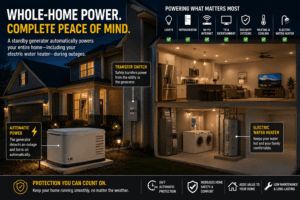
Standby Generator
Advantages:
- Automatic startup
- Permanently installed
- Can power major appliances automatically
- Ideal for long outages
If maintaining hot water during every outage is important, a standby generator provides the most convenient solution.
Safety Tips
Always:
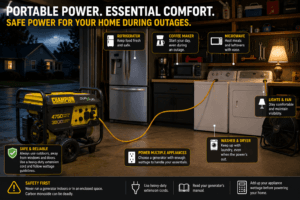
- Operate portable generators outdoors.
- Keep generators well away from doors, windows, and vents.
- Install carbon monoxide detectors.
- Use a properly installed transfer switch or approved interlock kit.
- Follow the generator manufacturer’s maintenance schedule.
- Test your generator regularly.
Never connect a generator directly to a household outlet.
Common Mistakes to Avoid
Avoid these common errors:
- Buying a generator that’s too small
- Forgetting to calculate total household load
- Running too many appliances at once
- Operating a generator indoors
- Ignoring maintenance
- Using undersized extension cords
- Waiting until an outage to test your setup
Frequently Asked Questions
Can a 5,000-watt generator run a 4,500-watt water heater?
It may be able to power the water heater alone under some conditions, but it leaves little capacity for other loads. A larger generator is generally recommended for better performance and flexibility.
Does an electric water heater have startup surge?
A standard electric resistance water heater does not have the large startup surge associated with motors or compressors.
Should I buy a dual-fuel generator?
Yes. Dual-fuel generators provide the flexibility to run on gasoline or propane, which can be helpful during extended outages.
Can I run my refrigerator too?
Yes, provided your generator has enough remaining capacity after accounting for the water heater and all other connected loads.
Do I need a transfer switch?
Yes. A properly installed transfer switch or approved interlock kit is the safest way to connect a portable generator to your home’s electrical system.
Final Thoughts
Electric water heaters are among the largest continuous electrical loads in most homes, so choosing the right generator is essential. For a typical 4,500-watt water heater, a 6,000–7,500 running watt generator is usually a good starting point, while homeowners who want to power additional appliances should consider an 8,000–12,000 watt generator.
Before purchasing, calculate your home’s total electrical demand and select a generator with enough capacity to comfortably handle both your water heater and any other essential appliances you’ll need during an outage.