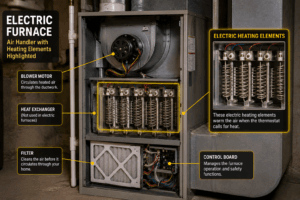
If your home relies on an electric furnace for heat, choosing the right generator is critical. Unlike gas furnaces—which only need electricity for the blower motor and controls—an electric furnace uses powerful heating elements that consume a significant amount of electricity.
Many homeowners underestimate how much power an electric furnace requires, only to discover during a winter outage that their generator isn’t large enough.
In this guide, you’ll learn how much electricity an electric furnace uses, what size generator you’ll need, and which generators are the best options for keeping your home warm during a power outage.
How Much Power Does an Electric Furnace Use?
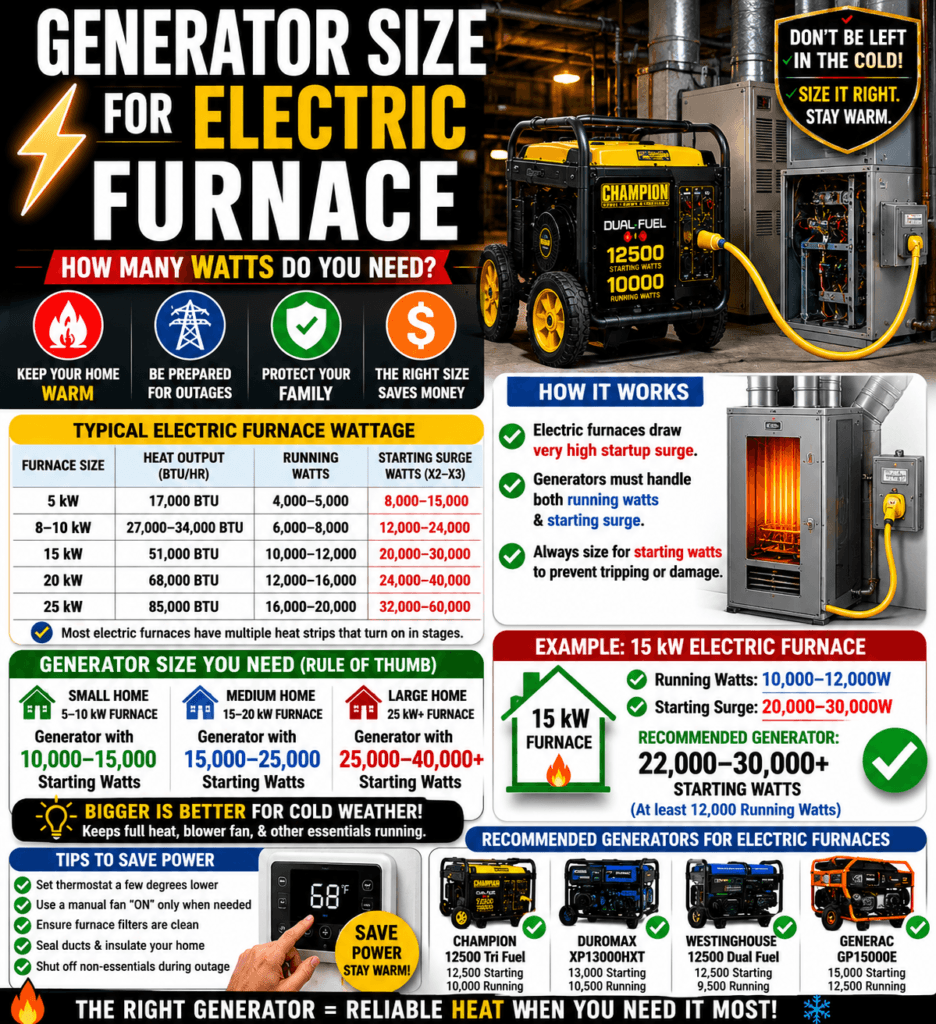
Electric furnaces vary widely in size, but they typically require 10,000 to 25,000+ watts while heating.
Here are common examples:
| Electric Furnace Size | Approximate Running Watts |
|---|---|
| Small (10 kW) | 10,000 W |
| Medium (15 kW) | 15,000 W |
| Large (20 kW) | 20,000 W |
| Extra Large (25 kW) | 25,000 W |
Unlike central air conditioners, electric furnaces generally use electric resistance heating elements, which create very high continuous electrical demand rather than large compressor startup surges. (energy.gov)
Can a Portable Generator Run an Electric Furnace?
Sometimes—but often no.
Many portable generators produce between:
- 3,000 watts
- 5,000 watts
- 7,500 watts
- 9,500 watts
- 12,000 watts
While these are excellent for refrigerators, lights, sump pumps, and many other appliances, they are often too small for a full-size electric furnace.
Many homes with electric furnaces require either:
- A very large portable generator
- A permanently installed standby generator
Recommended Generator Size
Small Electric Furnace (10 kW)
Recommended generator:
- 12,000–15,000 running watts
Medium Electric Furnace (15 kW)
Recommended generator:
- 17,000–20,000 running watts
Large Electric Furnace (20 kW)
Recommended generator:
- 22,000–25,000 running watts
Extra-Large Electric Furnace (25 kW)
Recommended generator:
- 26,000+ running watts
These recommendations assume you’ll also want to power at least a few essential household appliances.
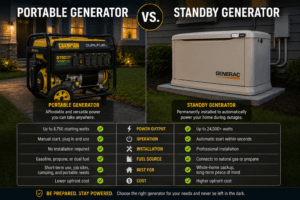
Portable vs. Standby Generator
Portable Generator
Advantages:
- Lower purchase price
- Portable
- Can power many household circuits
Disadvantages:
- Often too small for electric furnaces
- Manual setup
- Requires refueling
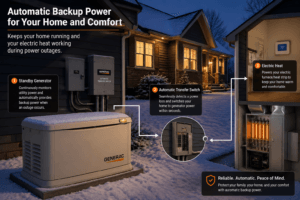
Standby Generator
Advantages:
- Starts automatically
- Can power large HVAC systems
- Long runtime
- Connected to natural gas or propane
- Excellent for homes with electric heat
For homes with electric furnaces, a standby generator is often the most practical long-term solution.
Our Top Picks
Best Portable Option
DuroMax XP15000HXT Tri-Fuel Generator
Why we like it:
- One of the largest portable generators available
- Excellent surge capacity
- Runs on gasoline, propane, or natural gas
- Electric start
Best for:
- Smaller electric furnaces
- Essential household circuits
- Emergency backup
Best Large Portable Generator
Westinghouse WGen14500TFc Tri-Fuel Generator
Why we like it:
- High continuous output
- Excellent runtime
- Tri-fuel flexibility
- Great whole-home backup
Best Standby Generator
Generac Guardian 24kW Standby Generator
Why we like it:
- Automatic startup
- Designed for large homes
- Excellent for electric heating systems
- Reliable whole-home backup
Best Premium Standby
Cummins QuietConnect 26kW
Ideal for:
- Large homes
- Electric furnaces
- Whole-home backup
- Long-duration outages
Can You Run Other Appliances Too?
That depends on your generator size.
If you also want to power:
- Refrigerator
- Freezer
- Lights
- Water heater
- Well pump
- Internet
- Television
You’ll need additional generator capacity beyond what the electric furnace alone requires.
Calculate your home’s total running wattage before purchasing a generator.
What About Heat Pumps?
If your home uses a heat pump, your generator requirements may be very different.
Heat pumps often require less electrical power than electric resistance furnaces, although they still have compressor startup requirements.
If you have a heat pump instead of an electric furnace, use a generator sizing guide specifically for heat pumps.
Generator Safety Tips
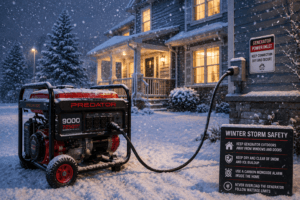
Always:
- Operate portable generators outdoors.
- Keep generators away from doors, windows, and vents.
- Install carbon monoxide detectors.
- Use a properly installed transfer switch or approved interlock kit.
- Test your generator monthly.
- Follow the manufacturer’s maintenance schedule.
Never plug a generator directly into a household outlet.
Common Mistakes to Avoid
Avoid these common errors:
- Underestimating electric furnace power requirements
- Buying based only on furnace size instead of actual wattage
- Forgetting other household loads
- Running a generator indoors
- Ignoring maintenance
- Waiting until winter to test your backup system
Frequently Asked Questions
Can a 10,000-watt generator run an electric furnace?
It depends on the furnace’s heating element size. Some smaller electric furnaces may operate on a generator of this size, but many require substantially more power.
Why do electric furnaces require such large generators?
Electric furnaces generate heat using electric resistance elements, which consume large amounts of continuous electrical power compared with gas furnaces that only power a blower and controls.
Is a standby generator better?
For most homes with electric heat, yes. Standby generators are often better suited to the high continuous electrical demand of an electric furnace.
Can I run my refrigerator too?
Yes, provided your generator has enough additional capacity after supplying the furnace.
Do I need a transfer switch?
Yes. A transfer switch or approved interlock kit is the safest way to connect a generator to your home’s electrical system.
Final Thoughts
Electric furnaces are among the most demanding residential appliances when it comes to backup power. While some smaller systems can operate from a large portable generator, many homeowners will need a standby generator in the 20–26 kW range to power an electric furnace along with other essential household loads.
Before buying a generator, check your furnace’s nameplate or owner’s manual for its actual electrical requirements, calculate your home’s total power needs, and choose a generator that provides enough capacity with room to spare. Proper planning today will help ensure your home stays warm and safe during the next winter outage.