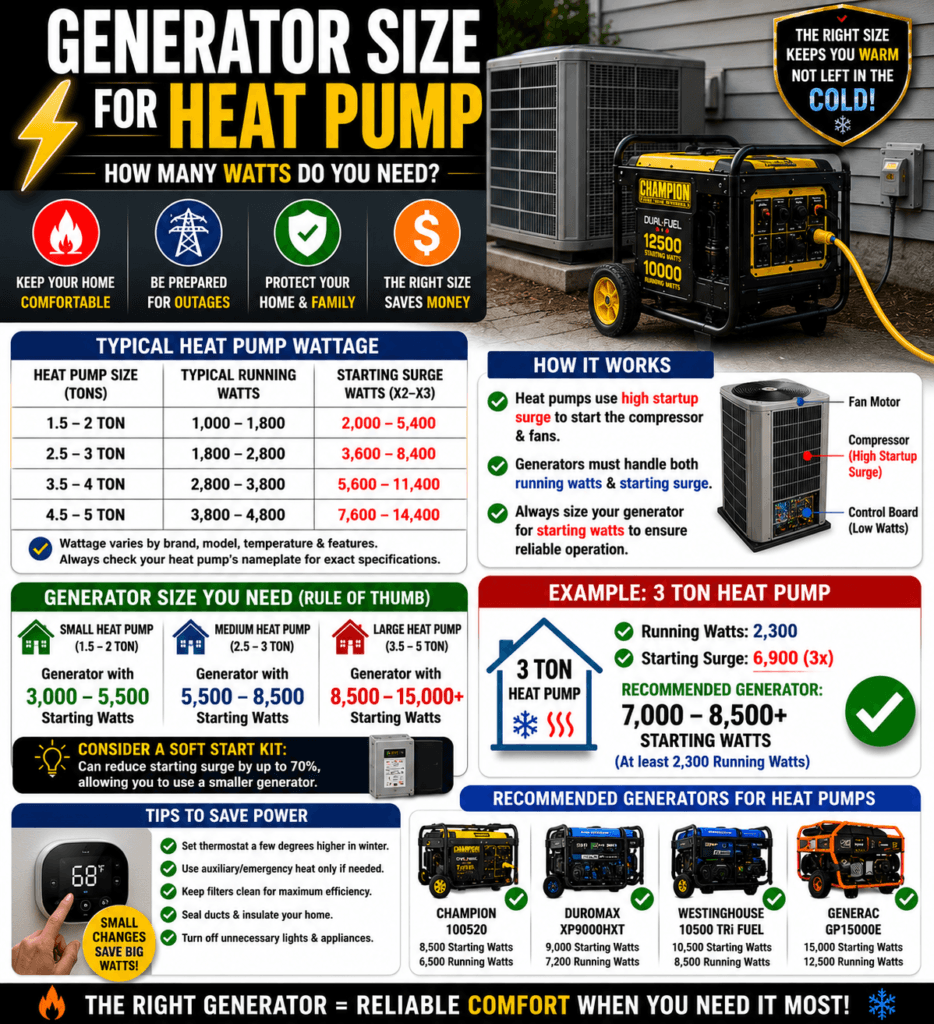
A heat pump is one of the most energy-efficient ways to heat and cool your home, but it can also be one of the largest electrical loads you’ll need to power during an outage. Choosing the wrong generator could mean your heat pump won’t start, leaving your home without heating or cooling when you need it most.
The biggest mistake homeowners make is buying a generator based only on running watts. Like central air conditioners, heat pumps have compressors that require significantly more power when starting.
In this guide, you’ll learn what size generator you need for a heat pump, how soft-start kits can reduce generator requirements, and which generators are the best choices in 2026.
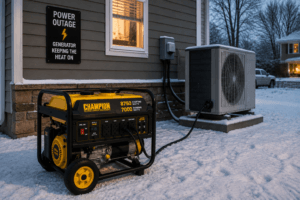
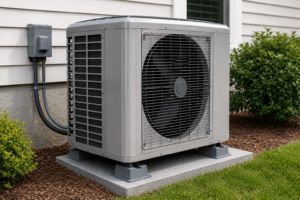
How Much Power Does a Heat Pump Use?
The exact power requirements depend on:
- Heat pump size (tons or BTUs)
- SEER2 and HSPF2 efficiency ratings
- Outdoor temperature
- Compressor design
- Whether auxiliary electric heat strips are being used
Typical heat pump requirements are:
| Heat Pump Size | Running Watts | Starting Watts |
|---|---|---|
| 2 Ton | 2,000–3,000 W | 4,000–6,000 W |
| 3 Ton | 3,000–4,500 W | 6,000–8,500 W |
| 4 Ton | 4,000–5,500 W | 8,000–11,000 W |
| 5 Ton | 5,000–6,500 W | 10,000–13,000+ W |
These are general estimates. Your actual requirements may differ depending on the manufacturer and model.
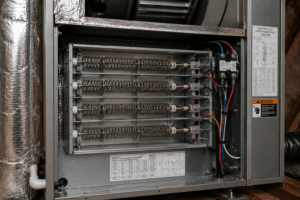
Don’t Forget Auxiliary Heat Strips
Many homeowners overlook one important detail.
Most heat pump systems include electric auxiliary (emergency) heat strips.
These heat strips may consume:
- 5,000 watts
- 10,000 watts
- 15,000 watts
- 20,000 watts
If auxiliary heat turns on, your generator requirements increase dramatically.
If your generator isn’t large enough, you may need to disable auxiliary heat while operating on generator power (if appropriate for your system and climate).
What Is a Soft-Start Kit?
A soft-start kit reduces the compressor’s startup current.
Benefits include:
- Smaller generator requirements
- Easier compressor startup
- Reduced wear on HVAC equipment
- Better generator compatibility
- Lower voltage drop during startup
Many homeowners find they can use a smaller generator after installing a quality soft-start device.
Recommended Generator Size
2-Ton Heat Pump
Recommended generator:
- 5,000–7,500 running watts
3-Ton Heat Pump
Recommended generator:
- 7,500–10,000 running watts
4-Ton Heat Pump
Recommended generator:
- 9,500–12,500 running watts
5-Ton Heat Pump
Recommended generator:
- 12,000–15,000 running watts
If auxiliary electric heat strips will operate during an outage, a significantly larger generator—or a standby generator—may be required.
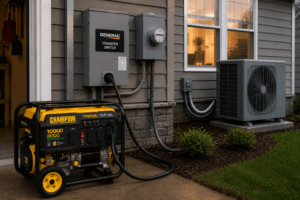
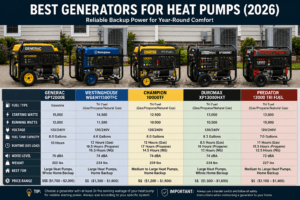
Our Top Picks
Best Overall
Westinghouse WGen11500TFc Tri-Fuel Portable Generator
Why we like it:
- Excellent surge capacity
- Runs on gasoline, propane, or natural gas
- Electric start
- Ideal for many 3- to 5-ton heat pumps
Best Value
Westinghouse WGen9500DFc Dual Fuel Generator
Great for:
- Smaller heat pumps
- Homes with soft-start kits
- Essential household circuits
Best Heavy-Duty Portable Generator
DuroMax XP13000HXT Tri-Fuel Generator
Excellent for:
- Large heat pumps
- Multiple household appliances
- Long outages
- High starting loads
Best Standby Generator
Generac Guardian 24kW
Ideal for:
- Whole-home backup
- Heat pumps with auxiliary heat
- Automatic operation
- Extended outages
Portable vs. Standby Generator
Portable Generator
Advantages:
- Lower cost
- Flexible fuel options
- Portable
- Great for occasional outages
Disadvantages:
- Manual setup
- Limited capacity compared to standby systems
- May not support auxiliary heat strips
Standby Generator
Advantages:
- Automatic startup
- Whole-home protection
- Excellent for large HVAC systems
- Natural gas or propane fuel supply
- No manual refueling during operation
For homes that rely heavily on electric heat during the winter, a standby generator is often the most convenient long-term solution.
Can You Run Other Appliances Too?
Most homeowners also want to power:
- Refrigerator
- Freezer
- Lights
- Internet
- Television
- Microwave
- Well pump
- Garage door opener
These appliances add to your total electrical load.
Always calculate your home’s combined running watts before selecting a generator.
Generator Safety Tips
Always:
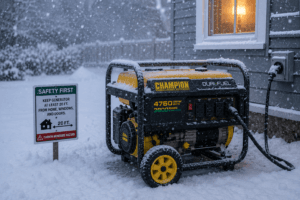
- Operate portable generators outdoors.
- Install carbon monoxide detectors.
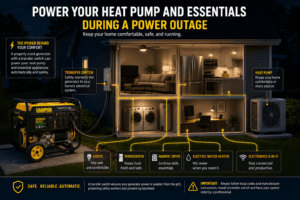
- Use a transfer switch or approved interlock kit.
- Keep generators away from doors, windows, and vents.
- Test your generator monthly.
- Perform routine maintenance according to the owner’s manual.
Never connect a generator to your home using a household wall outlet.
Common Mistakes to Avoid
Avoid these common errors:
- Forgetting about auxiliary heat strips
- Ignoring startup wattage
- Buying a generator that’s too small
- Running the generator indoors
- Skipping maintenance
- Overloading the generator
- Waiting until winter to test your system
Frequently Asked Questions
Can a 7,500-watt generator run a heat pump?
Many 2-ton and some 3-ton heat pumps can operate on a 7,500-watt generator, particularly if a soft-start kit is installed. Larger systems usually require more capacity.
Are heat pumps easier to run than electric furnaces?
Generally, yes. Heat pumps are usually much more energy-efficient than electric resistance furnaces. However, if auxiliary electric heat strips activate, power demand can increase significantly.
Do I need a soft-start kit?
A soft-start kit isn’t required for every system, but it can make it easier for a portable generator to start and run your heat pump by reducing compressor startup current.
Can I run my refrigerator too?
Yes, as long as your generator has enough remaining capacity after accounting for the heat pump and other household loads.
Do I need a transfer switch?
Yes. A properly installed transfer switch or approved interlock kit is the safest way to connect a generator to your home’s electrical system.
Final Thoughts
Choosing the right generator for a heat pump requires more than simply matching running watts. You need to account for compressor startup, other household appliances, and whether your system uses auxiliary electric heat strips.
For many homes, a 7,500–12,500-watt portable generator is sufficient for a typical heat pump, while larger systems or homes with electric backup heat often benefit from a 20–24 kW standby generator. By sizing your generator correctly and considering a soft-start kit, you’ll be better prepared to keep your home comfortable during the next power outage.