
Generators are incredibly reliable when they’re maintained properly, but even the best models can develop problems over time. Whether your generator refuses to start, surges while running, shuts off unexpectedly, or won’t produce electricity, many issues have simple causes that you can diagnose yourself.
This comprehensive troubleshooting guide walks through the 25 most common generator problems, explains their likely causes, and provides practical fixes you can try before calling a repair technician.
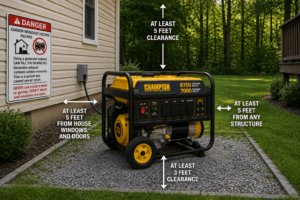
Important Safety Reminder: Always shut the generator off, allow it to cool completely, and disconnect all loads before performing maintenance or inspections. Never operate a portable generator indoors or in an enclosed space because of carbon monoxide risks.
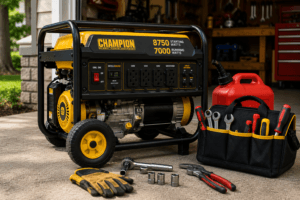
Start With These Basic Checks
Before assuming something major is wrong, check the basics:
- Is there fresh fuel in the tank?
- Is the fuel valve turned on?
- Is the engine switch in the ON position?
- Is the choke set correctly?
- Is the oil level full?
- Is the battery charged (electric start models)?
- Has the generator been overloaded?
- Has the circuit breaker tripped?
Many generator issues are solved in less than five minutes by checking these simple items first.
Problem #1: Generator Won’t Start
Possible Causes
- Empty fuel tank
- Old gasoline
- Fuel valve closed
- Dirty spark plug
- Dead battery
- Low oil shutdown activated
How to Fix It
- Add fresh gasoline.
- Verify the fuel valve is open.
- Check engine oil.
- Clean or replace the spark plug.
- Recharge or replace the battery.
- Follow the manufacturer’s starting procedure exactly.
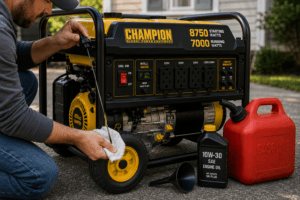
Problem #2: Generator Starts Then Immediately Dies
Common Causes
- Clogged carburetor
- Dirty fuel
- Fuel cap vent blocked
- Low oil sensor activated
Fix
- Clean the carburetor.
- Replace stale gasoline.
- Check that the fuel cap vent isn’t clogged.
- Verify the oil level is correct.
Problem #3: Generator Cranks Slowly
Causes
- Weak battery
- Corroded terminals
- Bad starter motor
Fixes
- Charge the battery.
- Clean battery terminals.
- Replace an aging battery if necessary.
Problem #4: Electric Start Doesn’t Work
Possible causes include:
- Dead battery
- Blown fuse
- Faulty ignition switch
- Loose battery cables
Always inspect the battery before replacing expensive electrical parts.
Problem #5: Pull Cord Is Extremely Hard to Pull
Possible reasons:
- Engine hydro-lock
- Internal engine damage
- Seized engine
- Oil overfilled
Never force the recoil starter. Determine the cause first to avoid damaging the starter mechanism.
Problem #6: Generator Runs But Produces No Electricity
Possible causes:
- Tripped breaker
- Bad outlet
- Failed voltage regulator
- Worn brushes (on applicable models)
Check the breaker first before assuming the alternator has failed.
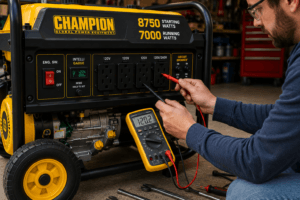
Problem #7: Generator Produces Low Voltage
Possible causes:
- Engine RPM too low
- Voltage regulator issue
- Heavy electrical load
Reduce the connected load and verify engine speed.
Problem #8: Generator Produces High Voltage
High voltage can damage appliances.
Common causes:
- Faulty AVR
- Governor malfunction
Disconnect sensitive electronics immediately until the issue is repaired.
Problem #9: Generator Surges Up and Down
Engine surging is often caused by:
- Dirty carburetor
- Restricted fuel flow
- Dirty air filter
- Old fuel
Cleaning the fuel system usually solves the problem.
Problem #10: Generator Overheats
Possible causes include:
- Dirty cooling fins
- Blocked airflow
- Running in direct sunlight
- Overloading
Allow adequate ventilation around the generator.
Problem #11: Generator Shuts Off Under Load
Common reasons:
- Overloaded generator
- Low oil shutdown
- Dirty fuel filter
- Failing ignition coil
Disconnect all appliances and test the generator with a smaller load.
Problem #12: Generator Trips Its Circuit Breaker
Usually caused by:
- Too many appliances
- Short circuit
- Damaged extension cord
Reduce the electrical load before resetting the breaker.
Problem #13: Generator Runs Rough
Common causes include dirty fuel, clogged jets, worn spark plugs, and restricted air filters.
Routine maintenance prevents most rough-running issues.
Problem #14: Excessive Smoke From Exhaust
Different smoke colors indicate different problems:
- Black smoke = Too much fuel
- Blue smoke = Burning oil
- White smoke = Moisture or internal engine issue
Investigate before continuing operation.
Problem #15: Generator Vibrates Excessively
Possible causes:
- Loose mounting bolts
- Uneven ground
- Damaged engine mounts
- Bent rotating components
Stop the generator if vibration becomes severe.
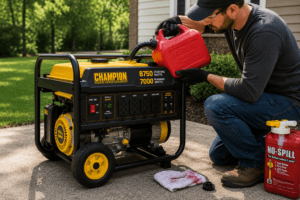
Problem #16: Generator Uses Too Much Fuel
If your generator seems to be burning through fuel much faster than normal, several factors could be responsible.
Possible Causes
- Overloaded generator
- Dirty air filter
- Carburetor running too rich
- Old spark plug
- Engine not properly maintained
How to Fix It
- Reduce the electrical load.
- Replace the air filter if it’s dirty.
- Install a new spark plug if it’s worn.
- Perform the manufacturer’s recommended maintenance schedule.
- Avoid running the generator at maximum capacity for extended periods.
A properly maintained generator operating at around 50–75% of its rated capacity is usually the most fuel-efficient.
Problem #17: Battery Won’t Stay Charged
Electric-start generators depend on a healthy battery.
Possible Causes
- Old battery
- Faulty charging system
- Loose battery cables
- Corroded terminals
How to Fix It
- Clean the battery terminals.
- Tighten all cable connections.
- Recharge the battery fully.
- Replace batteries that are more than 3–5 years old or fail a load test.
Problem #18: Oil Leak
Oil leaks should never be ignored because running with low oil can severely damage the engine.
Possible Causes
- Loose drain plug
- Damaged gasket
- Overfilled crankcase
- Cracked engine case
- Worn oil seal
How to Fix It
- Tighten the drain plug.
- Replace damaged gaskets.
- Drain excess oil if overfilled.
- Inspect the engine carefully for cracks or damaged seals.
If oil continues leaking after these checks, professional repair is recommended.
Problem #19: Fuel Leak
Fuel leaks create a serious fire hazard.
Possible Causes
- Cracked fuel line
- Loose hose clamp
- Damaged fuel shutoff valve
- Leaking carburetor
- Cracked fuel tank
How to Fix It
- Shut the generator off immediately.
- Do not restart until repaired.
- Replace damaged fuel hoses.
- Tighten clamps.
- Repair or replace leaking components.
Never use a generator with an active fuel leak.
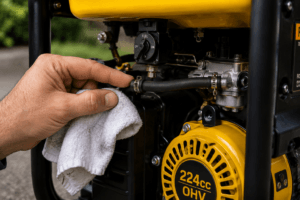
Problem #20: Generator Is Much Louder Than Normal
A noticeable increase in noise often indicates a mechanical problem.
Possible Causes
- Loose exhaust bolts
- Damaged muffler
- Loose engine mounting bolts
- Internal engine wear
How to Fix It
- Tighten loose hardware.
- Inspect the muffler.
- Replace damaged exhaust components.
- Check engine mounts.
Problem #21: Extension Cord Gets Hot
Hot extension cords are a warning sign of excessive current or an undersized cord.
Possible Causes
- Cord gauge too small
- Cord too long
- Damaged wiring
- Overloaded circuit
How to Fix It
- Upgrade to a heavier-gauge extension cord.
- Use the shortest cord practical.
- Replace damaged cords immediately.
- Reduce the electrical load.
Problem #22: GFCI Outlet Keeps Tripping
Ground Fault Circuit Interrupter (GFCI) outlets protect against electrical shock.
Possible Causes
- Moisture
- Damaged appliance
- Faulty extension cord
- Ground fault
How to Fix It
- Dry the outlet thoroughly.
- Test appliances one at a time.
- Replace damaged cords.
- If the outlet trips with nothing connected, have it inspected.
Problem #23: Generator Frequency Is Incorrect
Most North American generators should produce approximately 60 Hz.
Possible Causes
- Incorrect engine RPM
- Governor adjustment needed
- AVR problems
How to Fix It
- Check engine speed.
- Follow the manufacturer’s governor adjustment procedure.
- Have the voltage regulator inspected if frequency remains unstable.
Incorrect frequency can damage sensitive electronics.
Problem #24: Carbon Buildup
Generators that sit unused or idle for long periods may develop carbon deposits.
Symptoms
- Hard starting
- Poor fuel economy
- Rough idle
- Loss of power
Fix
- Replace the spark plug.
- Clean the combustion chamber if necessary.
- Use fresh fuel.
- Run the generator under moderate load occasionally to help reduce carbon buildup.
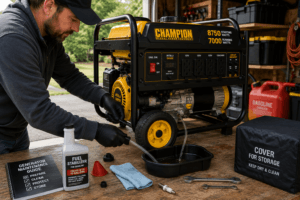
Problem #25: Generator Won’t Run After Long-Term Storage
This is one of the most common problems homeowners encounter.
Possible Causes
- Stale gasoline
- Clogged carburetor
- Dead battery
- Dirty fuel system
- Moisture contamination
How to Fix It
- Drain old fuel completely.
- Refill with fresh gasoline.
- Clean the carburetor if necessary.
- Replace the spark plug.
- Charge the battery.
- Change the oil before extended use.
Many generators that “won’t start” after storage only need fresh fuel and a cleaned carburetor.
Quick Troubleshooting Chart
| Problem | Most Likely Cause | First Thing to Check |
|---|---|---|
| Won’t start | Fuel or oil | Fuel level and oil level |
| Starts then dies | Carburetor | Fresh fuel |
| No electricity | Breaker | Reset breaker |
| Low power | Overload | Reduce load |
| Surging | Dirty carburetor | Fuel system |
| Overheating | Blocked airflow | Cooling vents |
| Battery dead | Old battery | Voltage |
| Excess smoke | Fuel or oil issue | Smoke color |
| Fuel leak | Damaged hose | Fuel lines |
| Loud operation | Loose exhaust | Muffler |
Preventive Maintenance Checklist
Following a maintenance schedule can prevent many of the issues listed above.
Before Every Use
- Check engine oil.
- Inspect fuel level.
- Look for leaks.
- Check the air filter.
- Inspect extension cords.
- Verify proper ventilation.
Every 25–50 Hours
- Change the engine oil (or follow your owner’s manual).
- Clean the air filter.
- Inspect the spark plug.
- Tighten loose fasteners.
Every 100 Hours
- Replace the spark plug if recommended.
- Replace the air filter if needed.
- Inspect the fuel system.
- Clean cooling fins.
- Check battery condition.
Annual Maintenance
- Drain stale fuel if the generator will be stored.
- Replace fuel if using gasoline.
- Test the generator under load for 20–30 minutes.
- Inspect all electrical outlets and breakers.
Frequently Asked Questions
Why won’t my generator start after sitting for several months?
The most common causes are stale gasoline, a clogged carburetor, a discharged battery (electric-start models), or a fouled spark plug.
Why is my generator running but not producing electricity?
A tripped breaker, faulty outlet, worn brushes (on applicable models), or a failed automatic voltage regulator (AVR) are common causes.
Can old gasoline damage a generator?
Yes. Gasoline begins to degrade within a few months, leaving varnish deposits that can clog the carburetor and fuel system.
Should I repair my generator myself?
Basic maintenance such as changing oil, replacing spark plugs, cleaning the air filter, and using fresh fuel is within the ability of many owners. Internal engine repairs, fuel leaks, or electrical faults are usually best left to qualified technicians.
How often should I test my generator?
A good rule is to run your generator under load for about 20–30 minutes once a month. This helps keep the engine lubricated, charges the battery on electric-start models, and lets you catch problems before an emergency.
Final Thoughts
Most generator problems are caused by neglected maintenance, stale fuel, overloaded circuits, or simple wear items such as spark plugs and air filters. By performing regular inspections and following a preventive maintenance schedule, you can avoid many common breakdowns and keep your generator ready when you need it most.
When troubleshooting, always begin with the simplest possibilities—fuel, oil, battery, and breakers—before assuming a major mechanical failure. A systematic approach can save both time and repair costs while extending the life of your generator.