When the power goes out, one of the first questions people ask is:
“How long will my generator run on a full tank?”
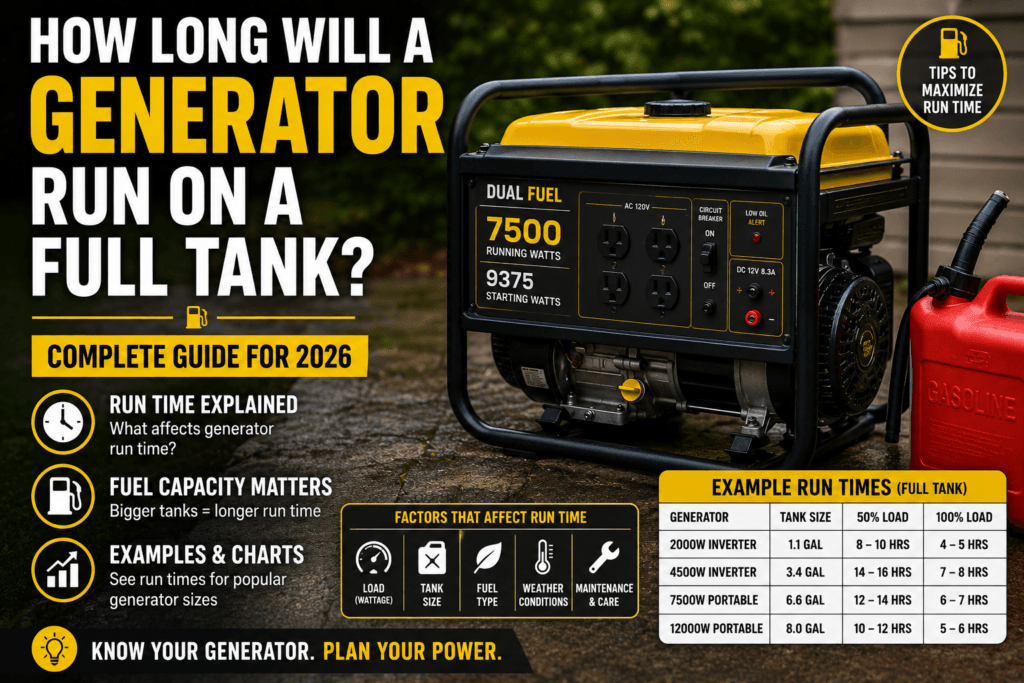
The answer depends on several factors, including the generator’s fuel tank size, engine efficiency, fuel type, and—most importantly—how much electricity you’re using.
Some small inverter generators can run 8–12 hours on a single tank, while larger whole-house portable generators may need refueling every 6–10 hours under heavy loads.
In this guide, you’ll learn what affects generator runtime, see average runtimes by generator size, compare gasoline, propane, diesel, and natural gas, and discover practical ways to maximize your generator’s operating time during an outage.
The Short Answer
Most portable generators run:
- Small inverter generators: 6–12 hours
- Mid-size portable generators: 8–14 hours
- Large portable generators: 7–12 hours
- Whole-house standby generators: Can run continuously as long as fuel is available (especially natural gas models)
Most manufacturers advertise runtime at 25% or 50% electrical load, not at full power.
What Determines Generator Runtime?
Several factors affect how long a generator will run before it needs more fuel.
1. Fuel Tank Size
The larger the fuel tank, the longer the runtime.
For example:
| Tank Size | Typical Runtime* |
|---|---|
| 1 gallon | 2–5 hours |
| 2 gallons | 4–8 hours |
| 4 gallons | 7–12 hours |
| 6 gallons | 9–15 hours |
| 8 gallons | 10–18 hours |
*Actual runtime depends on generator size and electrical load.
2. Electrical Load
This is the biggest factor.
Running only:
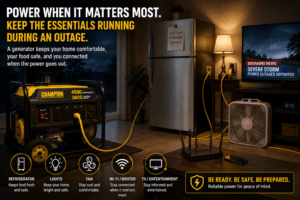
- Refrigerator
- Wi-Fi router
- LED lights
- Phone chargers
uses far less fuel than powering:
- Central air conditioning
- Electric water heater
- Electric furnace
- Large well pump
- Multiple appliances
The heavier the load, the faster the generator burns fuel.
3. Generator Size
Larger engines generally consume more fuel.
A 2,000-watt inverter generator may use only a fraction of a gallon per hour, while a 12,000-watt portable generator can consume well over a gallon per hour under heavy demand.
4. Fuel Type
Runtime also depends on whether you’re using:
- Gasoline
- Propane
- Diesel
- Natural gas
Each fuel has different energy content and efficiency characteristics.
Average Generator Runtime by Size
| Generator Size | Typical Runtime on Full Tank |
|---|---|
| 2,000 watts | 8–12 hours |
| 3,000 watts | 8–12 hours |
| 4,000 watts | 8–14 hours |
| 5,000 watts | 8–12 hours |
| 7,500 watts | 8–11 hours |
| 10,000 watts | 7–10 hours |
| 12,000 watts | 7–10 hours |
| 15,000 watts | 6–10 hours |
These estimates assume moderate household loads rather than maximum output.
Runtime by Fuel Type
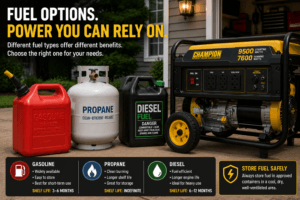
Gasoline
Gasoline is the most common fuel for portable generators.
Advantages
- Easy to find
- High energy density
- Widely available
Disadvantages
- Short storage life unless stabilized
- Requires regular refueling
- Can be difficult to find during major outages
Typical runtime:
6–14 hours per tank, depending on load and tank size.
Propane
Dual-fuel generators often provide excellent runtime on propane.
Advantages include:
- Cleaner burning
- Longer storage life
- Less engine maintenance
- Easy cylinder storage
Many dual-fuel generators run slightly longer on a standard 20-pound propane tank than people expect, though power output is often a bit lower than on gasoline.
Diesel
Diesel generators are known for:
- Excellent fuel efficiency
- Long engine life
- Heavy-duty performance
Many commercial generators operate on diesel because they can run for extended periods with relatively low fuel consumption.
Natural Gas
Standby generators connected to a home’s natural gas line can operate continuously as long as the gas supply remains available.
This makes them ideal for long-duration outages.
What Uses the Most Fuel?
These appliances significantly increase fuel consumption:
- Central air conditioner
- Electric furnace
- Electric water heater
- Electric range
- Clothes dryer
- Large air compressor
- Multiple refrigerators and freezers running simultaneously
Reducing these loads can dramatically extend runtime.
How to Make Your Generator Run Longer
Reduce Electrical Load
Only power essential appliances such as:
- Refrigerator
- Freezer
- Medical equipment
- Sump pump
- Wi-Fi router
- LED lighting
Avoid running unnecessary high-wattage devices.
Use Eco Mode
Many inverter generators include an economy or eco mode.
Benefits include:
- Lower fuel consumption
- Reduced engine speed
- Quieter operation
- Longer engine life
Eco mode works best when powering lighter loads.
Perform Regular Maintenance
A well-maintained generator is more fuel-efficient.
Keep up with:
- Oil changes
- Air filter cleaning
- Spark plug replacement
- Fresh fuel
- Fuel stabilizer for stored gasoline
Avoid Overloading
Running near maximum capacity increases fuel consumption and engine wear.
For best efficiency, many generators perform well at about 50–75% of their rated output.
Can You Refuel While the Generator Is Running?
No.
Never add gasoline to a running or hot generator.
Always:
- Turn the generator off.
- Allow it to cool.
- Refill using an approved fuel container.
- Clean up any spilled fuel before restarting.
Refueling a hot engine can cause gasoline vapors to ignite.
Frequently Asked Questions
How long will a 5-gallon tank last?
The answer depends on the generator and the connected load. Under moderate use, many portable generators can run for much of the day on a 5-gallon fuel supply.
Does running fewer appliances save fuel?
Yes. Lower electrical demand reduces engine workload, allowing the generator to consume less fuel and run longer between refueling.
Which fuel lasts the longest in storage?
Propane has one of the longest storage lives because it does not degrade like gasoline. Diesel also stores well when properly treated, while gasoline benefits from a fuel stabilizer if it will be stored for extended periods.
Is it okay to run a generator overnight?
Many generators are capable of running overnight if operated according to the manufacturer’s instructions. They should always be used outdoors in a well-ventilated area, away from windows and doors, and monitored with working carbon monoxide detectors inside the home.
Should I keep extra fuel?
Yes. Keeping an emergency fuel supply—stored safely in approved containers and rotated regularly—can help you stay prepared for extended outages.
Final Thoughts
Generator runtime depends on more than just the size of the fuel tank. Electrical load, engine size, maintenance, and fuel type all play a major role in how long your generator can keep the lights on.
For most homeowners, reducing unnecessary power usage, maintaining the generator properly, and keeping an adequate fuel supply on hand will provide the best balance of runtime, efficiency, and reliability during emergencies. Understanding your generator’s expected runtime before a storm can help you plan fuel needs and avoid unexpected interruptions when backup power matters most.