
A portable generator is only valuable if it’s ready to start when the power goes out. Unfortunately, many generators fail during emergencies because they were stored incorrectly.
Old gasoline, dead batteries, dirty air filters, and neglected maintenance are some of the most common reasons generators won’t start after sitting for months.
Whether you’re putting your generator away after storm season or storing it for several months, following a proper storage checklist will help extend its lifespan and improve reliability.
This guide walks you through everything you should do before storing your portable generator so it’s ready when you need it most.
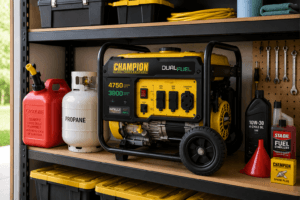
Why Proper Generator Storage Matters
Correct storage helps prevent:
- Hard starting
- Stale fuel problems
- Carburetor clogs
- Rust and corrosion
- Battery failure
- Fuel leaks
- Engine damage
- Expensive repairs
A few minutes of preparation can save hours of frustration during your next power outage.
Portable Generator Storage Checklist
Use this checklist every time you prepare your generator for long-term storage.
✅ Clean the Generator
Remove:
- Dirt
- Dust
- Leaves
- Grass
- Oil residue
Keeping the generator clean helps prevent corrosion and allows you to spot leaks or damaged parts more easily.
✅ Inspect for Damage
Check for:
- Loose bolts
- Cracked fuel lines
- Oil leaks
- Damaged wiring
- Broken wheels or handles
- Loose electrical outlets
Repair any problems before putting the generator away.
✅ Change the Engine Oil
Old engine oil contains contaminants that can cause internal corrosion during storage.
If your generator is due for an oil change, perform it before storing the unit.
Always use the oil type recommended in your owner’s manual.

Fuel Storage Options
Fuel is one of the most important parts of long-term storage.
Option 1: Add Fuel Stabilizer
If you’re storing gasoline:
- Fill the tank with fresh fuel.
- Add the correct amount of fuel stabilizer.
- Run the generator for 10–15 minutes to circulate the treated fuel.
This helps reduce fuel degradation during storage.
Option 2: Drain the Fuel System
For longer storage periods, many manufacturers recommend draining:
- Fuel tank
- Fuel lines
- Carburetor (if applicable)
This helps prevent varnish buildup and clogged carburetor jets.
Always follow your owner’s manual for the recommended storage procedure.
Check the Air Filter
Remove and inspect the air filter.
Replace it if it is:
- Torn
- Extremely dirty
- Oil-soaked (foam filters)
- Damaged
A clean air filter helps ensure reliable starting after storage.
Inspect the Spark Plug
Remove the spark plug and check for:
- Heavy carbon buildup
- Cracked porcelain
- Excessive wear
- Oil fouling
Replace it if necessary.
Spark plugs are inexpensive and can prevent many starting problems.
Check the Battery (Electric Start Models)
If your generator has electric start:
- Fully charge the battery.
- Clean battery terminals.
- Inspect cables.
- Recharge periodically during long storage.
Some owners use a battery maintainer to help keep the battery ready.

Protect the Generator From Moisture
Store the generator in a dry location.
Avoid:
- Damp basements
- Areas prone to flooding
- Standing water
- Excess humidity
Moisture can cause corrosion on electrical components and metal parts.
Use a Generator Cover
Once the generator has cooled completely:
- Install a breathable storage cover.
- Keep dust off the engine.
- Protect against accidental scratches.
Never cover a generator while it is hot or running.
Store Fuel Safely
Fuel should always be stored:
- In approved fuel containers
- Away from flames
- Away from heaters
- In a cool, well-ventilated location
- Out of reach of children
Never store gasoline inside living areas.
Choose the Right Storage Location
Good storage locations include:
- Dry garage
- Storage shed
- Workshop
- Detached outbuilding
The location should be:
- Clean
- Dry
- Well ventilated
- Protected from weather
Protect Against Rodents
Rodents sometimes nest inside stored generators.
To reduce the risk:
- Keep the storage area clean.
- Remove food sources.
- Inspect the generator before each use.
- Check air intakes and cooling fins for nests or debris.

Monthly Storage Maintenance
Even while stored, it’s a good idea to inspect your generator regularly.
Once a month:
- Check for leaks.
- Inspect fuel containers.
- Recharge the battery if needed.
- Look for rodent damage.
- Wipe away dust.
- Verify the storage area remains dry.
Exercise the Generator
Many manufacturers recommend running the generator periodically.
Running the generator under a moderate electrical load for about 20–30 minutes helps:
- Lubricate internal engine parts
- Keep seals from drying out
- Charge the battery (electric-start models)
- Identify problems before an emergency
Always operate the generator outdoors in a well-ventilated area.
Before Using the Generator Again
When taking the generator out of storage:
- Inspect for leaks.
- Check engine oil.
- Add fresh fuel if needed.
- Inspect the air filter.
- Check the spark plug.
- Verify battery charge.
- Test under load.
- Inspect extension cords.
Never assume the generator is ready without performing a quick inspection.
Printable Storage Checklist
✔ Clean generator
✔ Inspect for damage
✔ Change engine oil
✔ Stabilize or drain fuel
✔ Check air filter
✔ Inspect spark plug
✔ Charge battery
✔ Clean battery terminals
✔ Store in a dry location
✔ Install storage cover
✔ Store fuel safely
✔ Protect against rodents
✔ Inspect monthly
✔ Exercise generator periodically
✔ Test before emergency use
Common Storage Mistakes
Avoid these common mistakes:
- Leaving untreated gasoline in the tank for months
- Forgetting to change the oil
- Storing the generator in damp areas
- Ignoring battery maintenance
- Covering a hot generator
- Skipping monthly inspections
- Never testing the generator before storm season
Frequently Asked Questions
How long can a generator sit without being used?
A generator can be stored for extended periods if it is prepared correctly. Regular inspections and periodic exercise help keep it in good condition.
Should I drain the gas before storing my generator?
Many manufacturers recommend either treating fresh gasoline with a fuel stabilizer or draining the fuel system for long-term storage. Always follow your owner’s manual.
Can I leave gasoline in the generator all winter?
Leaving untreated gasoline in the tank for several months can lead to stale fuel and carburetor problems. Using a fuel stabilizer or following the manufacturer’s storage recommendations helps reduce these issues.
How often should I start my stored generator?
Many owners run their generator for about 20–30 minutes once a month under a moderate load to help maintain reliability.
Where is the best place to store a portable generator?
A clean, dry, well-ventilated garage, shed, or workshop is generally a good choice, provided the generator is cool and stored according to the manufacturer’s recommendations.
Final Thoughts
Proper generator storage is one of the easiest ways to ensure reliable backup power when you need it most. A clean generator, fresh or properly treated fuel, regular maintenance, and a dry storage location can prevent many of the common problems that occur after long periods of inactivity.
By following this storage checklist, you’ll improve your generator’s reliability, extend its lifespan, and be better prepared for the next power outage.