Power outages can happen at any time, whether they’re caused by severe thunderstorms, hurricanes, tornadoes, ice storms, wildfires, utility failures, or overloaded electrical grids. Losing electricity for even a few hours can disrupt your daily routine, spoil food, disable medical equipment, leave your home without heating or cooling, and create serious safety concerns.
Fortunately, there are more backup power options available today than ever before. From portable generators and whole-house standby generators to portable power stations, home battery systems, and solar backup solutions, homeowners can choose a system that fits their budget and power needs. Modern battery systems continue to improve in capacity and efficiency, while traditional generators remain one of the most practical choices for extended outages.
Choosing the right emergency backup solution depends on several factors, including how much power your home requires, how long outages typically last in your area, your budget, available fuel sources, and whether you need whole-home backup or only essential appliances.
In this guide, we’ll compare the best emergency backup power solutions in 2026, explain the advantages and disadvantages of each option, and help you choose the best backup system to keep your family safe and comfortable during the next power outage.
 .]
.]
Quick Picks: Best Emergency Backup Power Solutions
| Category | Product | Best For |
|---|---|---|
| Best Overall | DuroMax XP13000HXT Tri-Fuel Generator | Whole-home emergency backup |
| Best Portable Power Station | EcoFlow DELTA Pro 3 | Quiet indoor backup power |
| Best Standby Generator | Generac 24kW Guardian | Automatic whole-home protection |
| Best Budget Backup | Champion 7500-Watt Dual Fuel Generator | Affordable emergency preparedness |
| Best Home Battery System | Tesla Powerwall 3 | Solar-powered home backup |
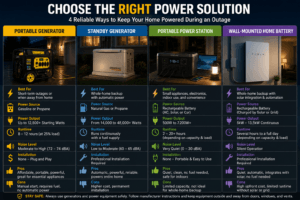
Types of Emergency Backup Power
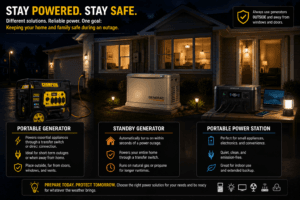
Today’s homeowners have several excellent options when preparing for emergencies.
The most common backup power solutions include:
- Portable generators
- Standby generators
- Portable power stations
- Home battery backup systems
- Solar generators
- Uninterruptible power supplies (UPS)
Each option has advantages depending on your home’s electrical needs.
Why Every Home Needs Backup Power
Power outages are becoming more common in many parts of the country due to severe weather, aging electrical infrastructure, and increased demand on the power grid.
Reliable backup power can help:
- Keep refrigerators and freezers running
- Prevent food spoilage
- Operate medical equipment
- Maintain internet service
- Power lights and security systems
- Keep sump pumps operating
- Support heating or cooling equipment
- Charge phones and emergency devices
Being prepared before an outage occurs can reduce stress and improve your family’s safety.
Best Overall Emergency Backup Solution
DuroMax XP13000HXT Tri-Fuel Generator

Why We Picked It
The DuroMax XP13000HXT is one of the most versatile emergency generators available. Its ability to operate on gasoline, propane, or natural gas provides outstanding flexibility during extended outages when one fuel source may become difficult to obtain.
With enough output to power central air conditioning, refrigerators, freezers, sump pumps, lighting, well pumps, and numerous household circuits through a transfer switch, it’s an excellent all-around emergency backup solution.
Pros
- Tri-fuel capability
- Excellent surge capacity
- Electric start
- Transfer switch compatible
- Carbon monoxide shutdown
- Outstanding emergency preparedness
Cons
- Heavy
- Louder than enclosed inverter generators
Best For
- Whole-home essentials
- Extended outages
- Large homes
- Natural gas users
Best Portable Power Station
EcoFlow DELTA Pro 3

Why We Picked It
The EcoFlow DELTA Pro 3 is one of the most capable portable power stations available for emergency backup. It provides quiet, emission-free indoor power for refrigerators, freezers, internet equipment, medical devices, televisions, and many other household essentials. It can also be expanded with additional batteries and integrated into larger home backup systems.
Pros
- Silent indoor operation
- No gasoline required
- Fast charging
- Solar charging compatible
- Expandable battery capacity
- Clean power for electronics
Cons
- Higher purchase price
- Limited runtime without expansion batteries
Best For
- Indoor backup power
- Apartments
- Solar users
- Sensitive electronics
- Quiet operation
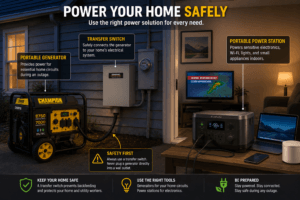
Choosing the Right Backup Power Solution
Before purchasing emergency backup equipment, consider:
- Total running watts
- Starting watts
- Fuel availability
- Runtime requirements
- Noise level
- Indoor or outdoor use
- Portability
- Budget
- Long-term maintenance
Selecting the right backup power solution today can help keep your home safe, comfortable, and prepared for future emergencies.
Continue to Part 2 for:
- Best Standby Generator
- Best Budget Backup Generator
- Best Home Battery System
- Emergency backup comparison table
- Generator vs battery backup
- Fuel options
- Buying advice
Best Standby Generator
Generac 24kW Guardian Series
Why We Picked It
The Generac 24kW Guardian is one of the most popular whole-house standby generators available. Permanently installed outside the home, it automatically starts within seconds after a power outage and can restore electricity to your home without requiring any manual setup.
When paired with an automatic transfer switch, it can power central air conditioning, refrigerators, freezers, lighting, well pumps, sump pumps, internet equipment, and many other household circuits.
Pros
- Automatic operation
- Whole-home protection
- Runs on natural gas or propane
- Excellent reliability
- No manual startup required
- Long runtime
Cons
- Higher installation cost
- Requires professional installation
- Permanent installation
Best For
- Whole-home backup
- Long power outages
- Families
- Homes with medical equipment
Best Budget Backup Generator
Champion 7500-Watt Dual Fuel Generator
Why We Picked It
The Champion 7500-Watt Dual Fuel Generator provides dependable emergency backup at an affordable price. It offers enough power for refrigerators, freezers, lighting, sump pumps, furnace blowers, televisions, and many additional household essentials.
Its ability to operate on gasoline or propane provides valuable flexibility during emergencies.
Pros
- Affordable
- Dual-fuel capability
- Electric start
- Reliable engine
- Excellent customer support
- Strong overall value
Cons
- Louder than inverter generators
- Limited whole-home capability
Best For
- Budget-conscious homeowners
- Emergency preparedness
- Small and medium-sized homes
- Portable backup
Best Home Battery Backup System
Tesla Powerwall 3
Why We Picked It
The Tesla Powerwall 3 provides automatic battery backup without gasoline, engine maintenance, or generator noise. It stores electricity from either the utility grid or rooftop solar panels and automatically powers selected household circuits when utility power fails.
For homeowners with solar energy systems, it provides one of the most seamless backup power experiences available.
Pros
- Automatic backup
- Silent operation
- Solar compatible
- No fuel storage
- Low maintenance
- Indoor or garage installation
Cons
- Higher installation cost
- Limited runtime without solar recharging
- Professional installation required
Best For
- Solar homes
- Quiet neighborhoods
- Automatic backup
- Environmentally conscious homeowners
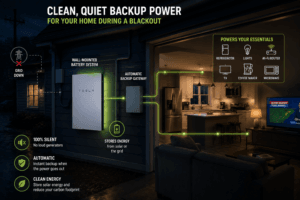
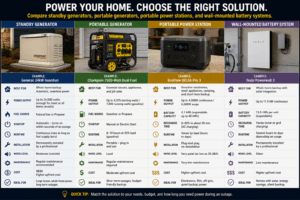
Emergency Backup Power Comparison
Backup Solution Automatic Indoor Use Fuel Required Best For Portable Generator No No Yes Affordable home backup Standby Generator Yes No Natural Gas/Propane Whole-home protection Portable Power Station No Yes No Quiet indoor backup Home Battery System Yes Yes No Solar-powered homes Solar Generator No Yes Solar Off-grid and renewable backup
Generator vs Battery Backup
Portable Generators
Advantages
- Lower purchase price
- Long runtime with fuel
- High power output
- Can operate large appliances
- Excellent for extended outages
Disadvantages
- Outdoor use only
- Engine maintenance required
- Fuel storage required
- Louder operation
Portable Power Stations
Advantages
- Silent operation
- Indoor safe
- No gasoline
- No engine maintenance
- Clean electricity
Disadvantages
- Limited battery capacity
- Higher cost per watt-hour
- Recharge required
Standby Generators
Advantages
- Automatic operation
- Whole-home backup
- Long runtime
- No manual setup during outages
Disadvantages
- Expensive installation
- Permanent location
- Professional maintenance recommended
Home Battery Systems
Advantages
- Silent
- Automatic
- Excellent with solar
- No emissions
- Very little maintenance
Disadvantages
- Expensive
- Limited storage without expansion
- Best when paired with solar panels
Fuel Options
Gasoline
Advantages:
- Widely available
- High energy output
- Good portability
Disadvantages:
- Limited shelf life
- Requires fuel stabilizer
- Must be rotated regularly
Propane
Advantages:
- Long shelf life
- Cleaner burning
- Easier long-term storage
Disadvantages:
- Slightly lower power output
- Requires propane tanks
Natural Gas
Advantages:
- Continuous fuel supply
- No refueling during outages
- Excellent for standby generators
Disadvantages:
- Requires natural gas service
- Permanent installation
Solar Energy
Advantages:
- Renewable
- Quiet
- No fuel costs
- Excellent with battery backup
Disadvantages:
- Weather dependent
- Slower charging during cloudy conditions
Which Backup Solution Is Best?
Choose a Portable Generator If:
- You want maximum power for the money
- Extended outages are common
- You need to power large appliances
- Budget is important
Choose a Standby Generator If:
- You want automatic protection
- You need whole-home backup
- You have natural gas service
- You frequently experience outages
Choose a Portable Power Station If:
- You want indoor-safe backup
- Quiet operation is important
- You need clean power for electronics
- You live in an apartment or condo
Choose a Home Battery System If:
- You already have solar panels
- You want automatic backup
- You prefer maintenance-free operation
- Quiet, emission-free power is important
Features to Look For
Choosing the best emergency backup power solution involves much more than simply comparing wattage. Whether you’re buying a portable generator, standby generator, portable power station, or home battery backup system, selecting the right features will help ensure dependable performance when you need it most.
Here are the most important features to compare before making your purchase.
Automatic Transfer Switch (ATS)
One of the biggest advantages of standby generators and home battery systems is an Automatic Transfer Switch (ATS).
Benefits include:
- Automatically detects power outages
- Starts backup power within seconds
- Restores utility power automatically
- No manual setup required
This feature is ideal for homeowners who travel frequently or want uninterrupted backup power.
Fuel Flexibility
Modern generators are available in several fuel configurations.
Gasoline
- Widely available
- High power output
- Good portability
Dual-Fuel
Runs on:
- Gasoline
- Propane
Tri-Fuel
Runs on:
- Gasoline
- Propane
- Natural gas
Fuel flexibility can make a major difference during long-term emergencies when one fuel source becomes difficult to obtain.
Inverter Technology
Many portable generators now use inverter technology.
Benefits include:
- Clean electricity
- Quiet operation
- Better fuel efficiency
- Safe for sensitive electronics
- Reduced engine speed under lighter loads
Ideal for powering:
- Computers
- TVs
- Gaming systems
- Medical devices
- Routers
- Home office equipment
Battery Expansion
Many modern portable power stations allow additional battery packs.
Benefits include:
- Longer runtime
- Increased storage capacity
- Greater flexibility
- Better long-term value
Expandable systems are excellent for extended outages.
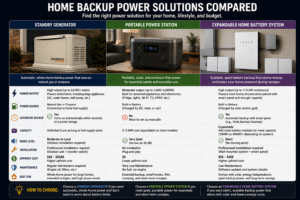
Solar Charging
Many portable power stations and battery systems support solar charging.
Advantages include:
- Renewable energy
- Quiet operation
- Lower operating costs
- Excellent for off-grid use
- Continuous charging during daylight
Solar charging becomes especially valuable during multi-day outages.
Remote Monitoring
Premium backup systems now offer smartphone monitoring.
Features may include:
- Battery status
- Generator status
- Fuel level
- Maintenance reminders
- Automatic alerts
- Remote diagnostics
This feature provides added peace of mind when you’re away from home.
Carbon Monoxide (CO) Protection
Modern portable generators often include carbon monoxide shutdown systems.
If dangerous CO levels are detected around the generator, it automatically shuts off.
Always operate portable generators outdoors in a well-ventilated location. Never run a generator inside a garage, basement, crawl space, or enclosed building. Position it well away from doors, windows, and vents.
Runtime
Long runtime becomes extremely important during extended outages.
Compare:
- Fuel tank size
- Battery capacity
- Runtime at 25% load
- Runtime at 50% load
Longer runtime means fewer refueling or recharging interruptions.
Common Buying Mistakes
Avoid these common mistakes before investing in emergency backup power.
Buying Too Small
Many homeowners underestimate how much electricity they actually need.
Always calculate:
- Running watts
- Starting watts
- Refrigerators
- Freezers
- Well pumps
- Sump pumps
- Air conditioners
- Medical equipment
Buying slightly more capacity provides room for future needs.
Buying More Than Necessary
Not every home requires a whole-house standby generator.
If your goal is simply to power:
- Phones
- Routers
- Refrigerators
- Lights
- Medical devices
A portable generator or power station may be the better investment.
Ignoring Fuel Availability
Fuel becomes one of the biggest challenges during extended outages.
Think about:
- Gasoline availability
- Propane storage
- Natural gas service
- Solar charging capability
Planning ahead helps avoid unnecessary stress during emergencies.
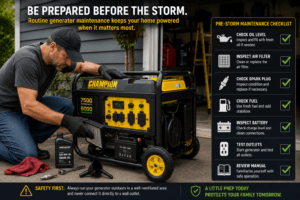
Forgetting Maintenance
Every backup system requires some level of maintenance.
Portable generators should be:
- Exercised monthly
- Given regular oil changes
- Kept fueled properly
- Stored correctly
Battery systems should also receive periodic software updates and system inspections when recommended by the manufacturer.
Waiting Until Storm Season
Generators and battery systems often become difficult to find before hurricanes, ice storms, and major weather events.
Buying early allows you to:
- Compare more models
- Install transfer equipment
- Learn safe operation
- Test your system
- Build emergency fuel supplies
Preparing before severe weather arrives is always the best strategy.
Frequently Asked Questions
What is the best emergency backup power solution?
For most homeowners, a portable generator offers the best balance of affordability, power, and flexibility.
If automatic whole-home protection is your priority, a standby generator is often the best solution.
Are portable power stations better than generators?
Portable power stations are quieter, maintenance-free, and safe for indoor use.
Portable generators generally provide:
- More power
- Longer runtime
- Better value for large electrical loads
The better choice depends on your backup power needs.
How much backup power do I need?
Every home is different.
Consider whether you want to power:
- Only essential appliances
- Several household circuits
- Your entire home
Calculating your running and starting wattage is the best way to determine the correct system size.
Can I power my entire house?
Yes.
Large portable generators connected through a transfer switch and permanently installed standby generators can power most or all household circuits depending on their capacity.
How long can backup systems run?
Runtime depends on:
- Fuel supply
- Battery capacity
- Electrical load
- Weather conditions
- Solar charging (if applicable)
Portable generators can often run for days with adequate fuel, while battery systems may run from several hours to multiple days when paired with solar panels and expansion batteries.
Which backup solution requires the least maintenance?
Home battery backup systems and portable power stations require the least maintenance because they have no gasoline engines, oil changes, or fuel storage requirements.
Final Thoughts
Every homeowner’s backup power needs are different, which is why there is no single solution that’s perfect for everyone. The best emergency backup system depends on your home’s electrical demands, budget, fuel availability, and how long you need to stay powered during an outage.
For homeowners seeking maximum power and flexibility at an affordable price, the DuroMax XP13000HXT Tri-Fuel Generator remains one of the best overall emergency backup solutions available. Its ability to operate on gasoline, propane, or natural gas makes it exceptionally versatile for long-term outages.
If quiet, indoor-safe backup power is your priority, the EcoFlow DELTA Pro 3 provides outstanding battery-powered performance with expandable capacity and solar charging options. Homeowners wanting automatic whole-house protection should consider the Generac 24kW Guardian, while those already using rooftop solar may benefit from the seamless operation of the Tesla Powerwall 3. Budget-conscious buyers will also find excellent value in the Champion 7500-Watt Dual Fuel Generator, which delivers dependable backup power without the cost of a permanently installed system.
The most important step is preparing before the next outage occurs. Choosing the right backup power solution today can protect your family, preserve food, keep critical appliances operating, and provide peace of mind whenever the lights go out.