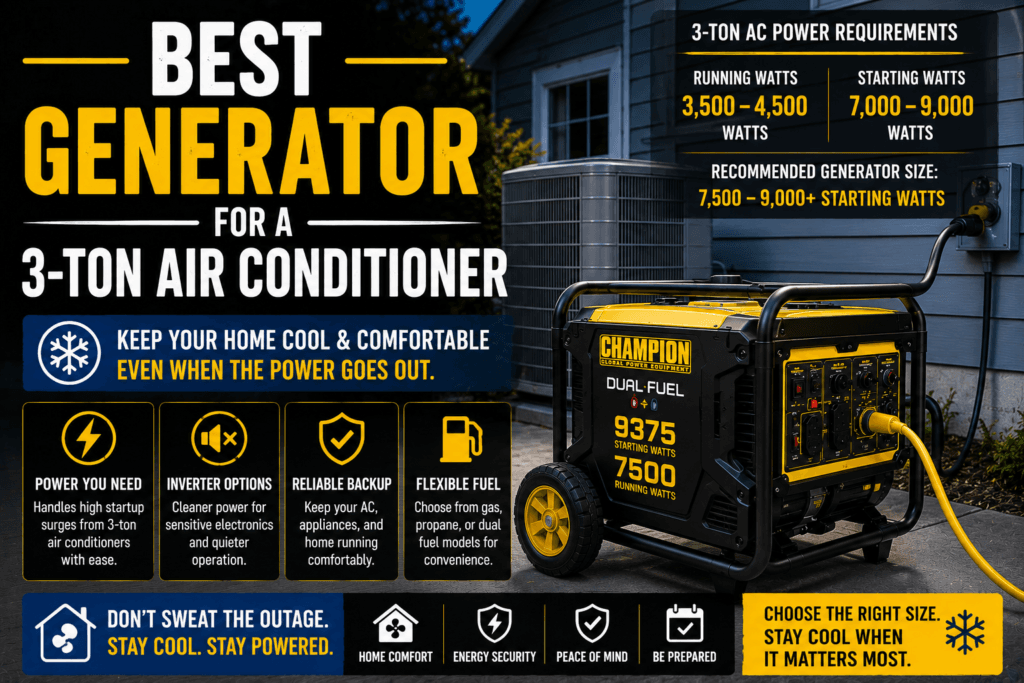
A 3-ton central air conditioner is one of the most common residential HVAC systems in the United States, but it’s also one of the most demanding appliances to power during an outage. Many homeowners assume that if a generator has enough running watts, it can start their air conditioner—but that’s not always true.
The compressor in a central air conditioner requires a large surge of power when it starts. Choosing the wrong generator can leave your AC unable to start, even if everything looks good on paper.
In this guide, we’ll explain what size generator you need for a 3-ton air conditioner, how a soft-start kit can reduce generator requirements, and which generators are the best choices in 2026.
How Much Power Does a 3-Ton Air Conditioner Need?
A typical 3-ton (36,000 BTU) central air conditioner usually requires:
| Requirement | Typical Range |
|---|---|
| Running Watts | 3,500–5,000 W |
| Starting Watts | 7,000–10,000+ W |
The exact requirements depend on:
- Air conditioner age
- SEER rating
- Compressor design
- Voltage
- Outdoor temperature
- Whether a soft-start kit is installed
Many HVAC professionals recommend a 7,500 to 10,000+ watt generator for a typical 3-ton central air conditioner, with larger units providing additional margin for other household loads.
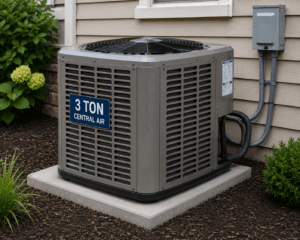
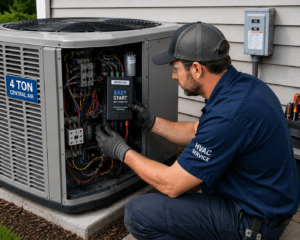
What Is a Soft-Start Kit?
A soft-start kit reduces the large surge of electricity needed when your air conditioner compressor starts.
Benefits include:
- Lower startup current
- Smaller generator requirements
- Reduced stress on the compressor
- Smoother starts
- Better compatibility with portable generators
Many homeowners are able to use a significantly smaller generator after installing a quality soft-start device. Real-world reports show startup current reductions of well over 50% in some installations.
What Size Generator Should You Buy?
Without a Soft-Start Kit
For most homes:
Recommended Generator Size:
- 9,000–12,000 running watts
This provides enough capacity to start many 3-ton air conditioners while still powering a refrigerator, lights, and other essential appliances.
With a Soft-Start Kit
Many homeowners can successfully operate a 3-ton AC using:
- 7,500–9,500 running watts
Actual performance depends on the specific air conditioner, generator, and other electrical loads.
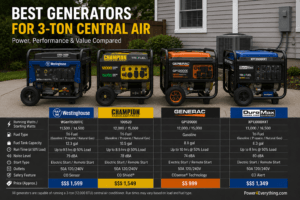
Our Top Picks
Best Overall
Why we like it:
- Plenty of power for most 3-ton AC systems
- Runs on gasoline, propane, or natural gas
- Electric start
- Excellent customer ratings
- Ideal for whole-home backup
Best Value
Excellent for:
- 3-ton air conditioners with a soft-start kit
- Home backup
- Long runtime
- Dual-fuel flexibility
Best Heavy-Duty Portable Generator
Ideal for:
- Larger homes
- Multiple appliances
- Well pumps
- 3-ton AC systems
- Extended outages
Best Budget Option
A strong value for homeowners who need substantial backup power without spending premium prices.
Portable vs. Standby Generator
Portable Generator
Advantages:
- Lower purchase cost
- Portable
- Available in gasoline, propane, and tri-fuel models
- Great for occasional outages
Standby Generator
Advantages:
- Starts automatically
- Permanently installed
- Powers the home without manual setup
- Excellent for extended outages
If your goal is to keep central air running automatically during every outage, a standby generator may be the better long-term solution.
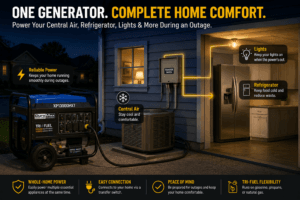
Don’t Forget Your Other Appliances
If you want to run your air conditioner plus:
- Refrigerator
- Freezer
- Lights
- Well pump
- Internet
- Microwave
You’ll need additional generator capacity beyond what the AC alone requires.
Always calculate your total running watts before choosing a generator.
Safety Tips
Always:
- Operate portable generators outdoors.
- Keep generators well away from doors, windows, and vents.
- Install carbon monoxide detectors.
- Use a transfer switch or approved interlock kit.
- Test your generator monthly.
- Change oil according to the maintenance schedule.
Never plug a generator directly into a household outlet or operate it inside a garage or enclosed space.
Common Mistakes to Avoid
Avoid these common errors:
- Buying a generator based only on running watts
- Forgetting compressor startup surge
- Ignoring soft-start kits
- Running the generator indoors
- Overloading the generator
- Using undersized extension cords
- Skipping maintenance
- Waiting until a storm to test your setup

Frequently Asked Questions
Can a 7,500-watt generator run a 3-ton AC?
It may, especially if the air conditioner has a soft-start kit installed. Without one, many systems require a larger generator due to the compressor’s startup surge.
Is a soft-start kit worth it?
Yes. A soft-start kit can significantly reduce startup current, making it easier for a portable generator to start and run your air conditioner.
Should I buy a dual-fuel or tri-fuel generator?
If you want greater flexibility during extended outages, dual-fuel and tri-fuel models let you switch between gasoline, propane, and—on tri-fuel models—natural gas.
Can I run other appliances at the same time?
Yes, but make sure the combined running and starting wattage stays within your generator’s rated capacity.
Do I need a transfer switch?
Yes. A properly installed transfer switch or approved interlock kit is the safest way to connect a portable generator to your home’s electrical system.
Final Thoughts
A 3-ton central air conditioner requires more than just enough running watts—it also demands enough surge capacity to start the compressor. For most homeowners, a 9,000–12,000 running watt generator provides the best balance of reliability and flexibility. If your system has a soft-start kit, you may be able to use a smaller generator while still keeping your home cool during an outage.
Choosing the right generator now means you’ll stay comfortable, protect your HVAC system, and avoid unpleasant surprises when the next power outage strikes.