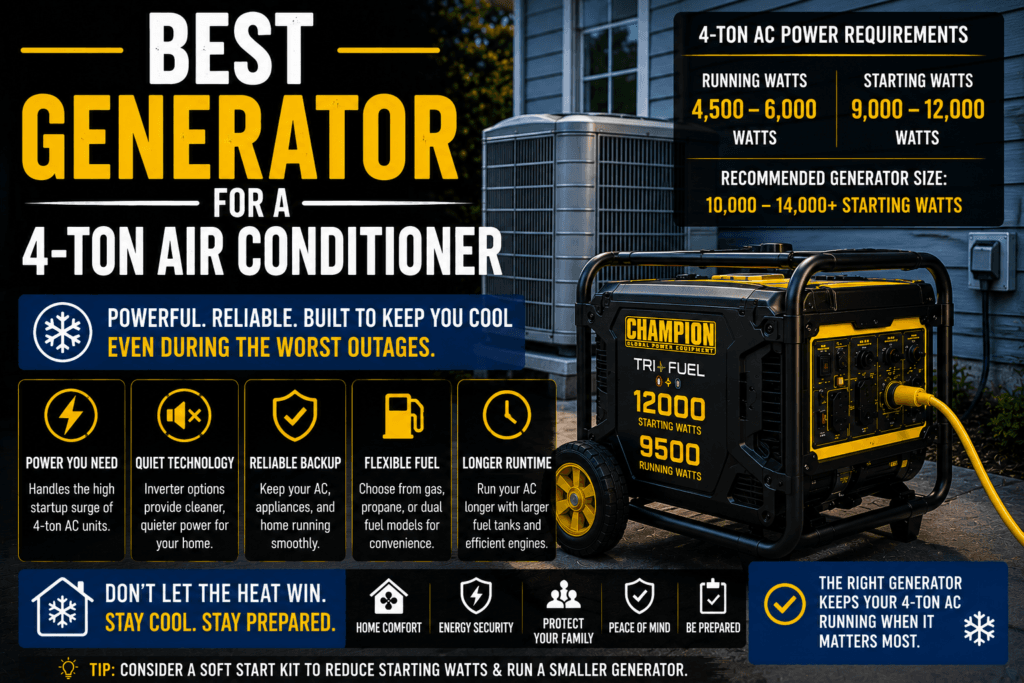
A 4-ton central air conditioner (48,000 BTU) can keep a large home comfortable during the hottest summer months—but it’s also one of the biggest electrical loads you’ll try to power during an outage.
The biggest mistake homeowners make is buying a generator based only on the air conditioner’s running watts. The compressor requires a large surge of power when it starts, and many generators that appear large enough simply can’t handle that initial startup.
In this guide, you’ll learn what size generator you need for a 4-ton air conditioner, how a soft-start kit can reduce generator requirements, and which generators are the best choices in 2026.
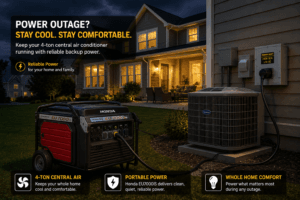
How Much Power Does a 4-Ton Air Conditioner Need?
A typical 4-ton (48,000 BTU) central air conditioner generally requires:
| Requirement | Typical Range |
|---|---|
| Running Watts | 4,500–6,000 W |
| Starting Watts | 9,000–12,000+ W |
Actual power requirements depend on:
- HVAC manufacturer
- SEER rating
- Compressor type
- Outdoor temperature
- Electrical voltage
- Whether a soft-start kit is installed
Many sizing guides recommend around a 10,000-watt portable generator as a starting point for many 4-ton systems, with additional capacity needed if you plan to power other household appliances at the same time.
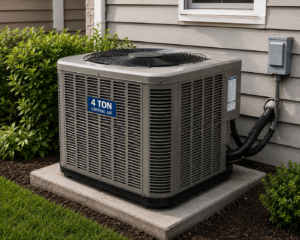
Why Starting Watts Matter
Your air conditioner uses far more electricity for a split second when the compressor starts than it does while it’s running.
If the generator cannot handle this startup surge:
- The AC may fail to start.
- The generator may overload or stall.
- Circuit breakers may trip.
- Voltage can drop enough to affect other equipment.
This is why startup wattage—not just running wattage—is so important when sizing a generator.
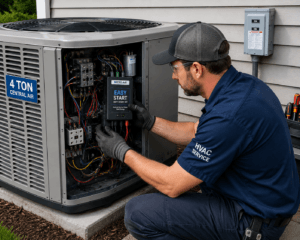
What Is a Soft-Start Kit?
A soft-start kit reduces the compressor’s starting current, making it much easier for a generator to start and run your central air conditioner.
Benefits include:
- Lower startup current
- Smaller generator requirements
- Less stress on the compressor
- Smoother operation
- Improved generator compatibility
Some manufacturers report that a properly installed soft-start device can dramatically reduce generator size requirements for central air conditioners.
Recommended Generator Size
Without a Soft-Start Kit
For most homes:
Recommended Generator Size
- 10,000–13,000 running watts
This provides enough capacity for many 4-ton air conditioners while still allowing you to operate several essential household appliances.
With a Soft-Start Kit
Many homeowners can successfully operate a 4-ton air conditioner using:
- 8,000–10,500 running watts
Actual results depend on your specific HVAC system and generator.
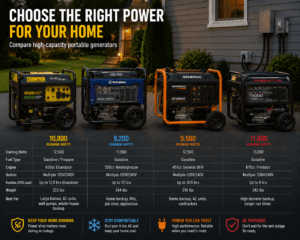
Our Top Picks
Best Overall
Why we like it:
- Excellent power for most 4-ton AC systems
- Runs on gasoline, propane, or natural gas
- Electric start
- Long runtime
- Great whole-home backup capability
Best Value
Excellent for:
- 4-ton AC systems with a soft-start kit
- Essential household circuits
- Long outages
- Dual-fuel flexibility
Best Heavy-Duty Choice
Ideal for:
- Large homes
- Multiple HVAC loads
- Well pumps
- Extended outages
- High starting wattage
Best Budget Choice
A great value for homeowners needing enough capacity for a central air conditioner without paying premium prices.
Don’t Forget Your Other Appliances
Most homeowners also want to power:
- Refrigerator
- Freezer
- Lights
- Internet
- Television
- Microwave
- Well pump
- Garage door opener
These loads add to the total generator demand.
Always calculate your total running watts before choosing a generator.
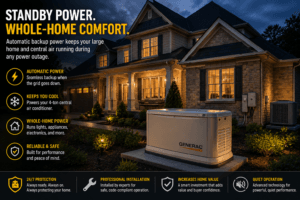
Portable vs. Standby Generator
Portable Generator
Advantages:
- Lower purchase price
- Portable
- Available in gasoline, propane, and tri-fuel models
- Great for occasional outages
Standby Generator
Advantages:
- Starts automatically
- Permanently installed
- Can power central air without manual setup
- Ideal for frequent outages
If your goal is automatic whole-home backup—including your air conditioner—a standby generator is often the most convenient long-term solution.
📷
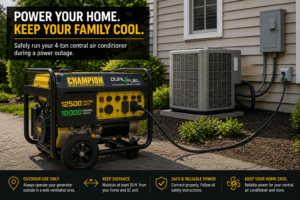
Safety Tips
Always:
- Operate portable generators outdoors.
- Keep generators away from doors, windows, and vents.
- Install carbon monoxide detectors.
- Use a properly installed transfer switch or approved interlock kit.
- Test your generator monthly.
- Follow the manufacturer’s maintenance schedule.
Never connect a generator directly to a household wall outlet.
Common Mistakes to Avoid
Avoid these common errors:
- Buying based only on running watts
- Ignoring compressor startup surge
- Skipping a soft-start kit
- Running the generator indoors
- Overloading the generator
- Using undersized extension cords
- Waiting until storm season to test the system
Frequently Asked Questions
Can a 10,000-watt generator run a 4-ton air conditioner?
In many cases, yes—especially if the air conditioner has a soft-start kit installed. Without one, some 4-ton systems may require a larger generator because of the compressor’s startup surge.
Is a soft-start kit worth it?
Yes. Many homeowners install a soft-start kit to reduce compressor startup current, making it easier to run central air conditioning from a portable generator.
Should I buy a tri-fuel generator?
Tri-fuel generators offer excellent flexibility by allowing you to operate on gasoline, propane, or natural gas, making them a great choice for extended outages.
Can I power other appliances too?
Yes, as long as the combined running and starting wattage stays within your generator’s rated capacity.
Do I need a transfer switch?
Yes. A properly installed transfer switch or compatible interlock kit is the safest way to connect a generator to your home’s electrical system.
Final Thoughts
A 4-ton central air conditioner places a significant demand on any portable generator, especially during compressor startup. For most homeowners, a 10,000–13,000 running watt generator provides the best combination of performance and flexibility. If you install a soft-start kit, you may be able to use a smaller generator while still enjoying reliable cooling during an outage.
Planning ahead, sizing your generator correctly, and maintaining it properly will help ensure your home stays cool and comfortable the next time the power goes out.