Best Generators for Home Backup (2026 Guide)
When the power goes out, the right generator can help keep essential appliances running, protect refrigerated food, power medical equipment, operate a sump pump or well pump, and make an extended outage much easier to manage.
But choosing a generator for home backup is not as simple as buying the model with the highest wattage.
The best generator for your home depends on several factors, including the size of your house, which appliances you need to operate, whether you have central air conditioning, what fuels are available in your area, how long outages typically last, and how much you are prepared to spend.
A small inverter generator may be enough for a homeowner who only needs to power a refrigerator, lights, internet equipment, and a few electronics. Another household may need a large tri-fuel generator capable of operating a well pump, sump pump, refrigerator, freezer, and central air conditioner.
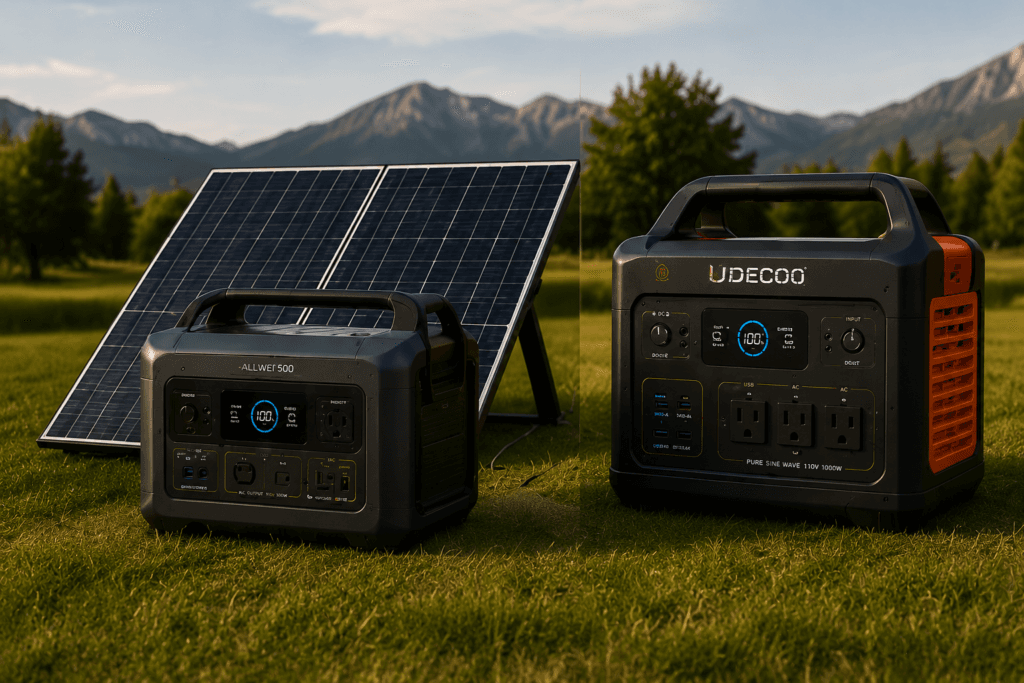
Some homeowners may prefer a portable power station because it can operate quietly without gasoline or engine exhaust. Others may want the convenience of a permanently installed standby generator that automatically starts when utility power fails.
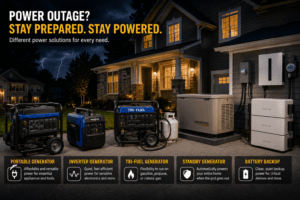
This 2026 guide will help you understand the major types of home backup generators, determine how much power you may need, and compare different backup-power options before making a decision.
Quick Recommendations
The right generator depends more on your individual power requirements than on finding one model that is best for everyone.
Here are our quick recommendations by use case:
| Home Backup Need | Recommended Generator Type |
|---|---|
| Refrigerator, lights, internet, and electronics | Small inverter generator or portable power station |
| Several essential household appliances | Mid-sized portable generator |
| Refrigerator, freezer, sump pump, and additional appliances | Large portable generator |
| Central air conditioning and multiple appliances | High-output portable or tri-fuel generator |
| Extended power outages | Dual-fuel or tri-fuel generator |
| Quiet emergency power | Inverter generator or portable power station |
| Automatic whole-home backup | Standby generator |
| Homes with natural gas access | Tri-fuel or standby generator |
| Indoor backup for electronics and small appliances | Portable power station |
Before purchasing any generator, calculate the running and starting wattage requirements of the appliances you plan to operate.
Buying too small a generator can leave you without enough power during an emergency.
Buying significantly more generator than you need may mean spending additional money, using more fuel, and operating a larger and heavier machine than necessary.
Our Top Home Backup Generator Picks for 2026
For this guide, we selected generators that represent different home backup needs rather than simply choosing the largest or most expensive models.
Best Overall for Serious Home Backup: DuroMax XP13000HXT
The DuroMax XP13000HXT is a high-output tri-fuel portable generator designed for homeowners who want considerable power and multiple fuel options.
Its ability to operate on gasoline, propane, or natural gas gives homeowners more flexibility during extended outages.
That flexibility can become especially valuable during major storms or emergencies when gasoline may be difficult to obtain.
Why We Picked It
- High power output
- Tri-fuel capability
- Suitable for substantial home backup needs
- Multiple fuel options during emergencies
- Electric start
- Heavy-duty construction
Best For
- Larger homes
- Extended outages
- Central air conditioning
- Well pumps
- Sump pumps
- Multiple household appliances
Consider Before Buying
The DuroMax XP13000HXT is a large and heavy generator. Homeowners should carefully calculate their power requirements and determine how the generator will be safely connected to household circuits before purchasing.

Best High-Output Alternative: Westinghouse WGen11500TFc
The Westinghouse WGen11500TFc is another strong option for homeowners seeking high-output portable backup power.
Its tri-fuel capability allows operation using gasoline, propane, or natural gas.
For homeowners who already have access to a residential natural gas supply, a compatible tri-fuel generator can provide an additional emergency fuel option.
Why We Picked It
- High output
- Tri-fuel capability
- Remote electric start
- Suitable for demanding home backup applications
- Multiple outlet options
- Carbon monoxide safety technology
Best For
- Average and large homes
- Long power outages
- Multiple large appliances
- Homeowners wanting fuel flexibility
Consider Before Buying
Natural gas output can differ from gasoline output, so homeowners should check the manufacturer’s specifications when calculating available wattage for each fuel type.

Best Dual-Fuel Generator for Home Backup: Westinghouse WGen11500DFc
Not every homeowner needs a tri-fuel generator.
The Westinghouse WGen11500DFc provides gasoline and propane capability for homeowners who want fuel flexibility without needing natural gas operation.
Propane can be especially useful for emergency preparedness because properly stored propane does not degrade like gasoline.
Why We Picked It
- Gasoline and propane operation
- High output
- Electric and remote start
- Suitable for substantial home backup loads
- Strong option for extended outages
Best For
- Homeowners without natural gas service
- Central air conditioning
- Refrigerators and freezers
- Well pumps
- Sump pumps
- Multiple household appliances

Best Premium Inverter Generator for Home Backup: Honda EU7000iS
Homeowners who prioritize quieter operation and clean inverter power may prefer the Honda EU7000iS.
Unlike conventional open-frame generators, inverter generators automatically adjust engine speed based on electrical demand.
This can help reduce noise and improve fuel efficiency under lighter loads.
The Honda EU7000iS is considerably more expensive than many conventional portable generators, but its combination of quieter operation, inverter technology, and established reputation makes it a premium home backup option.
Why We Picked It
- Quiet operation compared with many conventional generators
- Inverter technology
- Fuel-efficient operation
- Electric start
- Suitable for sensitive electronics
Best For
- Homeowners concerned about generator noise
- Electronics
- Refrigerators
- Freezers
- Furnaces
- Essential household circuits
Consider Before Buying
The Honda EU7000iS may not provide enough output for homeowners attempting to operate several large electrical loads simultaneously.
Calculate your wattage requirements carefully before purchasing.

Best Portable Power Station for Home Backup: EcoFlow DELTA Pro 3
Not every home backup system requires a gasoline engine.
The EcoFlow DELTA Pro 3 is a large portable power station designed for applications ranging from emergency backup to expandable home energy systems.
Unlike fuel-powered generators, portable power stations do not produce engine exhaust while operating.
That makes them useful for powering electronics and compatible household appliances indoors when used according to the manufacturer’s instructions.
Why We Picked It
- Quiet operation
- No gasoline required during operation
- LiFePO₄ battery technology
- Expandable system
- Multiple charging options
- Suitable for sensitive electronics
Best For
- Electronics
- Refrigerators
- Internet equipment
- Home offices
- CPAP machines and compatible medical equipment
- Homeowners interested in solar charging
Consider Before Buying
A portable power station stores a limited amount of energy.
Once the battery is depleted, it must be recharged.
During extended outages, homeowners need a reliable recharging strategy such as utility power when restored, compatible solar panels, or another manufacturer-approved charging source.

Best Generator for Smaller Home Backup Needs: Honda EU2200i
Not every household needs a 10,000-watt generator.
For homeowners who only want to operate a few essential devices, the Honda EU2200i remains a popular compact inverter generator.
It can be useful for powering selected essentials such as:
- Refrigerator
- Lights
- Television
- Internet equipment
- Battery chargers
- Small electronics
The exact combination of appliances it can operate depends on their individual running and starting wattage requirements.
Why We Picked It
- Compact
- Portable
- Quiet compared with many open-frame generators
- Inverter power
- Fuel efficient
Best For
- Small homes
- Apartments where generator use and storage are legally and safely permitted
- Limited emergency loads
- Camping
- Electronics

Best Automatic Backup Option: Whole-House Standby Generator
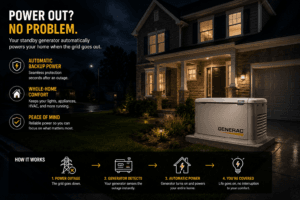
For homeowners who want automatic backup power, a permanently installed standby generator may be the best solution.
Unlike portable generators, standby generators can automatically detect a utility outage and begin supplying power through an automatic transfer switch.
Depending on system size and installation, a standby generator may be capable of operating many household circuits or most of the home.
Advantages of Standby Generators
- Automatic operation
- No need to manually move the generator into position
- Can provide substantial power
- Often connected to natural gas or propane
- Convenient during extended outages
Disadvantages
- Higher purchase cost
- Professional installation required
- Ongoing maintenance
- Fuel supply requirements
- Installation must meet applicable electrical, building, and fuel codes
Best For
- Frequent power outages
- Larger homes
- Homeowners who want automatic operation
- Households with critical electrical needs
- Long-term home backup planning
What Size Generator Do You Need for Home Backup?
Choosing the correct generator size is one of the most important parts of planning a home backup system.
Generators are typically rated using two important numbers:
Running watts are the watts a device continuously requires while operating.
Starting watts are the temporary additional watts some appliances need when their motors start.
Appliances with electric motors can require considerably more power during startup.
Examples include:
- Refrigerators
- Freezers
- Central air conditioners
- Window air conditioners
- Well pumps
- Sump pumps
- Furnaces
You cannot simply add the normal running wattage of your appliances and assume that number represents the generator size you need.
Starting loads must also be considered.
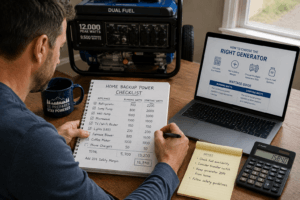
Typical Household Appliance Wattage
The following numbers are general estimates only.
Actual wattage varies by appliance model, age, size, and operating conditions.
| Appliance | Approximate Running Watts |
|---|---|
| Refrigerator | 100–800W |
| Freezer | 100–700W |
| Television | 50–300W |
| Wi-Fi Router | 5–30W |
| Laptop | 30–100W |
| Microwave | 600–1,500W |
| Sump Pump | 500–1,500W |
| Well Pump | 500–2,000W+ |
| Window Air Conditioner | 500–1,500W+ |
| Electric Water Heater | 3,000–5,000W+ |
| Central Air Conditioner | Varies significantly |
These figures should not be used as a substitute for checking the actual labels, manuals, or manufacturer specifications for your equipment.
How to Calculate Your Home Backup Power Needs
Use this basic process before choosing a generator:
- Make a list of everything you want to operate during an outage.
- Find the running wattage of each appliance.
- Identify appliances with higher starting wattage.
- Add the running loads you expect to operate simultaneously.
- Account for the largest additional starting load.
- Choose a generator with appropriate capacity and a reasonable safety margin.
For example, a homeowner may want to operate:
- Refrigerator
- Freezer
- Sump pump
- Gas furnace blower
- Lights
- Television
- Internet equipment
Another homeowner may also need:
- Central air conditioning
- Well pump
- Electric water heater
- Additional kitchen appliances
Those two households may require completely different generators.
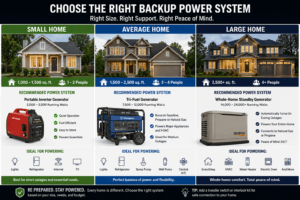
Small Home vs Average Home vs Large Home
Home size alone does not determine generator size.
A 3,000-square-foot home operating only essential appliances could require less generator capacity than a 1,500-square-foot home attempting to operate central air conditioning, an electric water heater, well pump, and multiple appliances simultaneously.
However, home size can provide a useful starting point.
Small Home Backup
A smaller generator may be sufficient if you only plan to operate:
- Refrigerator
- Freezer
- Lights
- Television
- Internet
- Phone chargers
- Gas furnace blower
An inverter generator, mid-sized portable generator, or portable power station may be appropriate depending on your actual electrical loads.

Average Home Backup
An average household may want to operate:
- Refrigerator
- Freezer
- Sump pump
- Furnace
- Lights
- Internet
- Television
- Microwave
- Selected additional appliances
A larger portable generator, dual-fuel generator, or tri-fuel generator may provide greater flexibility.

Large Home Backup
Large homes may have more demanding electrical systems, including:
- Multiple refrigerators
- Multiple freezers
- Large central air conditioners
- Well pumps
- Sump pumps
- Multiple HVAC systems
- Additional appliances
High-output portable generators, tri-fuel generators, or permanently installed standby generators may be more appropriate.

Before choosing a specific model, it is important to understand the major types of home backup power systems.
Each type has advantages and disadvantages.
The best choice depends on your power requirements, budget, available fuel, outage duration, noise concerns, and how much convenience you want.
| Backup Power Type | Best For | Main Advantage | Main Limitation |
|---|---|---|---|
| Conventional Portable Generator | General home backup | High output for the price | Noise and fuel storage |
| Inverter Generator | Quiet, efficient backup | Lower noise and clean power | Higher cost per watt |
| Dual-Fuel Generator | Fuel flexibility | Gasoline or propane | Only two fuel choices |
| Tri-Fuel Generator | Extended outages | Gasoline, propane, or natural gas | Larger and heavier |
| Portable Power Station | Quiet indoor backup | No engine exhaust during operation | Limited stored energy |
| Standby Generator | Automatic home backup | Automatically starts during an outage | High purchase and installation cost |

Conventional Portable Generators
Conventional portable generators remain one of the most common choices for emergency home backup.
They are available in a wide range of sizes and can provide substantial power for the purchase price.
Depending on generator capacity, a portable generator may be able to operate:
- Refrigerators
- Freezers
- Sump pumps
- Well pumps
- Furnaces
- Lights
- Kitchen appliances
- Window air conditioners
- Some central air-conditioning systems
Advantages
- Wide range of sizes
- High output available
- Generally lower cost per watt than inverter generators
- Many dual-fuel and tri-fuel options
- Suitable for extended outages when fuel is available
Disadvantages
- Louder than most inverter generators
- Produces dangerous carbon monoxide
- Must be operated outdoors in a safe location
- Requires fuel
- Regular maintenance is necessary
Best For
Homeowners who want substantial emergency power without the higher installation cost of a standby generator.
Inverter Generators
Inverter generators are designed to provide efficient, stable electrical power while generally operating more quietly than conventional open-frame generators.
Instead of continuously running at one engine speed, many inverter generators can adjust engine speed based on electrical demand.
This can reduce:
- Noise
- Fuel consumption
- Unnecessary engine wear
Inverter generators are particularly popular for electronics, camping, RV use, and homeowners concerned about generator noise.
Advantages
- Quieter operation
- Fuel-efficient under varying loads
- Clean power suitable for many sensitive electronics
- Many compact models are easy to transport
Disadvantages
- Higher cost per watt
- Large inverter generators can be expensive
- Smaller models may not provide enough power for demanding home backup loads
Best For
Homeowners who prioritize quieter operation, efficiency, and electronics.

Dual-Fuel Generators
Dual-fuel generators typically operate on gasoline or propane.
This provides an important advantage during emergencies.
If gasoline becomes difficult to find after a major storm, a homeowner may be able to use stored propane instead.
Gasoline Advantages
- Widely available during normal conditions
- Often provides higher output than propane on the same generator
- Easy to refill
Gasoline Disadvantages
- Degrades during long-term storage
- Requires safe storage
- Availability may become limited during widespread emergencies
Propane Advantages
- Stores for long periods when the cylinder and fuel are properly maintained
- Clean and convenient fuel storage
- Useful for emergency preparedness
Propane Disadvantages
- Generator output may be lower than when using gasoline
- Large loads can consume propane quickly
- Requires adequate fuel storage
Best For
Homeowners who want more fuel flexibility without needing natural gas operation.
Tri-Fuel Generators
Tri-fuel generators are becoming increasingly popular for home backup.
They can typically operate on:
- Gasoline
- Propane
- Natural gas
Having three fuel choices can provide valuable flexibility during extended outages.
A homeowner could use gasoline when maximum output is needed, propane from stored cylinders, or natural gas when an appropriate residential connection is available.
Advantages
- Three fuel choices
- Excellent emergency flexibility
- High-output models available
- Natural gas capability on compatible models
Disadvantages
- Large and heavy
- More expensive than many single-fuel generators
- Output varies depending on fuel type
- Natural gas connections must be properly installed and sized
Best For
Homeowners preparing for long outages who want the greatest possible fuel flexibility.

Portable Power Stations
Portable power stations use rechargeable batteries instead of internal combustion engines.
They are sometimes marketed as solar generators when sold or used with compatible solar panels.
Unlike gasoline generators, portable power stations do not create engine exhaust during operation.
They can be useful for powering:
- Refrigerators
- Electronics
- Internet equipment
- Televisions
- CPAP machines
- Home offices
- Lights
- Selected appliances
Larger systems may be capable of operating considerably more equipment.
Advantages
- Quiet operation
- No gasoline engine
- No engine exhaust during use
- Can be used indoors according to manufacturer instructions
- Solar charging available on compatible systems
- Minimal routine engine maintenance
Disadvantages
- Limited stored battery capacity
- Can be expensive
- Recharging may be difficult during long outages
- Large electrical loads can drain batteries quickly
Best For
Homeowners who prioritize quiet operation, indoor use, electronics, and renewable charging options.

Standby Generators
Standby generators provide the highest level of convenience for many homeowners.
A properly installed standby generator can automatically detect an outage and begin supplying backup power through an automatic transfer switch.
Depending on generator capacity and system design, it may power selected circuits or much of the home.
Advantages
- Automatic operation
- No manual generator setup during an outage
- High-capacity models available
- Suitable for extended outages when fuel remains available
- Can increase convenience for households with frequent outages
Disadvantages
- Expensive
- Professional installation required
- Requires regular maintenance
- Fuel costs
- Installation requirements vary by property and local codes
Best For
Homeowners who want automatic backup power and are willing to invest in a permanently installed system.
What Is the Best Generator Fuel for Home Backup?
The best fuel depends on your property, generator, storage options, and emergency plan.
There is no single fuel that is best for every homeowner.
| Fuel | Main Advantage | Main Disadvantage |
|---|---|---|
| Gasoline | Widely available and strong generator output | Limited long-term storage life |
| Propane | Excellent for long-term storage | May provide lower generator output |
| Natural Gas | Convenient when utility service remains available | Service can be interrupted in some emergencies |
| Diesel | Efficient and common in large backup systems | Fuel storage and generator cost |
| Battery/Solar | Quiet with no engine exhaust during operation | Limited energy storage and weather-dependent solar charging |
Gasoline for Home Backup
Gasoline remains the most common portable generator fuel.
It is easy to obtain during normal conditions and can provide strong generator performance.
However, gasoline requires planning.
During major storms:
- Gas stations may lose power.
- Fuel lines may become long.
- Local supplies may run low.
- Roads may be blocked.
Gasoline also requires safe storage and appropriate fuel stabilization when stored for extended periods.
Never store excessive fuel or gasoline containers in unsafe locations.
Propane for Home Backup
Propane is popular among homeowners who want long-term emergency fuel storage.
Properly stored propane does not degrade in the same way gasoline does.
Homeowners may use:
- Small portable cylinders
- Larger residential propane tanks
- Permanently installed tanks
The amount of propane required depends on generator load, generator efficiency, and outage duration.

Natural Gas for Home Backup
Natural gas can be extremely convenient for compatible generators.
Instead of manually refueling the generator, an appropriately installed system may connect to the home’s natural gas supply.
However, homeowners should not assume natural gas is unlimited or guaranteed during every emergency.
Natural gas service can potentially be interrupted by:
- Infrastructure damage
- Earthquakes
- Utility emergencies
- System shutdowns
Generator output can also be lower on natural gas than gasoline.
Always check the manufacturer’s wattage ratings for each fuel.

What Size Generator Do You Need to Run a Refrigerator?
A refrigerator is one of the most common appliances homeowners want to operate during a power outage.
A refrigerator may require relatively modest running wattage but significantly higher power when its compressor starts.
Because refrigerator designs vary, check:
- Appliance label
- Owner’s manual
- Manufacturer specifications
Do not select a generator based only on a generic wattage chart.
For many households, even a relatively small generator can operate a refrigerator along with several low-wattage devices, provided the combined running and starting loads remain within the generator’s capacity.

What Size Generator Do You Need for a Freezer?
Like refrigerators, freezers use compressors that can create temporary starting loads.
A generator may be able to operate both a refrigerator and freezer, but the homeowner must consider whether their compressors could start simultaneously.
During an outage, you may reduce electrical demand by managing when certain appliances operate.
However, repeatedly connecting and disconnecting appliances can be inconvenient.
A properly sized generator provides greater flexibility and reduces the risk of overload.
What Size Generator Do You Need for a Sump Pump?
A sump pump can become one of the most important appliances during a severe storm.
Unfortunately, severe storms can cause both:
- Heavy rainfall
- Power outages
That combination can increase the risk of basement flooding.
Sump pumps require additional starting power when their motors activate.
The correct generator size depends on:
- Pump horsepower
- Starting wattage
- Running wattage
- Other appliances operating simultaneously
Homeowners with sump pumps should consider backup power before storm season rather than waiting until an outage occurs.

What Size Generator Do You Need for a Well Pump?
Homes with private wells have an additional concern during power outages.
Without electricity, the well pump may not operate.
This can leave the household without running water.
Well pump requirements vary significantly depending on:
- Pump horsepower
- Pump depth
- Voltage
- Starting current
- System design
Some well pumps require 240-volt power.
Before purchasing a generator, check your pump specifications and determine whether the generator provides the correct voltage, wattage, and connection method.

Can a Portable Generator Run Central Air Conditioning?
Some portable generators can operate central air conditioners.
However, this is one of the most demanding home backup applications.
Air conditioners can require substantial starting power when the compressor activates.
Whether a generator can operate your central air conditioner depends on:
- Air conditioner size
- Running wattage
- Starting requirements
- Generator output
- Other electrical loads
- Electrical connection method
A generator advertised as having enough running watts may still struggle with compressor startup.
Some homeowners install compatible soft-start devices to reduce air-conditioning startup demand.
Installation should be performed according to equipment manufacturer requirements and applicable electrical codes.

Can a Generator Run an Electric Water Heater?
Electric water heaters can consume substantial amounts of power.
Many traditional electric water heaters use several thousand watts while heating.
Running an electric water heater during an outage may significantly increase the generator capacity required.
Homeowners attempting to conserve generator power may choose to prioritize:
- Refrigeration
- Water supply
- Heating
- Cooling
- Medical equipment
- Lighting
before using large electric resistance appliances.
Can a Generator Run an Electric Stove?
Electric ranges and ovens can also require considerable power.
Operating multiple burners and an oven may create a large electrical load.
For emergency cooking, some households use lower-wattage alternatives such as:
- Microwave
- Electric hot plate
- Air fryer
- Slow cooker
The safest and most practical solution depends on your available equipment and backup power capacity.
Never use outdoor cooking equipment indoors.
Best Generator for Extended Power Outages
Long outages require different planning than short interruptions.
For an outage lasting several hours, a homeowner may only need enough power for:
- Refrigerator
- Internet
- Lights
- Electronics
For an outage lasting several days, additional concerns include:
- Fuel availability
- Generator maintenance
- Water supply
- Heating and cooling
- Food storage
- Medical equipment
- Fuel consumption
For extended outages, dual-fuel and tri-fuel generators can provide significant advantages.
Multiple fuel options reduce dependence on a single energy source.
Our Preferred Generator Type for Extended Outages
A high-output tri-fuel generator is one of the most flexible portable options for long-term emergency backup.
Models such as the DuroMax XP13000HXT and Westinghouse WGen11500TFc provide three potential fuel sources.
However, the best solution still depends on individual household requirements.

Best Generator for Short Power Outages
Not every homeowner needs a massive generator.
For short outages, a smaller inverter generator or portable power station may be sufficient.
Essential loads might include:
- Refrigerator
- Internet equipment
- Lights
- Television
- Phone chargers
- Laptop
- Medical equipment
A smaller generator can offer several advantages:
- Lower purchase price
- Easier transportation
- Reduced fuel consumption
- Easier storage
The key is accurately determining what you truly need to operate.
Best Generator for Quiet Home Backup
If noise is a major concern, consider:
- Inverter generators
- Portable power stations
Inverter generators are generally quieter than conventional open-frame generators.
Portable power stations are even quieter because they do not use internal combustion engines.
However, battery-powered systems and inverter generators have different strengths.
An inverter generator can continue operating as long as fuel and maintenance needs are addressed.
A portable power station must eventually be recharged.

Best Generator for Homes With Medical Equipment
Backup power can be especially important for households using electrically powered medical equipment.
Examples may include:
- CPAP machines
- Oxygen concentrators
- Refrigerated medications
- Mobility equipment
- Other electrically powered medical devices
The correct backup system depends on the specific equipment.
Important considerations include:
- Running wattage
- Starting wattage
- Required runtime
- Battery backup availability
- Manufacturer recommendations
For critical medical needs, do not rely solely on generic online wattage estimates.
Consult the equipment manufacturer and appropriate medical professionals when developing an emergency backup plan.
A redundant backup strategy may also be appropriate.

How Should You Connect a Generator to Your Home?
There are several ways homeowners may use portable generators.
The correct method depends on the generator, home electrical system, and appliances being powered.
Common methods include:
- Properly rated extension cords for individual appliances
- Generator inlet and manual transfer switch
- Approved interlock equipment where legally permitted and properly installed
For supplying household circuits, professional installation by a qualified electrician is strongly recommended.
Never Backfeed a Home
Never attempt to power a home by connecting a generator to a household outlet.
This dangerous practice is commonly called backfeeding.
Backfeeding can:
- Electrocute utility workers
- Damage electrical equipment
- Cause fires
- Injure or kill occupants
Use only approved connection methods.

Transfer Switch vs Extension Cords
Both methods can be useful depending on the situation.
Extension Cords
Extension cords may be practical when powering a limited number of appliances.
Only use cords that are:
- Properly rated for the electrical load
- Suitable for the intended environment
- In good condition
- Used according to manufacturer instructions
Transfer Switch
A transfer switch can allow a compatible generator to power selected household circuits.
Advantages may include:
- Easier power distribution
- Fewer extension cords
- Ability to operate hardwired appliances
- Safer isolation from utility power when properly installed
Transfer equipment should be selected and installed according to applicable codes and manufacturer requirements.
Generator Safety Rules Every Homeowner Should Know
Generator safety is more important than convenience.
Portable fuel-powered generators produce carbon monoxide, an invisible and potentially deadly gas.
Follow the generator manufacturer’s instructions and current official safety guidance.
Important precautions include:
- Never operate a fuel-powered generator inside a home.
- Never operate one inside a garage, even with the door open.
- Keep generators away from doors, windows, and vents.
- Use carbon monoxide alarms in appropriate locations.
- Keep the generator dry and follow manufacturer instructions for wet-weather operation.
- Allow the generator to cool before refueling.
- Store fuel safely.
- Never backfeed household wiring.
- Inspect cords and connections.
- Perform required maintenance.

How Far Should a Generator Be From the House?
Current safety guidance should always be followed.
Fuel-powered generators should be operated outdoors and kept well away from doors, windows, vents, and other openings where exhaust could enter the building.
Many safety authorities recommend operating portable generators at least 20 feet from the home when possible, with exhaust directed away from the structure.
Always follow the generator manufacturer’s instructions and applicable official safety guidance.
Should You Buy More Generator Than You Need?
Some additional generator capacity can be useful.
It can provide:
- Room for temporary starting loads
- Flexibility to add appliances
- Reduced risk of constantly operating at maximum output
However, buying a dramatically oversized generator can have disadvantages.
These may include:
- Higher purchase price
- Greater fuel consumption
- More difficult transportation
- Increased storage requirements
The goal is not to buy the largest generator available.
The goal is to buy an appropriately sized generator for your actual needs.
Home Backup Generator Buying Checklist
Before purchasing a generator, ask yourself:
- What appliances must I operate?
- What are their running wattages?
- What are their starting wattages?
- Do I need 120-volt or 240-volt power?
- Do I have central air conditioning?
- Do I have a well pump?
- Do I have a sump pump?
- How long do outages typically last?
- What fuels can I safely store?
- Is natural gas available?
- How much generator noise can I tolerate?
- Where will the generator operate safely?
- Where will I store it?
- How will I connect it to the home?
- Do I need an electrician?
- What maintenance will the generator require?
Answering these questions can significantly narrow your choices.

Which Generator Is Best for Most Homeowners?
There is no single generator that is best for every home.
However, our general recommendations are:
Best Overall for Serious Home Backup: DuroMax XP13000HXT
Best High-Output Alternative: Westinghouse WGen11500TFc
Best Dual-Fuel Option: Westinghouse WGen11500DFc
Best Premium Inverter Generator: Honda EU7000iS
Best Portable Power Station: EcoFlow DELTA Pro 3
Best for Limited Essential Loads: Honda EU2200i
Best Automatic Solution: Professionally installed standby generator
The best choice depends on the appliances you need to operate, your fuel options, budget, and expected outage duration.
How Much Should You Spend on a Home Backup Generator?
The amount you should spend depends on the level of backup power your household needs.
A homeowner who only wants to keep a refrigerator, lights, internet equipment, and a few electronics operating may need a much smaller investment than someone who wants to power central air conditioning, a well pump, sump pump, multiple refrigerators, and other large appliances.
In general, home backup systems fall into several categories:
| Backup Power Need | Typical Solution |
|---|---|
| A few essential electronics | Small portable power station |
| Refrigerator and basic essentials | Small inverter generator or larger power station |
| Multiple household essentials | Mid-sized portable generator |
| Central air and multiple appliances | High-output portable generator |
| Greater fuel flexibility | Dual-fuel or tri-fuel generator |
| Automatic home backup | Permanently installed standby generator |
Instead of setting your budget first and buying the largest generator you can afford, calculate your power requirements and determine which type of system meets those needs.

Is a Portable Generator or Standby Generator Better?
A portable generator is generally the better choice for homeowners who want lower upfront costs and do not mind manually setting up and operating their generator during an outage.
A standby generator may be the better choice for homeowners who want automatic operation and are willing to pay for professional installation.
Choose a Portable Generator If:
- You want a lower upfront cost.
- You are comfortable setting up the generator during an outage.
- You have a safe outdoor operating location.
- You want the ability to move the generator.
- You are willing to manage fuel and maintenance.
Choose a Standby Generator If:
- You want automatic backup power.
- Your area experiences frequent outages.
- You want to power many household circuits.
- You do not want to manually set up a portable generator.
- Your budget allows for professional installation and ongoing maintenance.
Our Recommendation
For most homeowners seeking affordable emergency backup power, a properly sized portable generator provides a practical balance between cost and capability.
For homeowners who experience frequent outages, have critical power requirements, or prioritize convenience, a professionally installed standby generator may be worth the additional investment.
Is a Generator or Portable Power Station Better?
Portable generators and portable power stations solve different problems.
A fuel-powered generator can continue producing electricity as long as fuel remains available and maintenance requirements are addressed.
A portable power station stores a limited amount of energy in its batteries.
Once that stored energy is depleted, the system must be recharged.
However, portable power stations provide several important advantages.
They are:
- Quiet
- Easy to operate
- Free from engine exhaust during use
- Suitable for many electronics
- Compatible with solar charging on supported systems
- Easier to maintain than combustion-engine generators
Choose a Fuel-Powered Generator If:
- You need substantial power.
- You expect long outages.
- You have access to fuel.
- You need to operate large appliances.
- You want longer runtime through refueling.
Choose a Portable Power Station If:
- Quiet operation is important.
- You primarily need electronics and essential appliances.
- You want indoor-friendly battery backup when used according to manufacturer instructions.
- You are interested in compatible solar charging.
- You want minimal engine maintenance.
Which Is Better?
For extended outages and demanding household loads, a fuel-powered generator often provides greater flexibility.
For quiet backup power, electronics, short outages, and households that do not want to store fuel, a portable power station may be the better choice.
Some homeowners may benefit from owning both.
A portable power station can operate smaller loads quietly, while a fuel-powered generator can handle larger appliances and recharge compatible battery systems when appropriate.

Should You Choose a Dual-Fuel or Tri-Fuel Generator?
The primary difference is the number of available fuel options.
A dual-fuel generator typically operates on:
- Gasoline
- Propane
A tri-fuel generator typically operates on:
- Gasoline
- Propane
- Natural gas
Choose Dual-Fuel If:
- You do not have natural gas service.
- You want gasoline and propane flexibility.
- You want a simpler emergency fuel strategy.
- A dual-fuel model meets your power requirements.
Choose Tri-Fuel If:
- Your home has natural gas service.
- You want maximum fuel flexibility.
- You are preparing for extended outages.
- You want access to three potential fuel sources.
Our Recommendation
For homeowners with access to natural gas, a tri-fuel generator can provide valuable additional flexibility.
For homeowners without natural gas service, a dual-fuel generator may provide everything they need.
Do not buy a tri-fuel generator simply because it has an additional fuel option.
Compare output, price, features, reliability, and your actual fuel availability.
Should You Buy an Inverter or Conventional Generator?
This decision usually comes down to power requirements, noise, efficiency, and budget.
Choose an Inverter Generator If:
- Quiet operation is important.
- You want efficient operation under varying loads.
- You frequently power sensitive electronics.
- Portability is important.
- Your electrical requirements fit within the generator’s capacity.
Choose a Conventional Generator If:
- You need higher output for the money.
- You need to operate multiple household appliances.
- Noise is less important than power capacity.
- You want more high-output options.
Our Recommendation
For limited essential loads and noise-sensitive environments, an inverter generator is an excellent choice.
For substantial home backup requirements on a limited budget, a conventional open-frame generator may provide more power for the money.
How Long Can You Run a Generator During a Power Outage?
There is no universal maximum runtime for every generator.
Runtime depends on:
- Generator design
- Fuel type
- Fuel tank capacity
- Electrical load
- Maintenance requirements
- Manufacturer instructions
- Environmental conditions
Some generators can operate for many hours between refueling periods.
However, generators still require:
- Oil checks
- Maintenance
- Refueling
- Inspection
- Appropriate operating conditions
Always follow the manufacturer’s operating and maintenance schedule.
Do not assume a portable generator can operate continuously for days without inspection or maintenance.
How Much Fuel Should You Store for an Emergency?
The correct amount depends on:
- Generator fuel consumption
- Expected outage duration
- Electrical load
- Available storage space
- Local regulations
- Safe storage requirements
Start by checking the manufacturer’s estimated runtime at different loads.
Then determine how many hours per day you expect to operate the generator.
For example, some homeowners may choose to operate their generator continuously when needed.
Others may use a power-management strategy and operate the generator periodically to:
- Cool refrigerators and freezers
- Pump water
- Charge batteries
- Operate essential appliances
Never store gasoline, propane, or other fuels in unsafe locations.
Follow applicable fire codes, local regulations, fuel-container requirements, and manufacturer guidance.

How Can You Reduce Generator Fuel Consumption?
During an extended outage, conserving fuel can become important.
Ways to reduce unnecessary generator fuel consumption include:
- Operate only essential appliances.
- Avoid powering unnecessary electrical loads.
- Use energy-efficient lights.
- Manage large appliances carefully.
- Keep refrigerators and freezers closed when possible.
- Use economy modes on compatible generators.
- Perform regular generator maintenance.
- Choose an appropriately sized generator.
An oversized generator operating at a very light load may not be the most efficient solution for every household.
Some homeowners use a smaller generator or portable power station for low-demand periods and a larger generator when substantial power is required.
Generator Maintenance Before an Emergency
A generator that has been ignored for years may not start when you need it.
Regular maintenance is an important part of emergency preparedness.
Your maintenance schedule should follow the manufacturer’s instructions.
Common maintenance tasks may include:
- Checking engine oil
- Changing engine oil
- Inspecting the air filter
- Checking the spark plug
- Inspecting fuel lines
- Testing the battery on electric-start models
- Checking extension cords
- Inspecting electrical connections
- Running or exercising the generator as recommended
- Properly managing stored fuel
Keep the generator manual in an accessible location.
You may also want to maintain an emergency supply of manufacturer-approved maintenance items.

Common Home Backup Generator Mistakes
Buying a generator is only one part of preparing for an outage.
Avoid these common mistakes:
1. Buying a Generator Without Calculating Wattage
Do not guess.
Calculate the running and starting requirements of your essential appliances.
2. Forgetting About Starting Watts
Motors and compressors may require additional power during startup.
3. Waiting Until the Storm Arrives
Generators, fuel, extension cords, and transfer equipment may become difficult to find immediately before or after a major storm.
4. Operating a Generator Too Close to the Home
Generator exhaust contains deadly carbon monoxide.
Follow current official safety guidance and manufacturer instructions.
5. Using Improper Extension Cords
Use properly rated cords suitable for the intended application and electrical load.
6. Backfeeding the Electrical System
Never connect a portable generator to a household outlet to power the home.
7. Storing Old Gasoline Without a Plan
Fuel storage requires proper containers, safe locations, and appropriate management.
8. Ignoring Generator Maintenance
A poorly maintained generator may fail when you need it most.
9. Buying Based Only on Maximum Wattage
Fuel type, runtime, noise, voltage, outlet configuration, portability, and connection options also matter.
10. Assuming One Generator Is Best for Everyone
Every household has different backup power requirements.

Frequently Asked Questions
What Is the Best Generator for Home Backup in 2026?
There is no single generator that is best for every home.
For substantial portable home backup, high-output tri-fuel models such as the DuroMax XP13000HXT and Westinghouse WGen11500TFc provide considerable power and fuel flexibility.
For quieter inverter power, the Honda EU7000iS is a premium option.
For battery backup, the EcoFlow DELTA Pro 3 provides quiet operation and expandable capacity.
The best choice depends on your home’s electrical requirements, fuel availability, budget, and expected outage duration.
What Size Generator Is Best for an Average Home?
Square footage alone cannot determine generator size.
An average home operating only essential appliances may require far less power than a similarly sized home attempting to operate central air conditioning, a well pump, electric water heater, and multiple appliances.
Calculate the running and starting wattage of the equipment you plan to use.
Is a 5,000-Watt Generator Enough for a House?
A 5,000-watt generator may be enough to operate selected essential appliances in some homes.
However, it may not be sufficient for large central air conditioners, electric water heaters, electric ranges, or multiple high-demand appliances operating simultaneously.
Calculate your actual loads before purchasing.
Is a 10,000-Watt Generator Enough for a House?
A 10,000-watt generator can provide substantial home backup power.
However, whether it is enough depends on the home’s electrical loads.
Some households may operate many essential appliances with that capacity, while homes with multiple large electrical loads may require more power or careful load management.
What Is the Best Generator for a 2,000-Square-Foot House?
There is no single generator size for every 2,000-square-foot home.
The correct generator depends on which appliances you need to operate.
A home using natural gas heating and only powering essentials may need much less generator capacity than an all-electric home with central air conditioning and a well pump.
Can I Run My Entire House on a Portable Generator?
Some high-output portable generators can power many household circuits when properly connected.
Whether they can power the entire home depends on:
- Generator output
- Household electrical demand
- Starting loads
- Connection equipment
- Load management
Large electric appliances may exceed the capacity of many portable generators.
Do I Need an Electrician to Connect a Portable Generator?
You generally do not need an electrician to connect individual appliances using properly rated extension cords according to manufacturer instructions.
However, if you want to power household circuits using a transfer switch, inlet, or other electrical connection equipment, professional installation by a qualified electrician is strongly recommended.
Can I Leave My Generator Outside in the Rain?
Generators must be protected from hazardous wet conditions while maintaining safe ventilation.
Never move a running generator into a garage, shed, or enclosed space to protect it from rain.
Use only manufacturer-approved weather protection or generator covers specifically designed for safe operation when applicable.
Always follow manufacturer instructions.
Can I Use a Generator in My Garage With the Door Open?
No.
Never operate a fuel-powered generator inside a garage, even when the garage door is open.
Dangerous carbon monoxide can accumulate and enter the home.
Operate portable generators outdoors according to current official safety guidance and manufacturer instructions.
Is Propane Better Than Gasoline for a Generator?
Neither fuel is best for every situation.
Gasoline often provides higher generator output.
Propane offers excellent long-term storage characteristics.
A dual-fuel generator allows homeowners to use either fuel depending on availability and circumstances.
Are Tri-Fuel Generators Worth It?
Tri-fuel generators can be worth the additional cost for homeowners who have natural gas service and want maximum emergency fuel flexibility.
If natural gas is not available at your property, a dual-fuel generator may be sufficient.
Are Portable Power Stations Better Than Generators?
Portable power stations are better for some applications.
They provide quiet operation, no engine exhaust during use, and convenient power for electronics and selected appliances.
Fuel-powered generators may be better for extended outages and demanding electrical loads because they can continue operating when additional fuel is available.
How Often Should I Test My Generator?
Follow the manufacturer’s recommended maintenance and exercise schedule.
Testing the generator periodically can help identify problems before an emergency occurs.
Check:
- Starting system
- Battery
- Oil
- Fuel system
- Electrical output
- Cords and accessories
Do not wait for a power outage to discover that your generator will not start.
Final Comparison
| Category | Our Recommendation |
|---|---|
| Best Overall for Serious Home Backup | DuroMax XP13000HXT |
| Best High-Output Alternative | Westinghouse WGen11500TFc |
| Best Dual-Fuel Generator | Westinghouse WGen11500DFc |
| Best Premium Inverter Generator | Honda EU7000iS |
| Best Portable Power Station | EcoFlow DELTA Pro 3 |
| Best for Limited Essential Loads | Honda EU2200i |
| Best Automatic Backup Solution | Professionally Installed Standby Generator |
| Best Fuel Type for Maximum Flexibility | Tri-Fuel |
| Best Quiet Backup Option | Inverter Generator or Portable Power Station |
| Best for Extended Outages | High-Output Dual-Fuel or Tri-Fuel Generator |
Our Final Recommendation
The best generator for home backup in 2026 is not necessarily the generator with the highest wattage, most features, or highest price.
It is the generator that safely and reliably meets your household’s actual emergency power requirements.
For homeowners who want substantial portable backup power and maximum fuel flexibility, the DuroMax XP13000HXT is our best overall choice in this guide.
The Westinghouse WGen11500TFc is another strong high-output tri-fuel option.
Homeowners who do not need natural gas capability may prefer the dual-fuel Westinghouse WGen11500DFc.
For quieter premium inverter power, consider the Honda EU7000iS.
For homeowners who prefer battery backup, quiet operation, and expandable capacity, the EcoFlow DELTA Pro 3 offers an alternative to a traditional fuel-powered generator.
And for households that want automatic emergency power without manually setting up a portable generator, a professionally installed standby generator may provide the greatest convenience.
Before purchasing any generator:
- Calculate your running wattage.
- Account for starting wattage.
- Determine your available fuel sources.
- Plan how you will safely connect the generator.
- Decide where the generator will operate.
- Consider the length of outages in your area.
- Read and follow all manufacturer safety instructions.
A properly selected and maintained backup power system can help keep essential equipment operating when utility power is unavailable.
Preparation before the outage is far easier than trying to solve a power emergency after the lights go out.

Related Backup Power Guides
To continue planning your home backup power system, explore these related topics on Power4Everything:
- How to Choose the Right Generator Size
- What Size Generator Do I Need for My House?
- Best Tri-Fuel Generators for Home Backup
- Best Dual-Fuel Generators
- Generator vs Portable Power Station
- Inverter Generator vs Conventional Generator
- Best Generators for Central Air Conditioning
- Best Generators for Well Pumps
- Best Generators for Sump Pumps
- How to Safely Connect a Generator to Your Home
- Generator Safety Rules Every Homeowner Needs
- How Much Fuel Should You Store for a Generator?
- Portable Generator Maintenance Guide
- Best Solar Generators for Home Backup
- How to Prepare for an Extended Power Outage