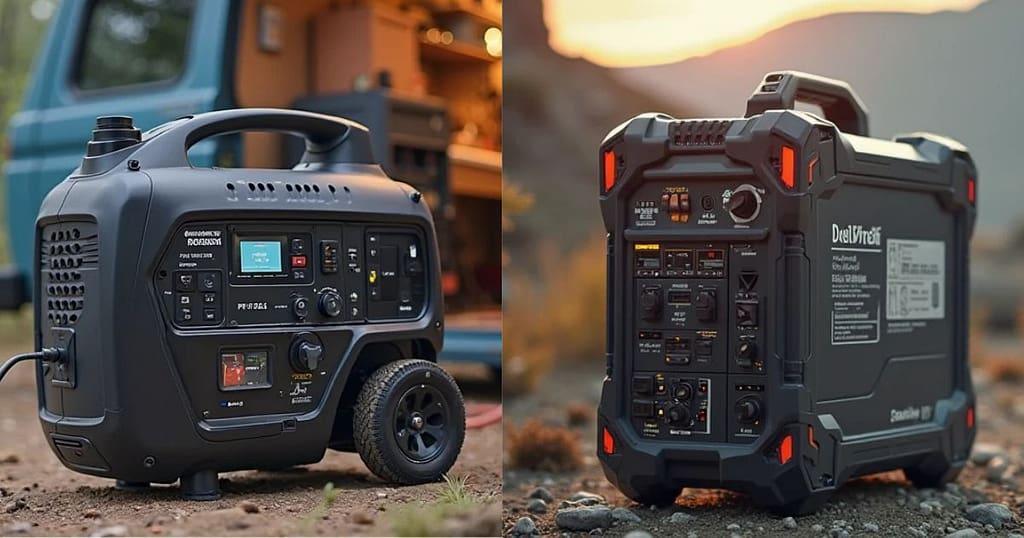
Power outages rarely happen at a convenient time. Whether they’re caused by severe thunderstorms, hurricanes, tornadoes, ice storms, wildfires, aging electrical infrastructure, or overloaded power grids, losing electricity can quickly disrupt your daily life.
A dependable generator can keep your refrigerator cold, preserve food, power medical equipment, keep your lights on, run your heating or cooling system, and help your family remain safe and comfortable until utility power is restored.
With so many generators on the market, choosing the right one can feel overwhelming. Portable generators, inverter generators, dual-fuel models, tri-fuel generators, and whole-house standby systems all have their own advantages depending on your home’s electrical needs.
In this guide, we’ll compare the best generators for power outages in 2026, explain which generator is best for different types of homes, compare fuel options, and help you choose the best backup power solution before the next outage.
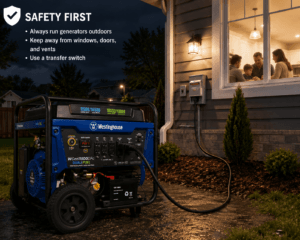
Quick Picks: Best Generators for Power Outages
| Category | Generator | Best For |
|---|---|---|
| Best Overall | DuroMax XP13000HXT Tri-Fuel Generator | Most homes and extended outages |
| Best Dual-Fuel | Westinghouse WGen11500DFc | Reliable whole-home backup |
| Best Inverter Generator | Honda EU7000iS | Quiet operation and sensitive electronics |
| Best Budget Generator | Champion 7500-Watt Dual Fuel | Affordable emergency backup |
| Best Heavy-Duty Generator | Generac GP18000EFI | Large homes and high electrical demand |
Why Buy a Generator for Power Outages?
Power outages can last anywhere from a few minutes to several days depending on the cause.
A properly sized generator can help keep critical household systems operating, including:
- Refrigerator
- Freezer
- Heating system
- Air conditioning
- Sump pump
- Well pump
- Medical equipment
- Internet and Wi-Fi
- Lighting
- Phone chargers
Having backup power can also help reduce food spoilage, protect your home from frozen pipes, and improve comfort during prolonged outages.
Advantages of Backup Generators
- Reliable emergency electricity
- Protects refrigerated food
- Powers medical devices
- Helps maintain heating and cooling
- Supports remote work
- Provides peace of mind during storms
Many homeowners find that a portable generator provides an excellent balance between affordability and emergency preparedness, while standby generators offer automatic protection during unexpected outages.
Best Overall
DuroMax XP13000HXT Tri-Fuel Generator

Why We Picked It
The DuroMax XP13000HXT is one of the most versatile portable generators available. Its ability to run on gasoline, propane, or natural gas gives homeowners valuable flexibility during extended power outages when one fuel source may become difficult to obtain.
With high starting wattage and transfer switch compatibility, it’s capable of powering many essential household circuits, including central air conditioning in many homes, refrigerators, well pumps, and lighting.
Pros
- Tri-fuel capability
- Excellent starting wattage
- Electric start
- Long runtime
- Transfer switch ready
- Great value
Cons
- Heavy unit
- Louder than inverter generators
Best For
- Large homes
- Extended outages
- Central air conditioning
- Well pumps
- Whole-home essentials
Best Dual-Fuel Generator
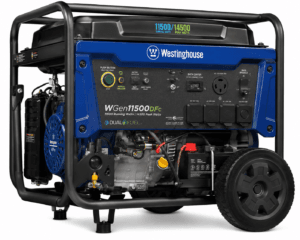
Westinghouse WGen11500DFc
Why We Picked It
The Westinghouse WGen11500DFc combines high output with dependable dual-fuel operation. Running on either gasoline or propane gives homeowners greater flexibility during emergency situations while providing enough power for many whole-home backup applications.
Its remote electric start and strong surge capacity make it an excellent choice for longer outages.
Pros
- Dual-fuel operation
- Remote electric start
- High surge wattage
- Reliable performance
- Excellent runtime
Cons
- Large storage footprint
- Heavy to move
Best For
- Home backup
- Central air conditioning
- Rural homes
- Multi-day outages
Best Inverter Generator
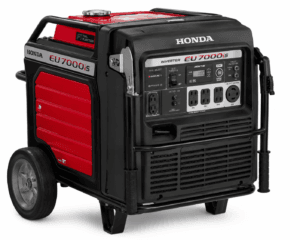
Honda EU7000iS
Why We Picked It
The Honda EU7000iS is widely respected for its quiet operation, excellent fuel efficiency, and exceptionally clean electrical output. It’s an outstanding choice for homeowners who want to protect sensitive electronics while still powering essential household appliances.
Pros
- Extremely quiet
- Clean inverter power
- Fuel efficient
- Reliable engine
- Electric start
Cons
- Premium price
- Lower maximum output than larger open-frame generators
Best For
- Sensitive electronics
- Home offices
- Quiet neighborhoods
- Overnight operation
Best Budget Generator
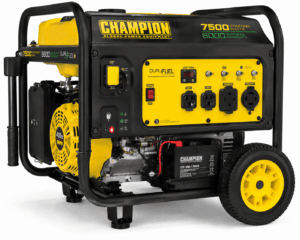
Champion 7500-Watt Dual Fuel Generator
Why We Picked It
The Champion 7500-Watt Dual Fuel Generator offers dependable emergency power at a competitive price. It provides enough capacity for many households to keep essential appliances operating while offering the convenience of gasoline or propane operation.
Pros
- Affordable
- Dual-fuel capability
- Electric start
- Reliable engine
- Easy to operate
Cons
- Louder than inverter generators
- Lower output than premium models
Best For
- Average households
- Essential backup power
- Budget-conscious buyers
Best Heavy-Duty Generator
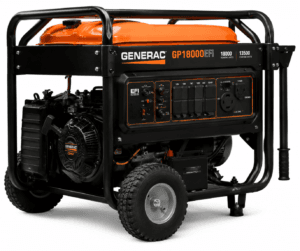
Generac GP18000EFI
Why We Picked It
The Generac GP18000EFI is designed for homeowners with demanding electrical requirements. Its high power output makes it well suited for large homes, heavy motor loads, and extended emergency operation.
Electronic fuel injection improves cold-weather starting and overall reliability.
Pros
- Massive output
- Electronic fuel injection
- Excellent for large homes
- Strong backup capability
- Reliable performance
Cons
- Premium price
- Heavy
- Higher fuel consumption
Best For
- Large homes
- Multiple HVAC systems
- Heavy electrical loads
- Whole-home backup
Generator Comparison
| Generator | Fuel Type | Electric Start | Best For |
|---|---|---|---|
| DuroMax XP13000HXT | Tri-Fuel | ✔ | Best Overall |
| Westinghouse WGen11500DFc | Dual Fuel | ✔ | Home Backup |
| Honda EU7000iS | Gasoline | ✔ | Quiet Operation |
| Champion 7500-Watt Dual Fuel | Dual Fuel | ✔ | Best Budget |
| Generac GP18000EFI | Gasoline | ✔ | Heavy Electrical Loads |
Choosing the Right Generator for Power Outages
Before purchasing a generator, consider:
- Running watts
- Starting watts
- Fuel type
- Runtime
- Noise level
- Generator weight
- Electric start
- Transfer switch compatibility
- Carbon monoxide shutdown
- Maintenance requirements
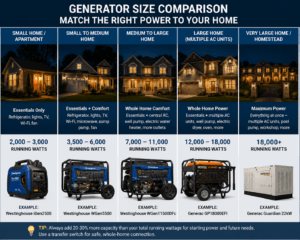
Generator Size Recommendations
One of the biggest mistakes homeowners make is buying a generator that’s too small. While running wattage is important, you also need to account for the extra power many appliances require when they first start.
The right generator size depends on what you plan to power during an outage.
Essential Backup Power
Recommended Generator Size
3,000–7,500 Watts
Ideal for powering:
- Refrigerator
- Freezer
- LED lighting
- Television
- Wi-Fi router
- Phone chargers
- Small kitchen appliances
For many apartments and smaller homes, this range provides enough electricity to maintain basic comfort during a power outage.

Comfortable Home Backup
Recommended Generator Size
7,500–10,000 Watts
Can often power:
- Refrigerator
- Freezer
- Furnace blower
- Sump pump
- Lighting
- Internet equipment
- Microwave
- Garage door opener
This is one of the most popular generator sizes for average-sized homes.
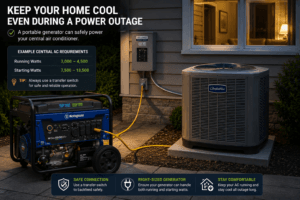
Home Backup with Central Air Conditioning
Recommended Generator Size
10,000–15,000 Watts
Suitable for powering:
- Central air conditioner (depending on size)
- Refrigerator
- Freezer
- Lighting
- Furnace
- Internet equipment
- Additional household appliances
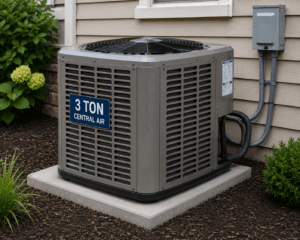
Always verify your air conditioner’s starting wattage before purchasing a generator.
Large Home Backup
Recommended Generator Size
12,000–18,000 Watts
Ideal for:
- Larger HVAC systems
- Well pumps
- Septic pumps
- Multiple refrigerators
- Freezers
- Large kitchen appliances
- Most household circuits
These generators are well suited for extended outages where maintaining normal household operation is important.
Generator Size by Home Type
| Home Type | Recommended Generator Size |
|---|---|
| Apartment or Condo | 2,000–4,000 watts |
| Small Home | 3,000–6,000 watts |
| Average Home | 7,500–10,000 watts |
| Large Home | 10,000–15,000 watts |
| Large Home with Well Pump | 12,000–18,000 watts |
| Whole-Home Automatic Backup | 18kW–26kW Standby Generator |
Dual-Fuel vs. Tri-Fuel Generators
Choosing the right fuel type is just as important as choosing the right generator.
Dual-Fuel Generators
Operate on:
- Gasoline
- Propane
Advantages
- More fuel options
- Easier long-term fuel storage
- Greater flexibility during emergencies
- Propane burns cleaner than gasoline
Dual-fuel generators are an excellent choice for homeowners who want flexibility without significantly increasing cost.
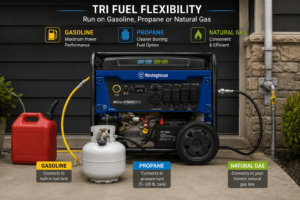
Tri-Fuel Generators
Operate on:
- Gasoline
- Propane
- Natural gas
Advantages
- Maximum fuel flexibility
- Can connect to a home’s natural gas supply
- Reduced refueling during extended outages
- Excellent emergency preparedness
If your home already has natural gas service, a tri-fuel generator can provide nearly continuous operation without storing large amounts of gasoline.
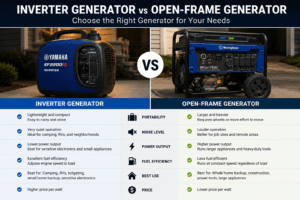
Inverter vs. Conventional Generators
Inverter Generators
Advantages:
- Much quieter
- Better fuel efficiency
- Clean electrical power
- Lightweight
- Ideal for electronics
Best For:
- Computers
- Home offices
- Medical equipment
- RVs
- Camping
Conventional Generators
Advantages:
- Higher output
- Better value per watt
- Handles larger motor loads
- Excellent for home backup
Best For:
- HVAC systems
- Well pumps
- Sump pumps
- Refrigerators
- Whole-home essentials
Fuel Consumption Expectations
| Generator Size | Typical Fuel Use Per Hour |
|---|---|
| 5,000 Watts | 0.5–0.8 gallons |
| 7,500 Watts | 0.7–1.0 gallons |
| 10,000 Watts | 0.9–1.3 gallons |
| 12,000 Watts | 1.1–1.7 gallons |
| 15,000 Watts | 1.5–2.0 gallons |
Actual fuel consumption varies depending on:
- Generator load
- Temperature
- Fuel type
- Maintenance
- Generator efficiency
Running a generator at about 50–75% of its rated capacity often provides the best balance of fuel efficiency and performance.
Portable Generator vs. Standby Generator
| Feature | Portable Generator | Standby Generator |
|---|---|---|
| Purchase Price | Lower | Higher |
| Installation | Minimal | Professional installation |
| Startup | Manual | Automatic |
| Fuel Options | Gasoline, Propane, Tri-Fuel | Natural Gas or Propane |
| Mobility | Portable | Permanent |
| Whole-Home Coverage | Limited | Yes |
Portable generators remain the best choice for many homeowners because they offer outstanding value and flexibility. Standby generators are ideal for homeowners who want fully automatic backup power without manual setup.
Preparing Before the Next Power Outage
Buying a generator is only part of your emergency preparedness plan.
Before the next outage:
- Test your generator monthly
- Store fresh fuel safely
- Keep engine oil on hand
- Inspect extension cords
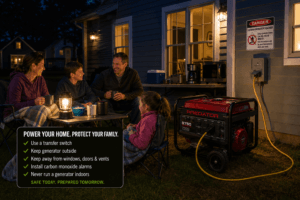
- Install carbon monoxide detectors
- Learn how to connect the generator safely
- Practice starting and operating the generator before an emergency
Preparation today can prevent unnecessary stress when severe weather strikes.
-
Features to Look For
The best generator isn’t always the one with the highest wattage. The right features can make your generator safer, easier to operate, and more reliable during extended power outages.
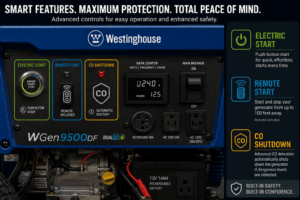
Electric Start
Electric start allows you to start the generator with the push of a button instead of pulling a recoil cord.
Benefits
- Easier during severe weather
- Faster startup
- Less physical effort
- Ideal for older homeowners
Remote Start
Some portable generators include remote start capability, allowing you to start the generator from inside your home or from a short distance away.
Benefits
- Convenient during rain or snow
- Faster startup
- Less exposure to severe weather
Carbon Monoxide (CO) Shutdown
Many modern generators include built-in carbon monoxide detection systems.
If dangerous levels of carbon monoxide accumulate around the generator, the engine automatically shuts down.
Although this is an excellent safety feature, you should always operate generators outdoors and well away from doors, windows, garages, and vents.
Fuel Gauge
A built-in fuel gauge allows you to monitor remaining fuel without opening the fuel tank.
Benefits include:
- Easier fuel management
- Better outage planning
- Fewer unexpected shutdowns
Transfer Switch Compatibility
If you plan to power household circuits directly, choose a generator compatible with a transfer switch or interlock kit.
Benefits include:
- Safer home connection
- Cleaner installation
- Reduced extension cord use
- Protection against dangerous backfeeding
Low-Oil Shutdown
Low-oil shutdown automatically turns the generator off before engine damage occurs.
This feature helps extend engine life and reduce maintenance costs.
Multiple Outlet Types
Many generators include multiple outlet configurations, such as:
- 120V household outlets
- 120/240V outlets
- Twist-lock outlets
- RV outlets
- USB charging ports (on some models)
Having a variety of outlet types makes the generator more versatile during emergencies.
Common Generator Buying Mistakes
Avoiding these mistakes can save money and prevent frustration during a power outage.
Buying Too Small
One of the biggest mistakes homeowners make is purchasing a generator based only on running watts.
Remember to account for startup power required by:
- Air conditioners
- Refrigerators
- Freezers
- Well pumps
- Sump pumps
- Furnaces
Ignoring Fuel Storage
Many outages last longer than expected.
Before storm season:
- Store approved fuel containers safely.
- Keep propane tanks filled.
- Use fuel stabilizer for gasoline.
- Rotate stored fuel regularly.
Forgetting HVAC Requirements
Heating and cooling equipment often requires much more starting power than homeowners expect.
Always check:
- Running watts
- Starting watts
- Manufacturer specifications
before choosing a generator.
Overlooking Noise Levels
Large open-frame generators can produce significant noise.
If you live in a neighborhood, consider:
- Inverter generators
- Lower decibel ratings
- Generator placement
- Local noise ordinances
Skipping Maintenance
Even the best generator requires routine maintenance.
Follow the manufacturer’s maintenance schedule and regularly:
- Change engine oil
- Inspect the air filter
- Replace the spark plug
- Check battery condition
- Exercise the generator monthly
- Inspect the fuel system
Routine maintenance greatly improves long-term reliability.
Waiting Until a Storm Is Forecast
Generators often sell out before major storms.
Purchasing early gives you time to:
- Learn how the generator operates
- Test it under load
- Store fuel safely
- Purchase extension cords or a transfer switch
- Complete routine maintenance
Frequently Asked Questions
Can a portable generator power an entire house?
It depends on the generator’s size and your home’s electrical demand. Larger portable generators can power many essential household circuits, while whole-house standby generators are designed to supply nearly the entire home automatically.
Can a generator run central air conditioning?
Yes. Many generators in the 10,000 to 15,000-watt range can operate central air conditioning, depending on the size and starting requirements of the unit.
Are dual-fuel generators worth buying?
For many homeowners, yes. The ability to operate on either gasoline or propane provides valuable flexibility during extended power outages.
Should I buy an inverter generator or a conventional generator?
Choose an inverter generator if quiet operation, fuel efficiency, and clean electricity for sensitive electronics are your priorities.
Choose a conventional generator if your primary goal is powering larger appliances, HVAC systems, well pumps, or multiple household circuits.
How often should I test my generator?
Running your generator for about 20–30 minutes once a month under a moderate electrical load helps keep the engine lubricated, maintains battery charge on electric-start models, and ensures the generator is ready when an outage occurs.
Can I run my generator overnight?
Many generators are capable of running overnight when properly fueled and maintained. Always operate the generator outdoors in a well-ventilated area, follow the manufacturer’s instructions, and make sure your home has working carbon monoxide detectors.
Final Thoughts
Power outages are unpredictable, but your backup power plan doesn’t have to be. Choosing the right generator before severe weather strikes can help keep your home comfortable, protect your food, power essential appliances, and provide peace of mind during emergencies.
For many homeowners, the DuroMax XP13000HXT Tri-Fuel Generator stands out as the best overall choice thanks to its excellent power output, tri-fuel flexibility, and ability to handle demanding household loads. If quiet operation is your priority, the Honda EU7000iS is an outstanding inverter generator, while the Champion 7500-Watt Dual Fuel Generator offers excellent value for budget-conscious buyers.
Before purchasing, calculate your home’s running and starting wattage requirements, think about the appliances you need most during an outage, and choose a generator with enough capacity to meet both your current and future needs. A properly sized generator is one of the best investments you can make for emergency preparedness.