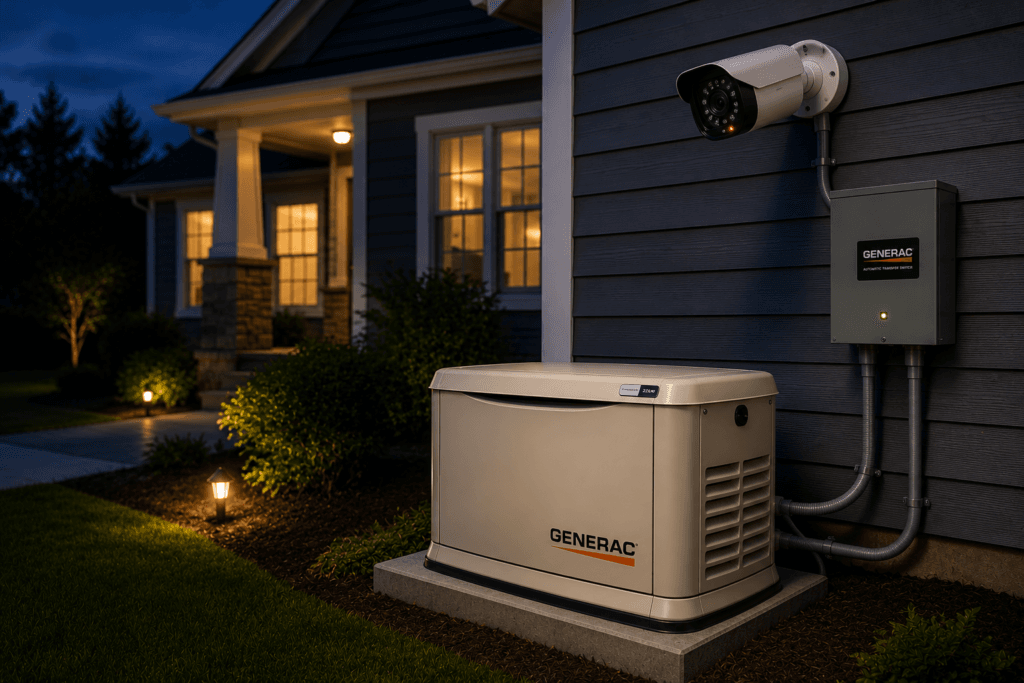
When the power goes out, one of the biggest concerns for most homeowners is keeping food from spoiling. A refrigerator or freezer can only stay cold for a limited amount of time before temperatures rise into the unsafe zone. Having the right generator can save hundreds or even thousands of dollars in groceries while providing peace of mind during storms, blackouts, and emergencies.
Whether you need to power a single refrigerator, a large chest freezer, or multiple kitchen appliances, choosing the correct generator size is critical. Buy one that’s too small, and it may struggle to start your refrigerator’s compressor. Buy one that’s much larger than necessary, and you may spend more money than you need to.
In this guide, we’ll explain exactly how many watts refrigerators and freezers use, how to size a generator correctly, and which generators are the best choices for different budgets and needs.
Table of Contents
- Why Backup Power Matters
- How Many Watts Does a Refrigerator Use?
- Refrigerator Starting vs. Running Watts
- Generator Size Chart
- Best Generators for Refrigerators and Freezers
- Portable Power Stations
- Fuel Options
- Safety Tips
- Frequently Asked Questions
- Final Verdict
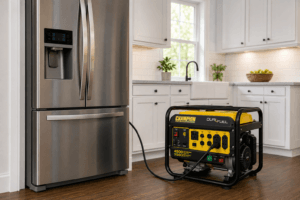
Why You Need a Generator for Your Refrigerator
Most refrigerators can keep food safely cold for about 4 hours without power if the doors remain closed. A full freezer can often stay frozen for around 48 hours, while a half-full freezer may keep food frozen for about 24 hours.
Extended outages caused by severe weather, high winds, hurricanes, tornadoes, winter storms, or electrical failures can quickly lead to spoiled food.
A generator helps you:
- Protect expensive groceries
- Prevent food waste
- Keep medications refrigerated
- Avoid emergency grocery trips
- Reduce stress during long outages
For many homeowners, protecting refrigerated food is the number one reason they purchase a backup generator.
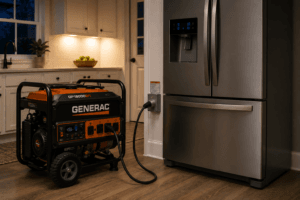
How Many Watts Does a Refrigerator Use?
The exact power requirements depend on the refrigerator’s size, age, and compressor design.
Typical running wattages include:
| Appliance | Running Watts | Starting Watts |
|---|---|---|
| Mini Refrigerator | 50–100 W | 200–400 W |
| Apartment Refrigerator | 150–300 W | 600–900 W |
| Standard Refrigerator | 300–800 W | 1,000–2,200 W |
| Large French Door Refrigerator | 600–900 W | 1,800–2,500 W |
| Chest Freezer | 200–500 W | 600–1,200 W |
| Upright Freezer | 300–700 W | 800–1,600 W |
The starting watts are especially important because compressors require a brief surge of electricity when they first turn on.
Running Watts vs. Starting Watts
Many first-time generator buyers only look at running watts. Unfortunately, that’s one of the biggest mistakes you can make.
Your refrigerator’s compressor may briefly draw two to four times its normal running power during startup.
For example:
- Running Watts: 700 W
- Starting Watts: 2,100 W
If your generator cannot provide that temporary surge, the refrigerator may fail to start or repeatedly trip the generator’s breaker.
Always size your generator using the highest starting watt requirement of the appliances you plan to run.
Recommended Generator Sizes
Small Refrigerators
Ideal Generator Size:
- 1,000–2,000 starting watts
Great for:
- Dorm rooms
- Offices
- Garages
- RVs
Standard Kitchen Refrigerators
Ideal Generator Size:
- 2,000–3,500 starting watts
Can usually power:
- Refrigerator
- Phone chargers
- Wi-Fi router
- LED lighting
Refrigerator + Freezer
Ideal Generator Size:
- 3,500–5,000 starting watts
Perfect for keeping both appliances running during a blackout.
Whole Kitchen Backup
Ideal Generator Size:
- 5,000–8,000+ starting watts
May also power:
- Microwave
- Coffee maker
- Television
- Internet equipment
- Additional lighting
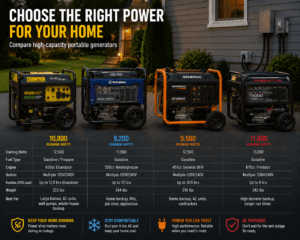
Best Generators for Refrigerators and Freezers
Best Overall
Westinghouse WGen3600DFc
Why we like it:
- Dual-fuel capability
- Easy electric start
- Plenty of starting power
- Excellent value
- Reliable during long outages
Best for:
- Most homeowners with one refrigerator and one freezer.
Best Budget Choice
WEN GN5602X
Pros:
- Affordable
- Easy maintenance
- Good surge capacity
- Ideal for occasional outages
Best for:
- Budget-conscious homeowners who want dependable emergency backup.
Best Quiet Generator
WEN 2500 Inverter Generator
Benefits:
- Quiet operation
- Fuel efficient
- Clean power for sensitive electronics
- Compact and portable
Perfect if you only need to keep a refrigerator running while minimizing noise.
Portable Power Stations for Refrigerators
Gas generators aren’t the only option. Modern portable power stations provide silent, emission-free backup power and are excellent for short outages.
They’re especially useful if:
- You live in an apartment
- You can’t use gasoline
- You want indoor-safe backup power
- You only need to keep food cold
Most refrigerators require relatively little running power, making many battery power stations a practical choice.
Best Portable Power Station Overall
EcoFlow DELTA 2
[IMAGE PLACEHOLDER – EcoFlow DELTA 2 Portable Power Station]
Why we like it:
- 1,800W continuous output
- 2,700W surge
- Fast charging
- Expandable battery capacity
- Powers most refrigerators with ease
Perfect for:
- Refrigerators
- Freezers
- Wi-Fi
- TVs
- Lights
- CPAP machines
Best Budget Power Station
Jackery Explorer 1000 v2
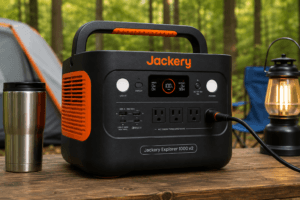
Pros:
- Lightweight
- Quiet
- Easy to use
- Reliable battery management
Great for overnight refrigerator backup during shorter outages.
Best Premium Power Station
Anker SOLIX C1000
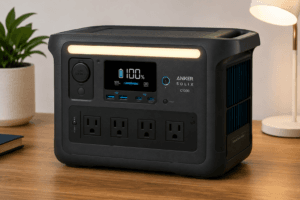
Highlights:
- Extremely fast charging
- High-quality battery
- Long lifespan
- Excellent mobile app
Gas vs Battery Backup
| Feature | Portable Generator | Power Station |
|---|---|---|
| Indoor Safe | ❌ No | ✅ Yes |
| Noise | Moderate to Loud | Nearly Silent |
| Fuel Required | Gasoline/Propane | Rechargeable Battery |
| Runtime | As long as fuel lasts | Limited by battery size |
| Maintenance | Oil changes | Almost none |
| Emissions | Yes | None |
If outages regularly last several days, a gas or dual-fuel generator is usually the better choice.
For outages lasting only a few hours, a power station may be all you need.
Fuel Options
Today’s generators come in several fuel types.
Gasoline
Pros
- Easy to find
- High power output
- Lowest upfront cost
Cons
- Fuel degrades over time
- Requires stabilizer for storage
Propane
Pros
- Cleaner burning
- Stores for years
- Less maintenance
Cons
- Slightly lower power output
Dual Fuel
Many experts recommend dual-fuel generators because they offer flexibility during emergencies.
If gasoline stations are closed, propane tanks may still be available.
Refrigerator Generator Safety Tips
Never operate a generator:
❌ Inside a garage
❌ On a porch
❌ In a basement
❌ Near open windows
Carbon monoxide can build up quickly and become deadly.
Always place portable generators:
- Outside
- At least 20 feet from the home when practical
- Away from doors and windows
- On a dry, level surface
Modern generators with CO shutoff provide an extra layer of safety, but proper placement remains essential.
How Long Can Food Stay Cold Without Power?
Refrigerator
- About 4 hours if the door stays closed
Full Freezer
- About 48 hours
Half-Full Freezer
- About 24 hours
Keeping the doors closed as much as possible helps preserve safe temperatures.
Tips to Extend Refrigerator Runtime
If you’re running on generator power:
- Open the refrigerator only when necessary.
- Keep the freezer full if possible.
- Freeze water bottles ahead of storm season.
- Run the generator efficiently instead of wasting fuel.
- Let the refrigerator cycle normally instead of unplugging it repeatedly.
Common Mistakes
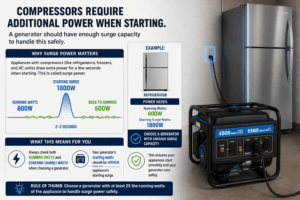
Buying Too Small
Many buyers only consider running watts and forget startup surge.
Compressors require additional power when starting. A generator should have enough surge capacity to handle this safely.
Using Cheap Extension Cords
Use:
- Outdoor-rated cords
- Heavy-gauge wire
- Proper generator cords
Undersized cords reduce performance and can overheat.
Overloading the Generator
Remember:
A refrigerator isn’t the only appliance starting.
Your freezer, microwave, sump pump, or furnace blower may all cycle on unexpectedly.
Leave extra capacity whenever possible.
Forgetting Fuel
Many homeowners own a generator but only have one gallon of gasoline stored.
During major storms:
- Gas stations may lose power.
- Long fuel lines can form.
- Fuel shortages may occur.
Keep stabilized fuel or propane stored safely according to local regulations.
Frequently Asked Questions
Can a 2,000-watt generator run a refrigerator?
Yes, many modern refrigerators can be powered by a quality 2,000-watt inverter generator, but always verify your refrigerator’s starting wattage first. Older or larger models may require more surge capacity.
Can one generator power both a refrigerator and freezer?
Yes.
Most generators rated around 3,000–4,500 running watts can comfortably handle both appliances while leaving room for lights and other small essentials, depending on their individual power requirements.
Is an inverter generator worth it?
Absolutely.
Advantages include:
- Quieter operation
- Better fuel economy
- Cleaner electricity for electronics
- Easier portability
Can I run my refrigerator continuously on a generator?
Yes.
Most generators are designed for extended operation as long as:
- Oil levels are maintained.
- Fuel is replenished safely.
- Maintenance schedules are followed.
Will a power station keep my refrigerator running overnight?
Many can.
Runtime depends on:
- Refrigerator size
- Battery capacity
- Compressor cycling
- Ambient temperature
Larger battery systems can often keep an efficient refrigerator operating overnight or longer.
Which Generator Is Right for You?
Here’s a quick recommendation based on your needs.
| If You Need… | Recommended Generator Type |
|---|---|
| Refrigerator only | 2,000–2,500W inverter generator |
| Refrigerator + freezer | 3,000–4,500W inverter or dual-fuel generator |
| Whole kitchen during outages | 5,000–7,500W portable generator |
| Entire home backup | Whole-house standby generator |
| Apartment or condo | Portable power station |
| Quiet camping or RV use | Inverter generator |
| Multi-day emergency backup | Dual-fuel portable generator |
Choosing a generator with a little extra capacity can make future outages much easier to manage. It gives you room to power additional essentials like lights, internet equipment, fans, or a sump pump without constantly worrying about exceeding the generator’s limits.
Final Thoughts
A reliable generator can protect hundreds of dollars worth of food while keeping one of your home’s most important appliances running during a power outage.
For many homeowners, a quality 2,000 to 4,500-watt inverter generator provides the ideal balance of power, fuel efficiency, portability, and quiet operation. If you frequently experience long outages, a dual-fuel generator offers additional flexibility by allowing you to switch between gasoline and propane. If you live in an apartment or only need short-term backup, a portable power station can keep your refrigerator running without noise or exhaust.
Before buying, always check your refrigerator’s running and starting wattage. A generator with enough surge capacity helps ensure reliable starts and leaves room for additional appliances if needed.
Investing in the right generator today can save you money, reduce stress, and help keep your family prepared for unexpected power outages.