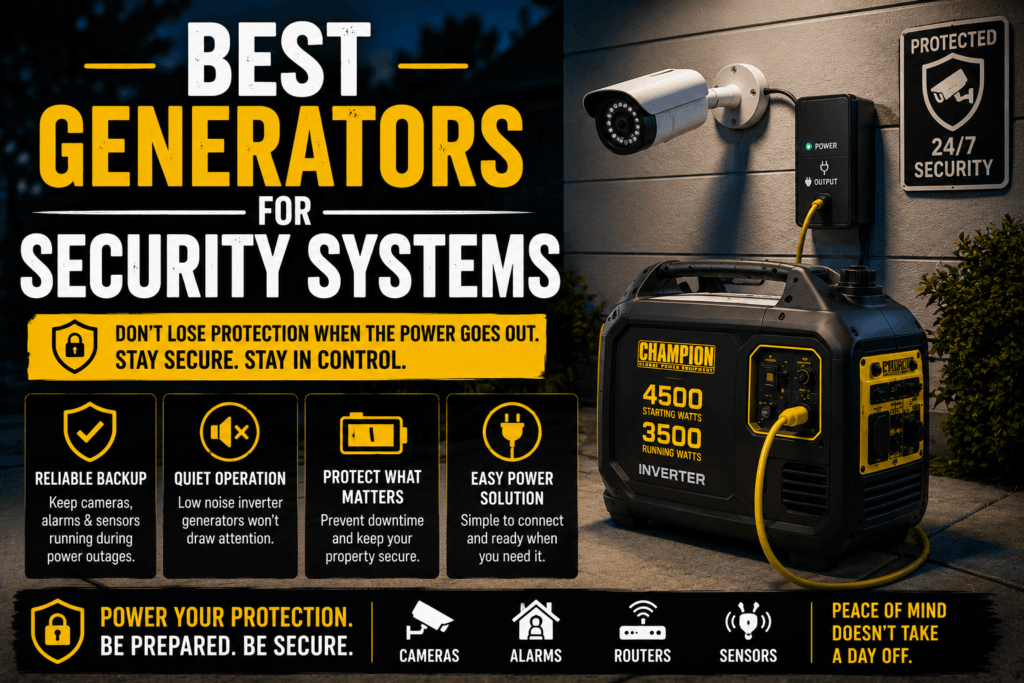
Your security system is one of the last things you want to lose during a power outage. Whether you have smart security cameras, alarm systems, motion sensors, electronic door locks, or a complete home surveillance setup, reliable backup power helps keep your home protected when the grid goes down.
Fortunately, most security systems use relatively little electricity, meaning you don’t need a massive generator to keep them operating.
In this guide, we’ll cover the best generators and portable power stations for security systems, explain how much power they need, and help you choose the best backup solution.
How Much Power Does a Security System Need?
Most residential security systems use less than 200 watts.
Typical power requirements include:
| Device | Approximate Running Watts |
|---|---|
| Alarm Control Panel | 10–30 W |
| Wi-Fi Router | 10–30 W |
| Internet Modem | 10–20 W |
| Security Camera | 5–15 W each |
| NVR/DVR Recorder | 20–60 W |
| Smart Home Hub | 10–20 W |
| Outdoor Motion Lights (LED) | 20–100 W |
| Network Switch | 15–50 W |
Because these devices use so little power, many homeowners find that a portable power station can keep their entire security system running for hours during an outage.
What Makes a Great Backup Power Solution?
The best backup system should provide:
- Clean electricity
- Quiet operation
- Reliable runtime
- Fast startup
- Safe indoor operation (for battery power stations)
- Pure sine wave output
- Low maintenance
Since security equipment contains sensitive electronics, clean, stable power is especially important.
Our Top Picks
Best Overall Portable Power Station
Why we like it:
- Pure sine wave power
- Fast charging
- Quiet operation
- UPS functionality on supported setups
- Excellent for routers, cameras, DVRs, and alarm systems
Best Budget Backup
Why we like it:
- Compact
- Lightweight
- Great for routers, cameras, alarm panels, and phone charging
- Safe for indoor use
Best Extended Runtime
Why we like it:
- Large battery capacity
- Long runtime
- Pure sine wave inverter
- Excellent for powering an entire home network and security system through longer outages
Best Fuel-Powered Generator
Why we like it:
- Extremely quiet
- Reliable
- Clean inverter power
- Fuel efficient
- Excellent for extended outages when operated safely outdoors
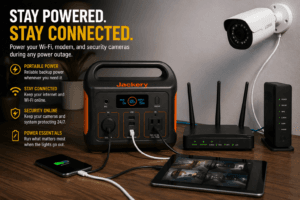
Portable Power Station vs. Generator
Portable Power Station
Advantages:
- Safe for indoor use
- Silent operation
- No fuel required
- No exhaust fumes
- Minimal maintenance
- Excellent for electronics
Best for:
- Security cameras
- Wi-Fi routers
- Alarm panels
- DVR/NVR systems
- Smart locks
- Internet equipment
Inverter Generator
Advantages:
- Can run continuously with refueling
- Higher power output
- Can power additional household appliances
- Excellent for long outages
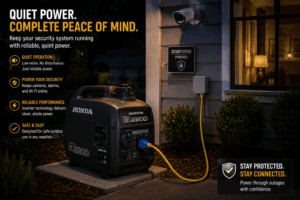
Remember that fuel-powered generators must always operate outdoors, away from doors, windows, and vents.
Should You Use a UPS?
Many homeowners pair a UPS (Uninterruptible Power Supply) with a generator or portable power station.
A UPS can:
- Keep cameras recording during short outages
- Prevent modem and router reboots
- Maintain internet connectivity
- Bridge the gap while backup power starts
- Protect electronics from sudden power loss
For the best protection, many security professionals recommend combining a UPS with a larger backup power source.
Can You Power an Entire Smart Home?
Yes.
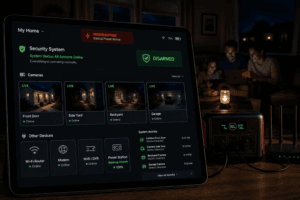
Many portable power stations can keep the following running simultaneously:
- Wi-Fi router
- Internet modem
- Smart home hub
- Security cameras
- DVR/NVR recorder
- LED lighting
- Phone chargers
- Laptop
Because these devices use relatively little electricity, runtime is often measured in many hours rather than minutes.
Generator Safety Tips
Always:
- Operate fuel-powered generators outdoors only.
- Install carbon monoxide detectors.
- Keep generators away from windows and doors.
- Store gasoline safely.
- Test your backup power regularly.
- Replace UPS batteries according to the manufacturer’s recommendations.
Portable power stations require very little maintenance and are designed for indoor use because they produce no exhaust emissions.
Common Mistakes to Avoid
Avoid these common errors:
- Buying more generator than you need
- Forgetting the Wi-Fi router also needs power
- Ignoring battery maintenance
- Running a fuel-powered generator indoors
- Waiting until an outage to test your backup system
- Overloading your generator
- Using damaged extension cords
Frequently Asked Questions
What is the best backup power for security cameras?
For most homes, a portable power station provides quiet, clean, and reliable backup power for cameras, DVRs, routers, and alarm systems.
Can a portable power station run my Wi-Fi and cameras?
Yes. Most home security equipment uses very little electricity, allowing many portable power stations to provide backup power for several hours or longer.
Do I need a large generator?
Usually not. Unless you’re also powering major household appliances, most security systems require only a small amount of electricity.
Is a UPS enough?
A UPS is excellent for short outages and preventing interruptions, but for longer outages it’s best paired with a portable power station or generator.
Can I use a gasoline generator indoors?
No. Fuel-powered generators produce carbon monoxide and must always be operated outdoors in accordance with the manufacturer’s safety instructions.
Final Thoughts
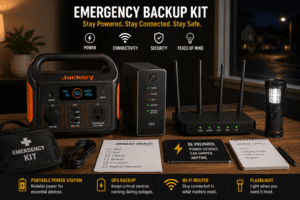
Keeping your security system running during a power outage doesn’t require a huge generator. In fact, a quality portable power station is the best choice for most homeowners because it provides clean, silent, indoor-safe backup power for cameras, routers, alarm systems, and smart home devices.
If you expect extended outages or also want to power household appliances, a quiet inverter generator used outdoors can provide virtually unlimited runtime with proper refueling. By planning ahead, you can keep your home protected, connected, and secure no matter how long the power stays out.