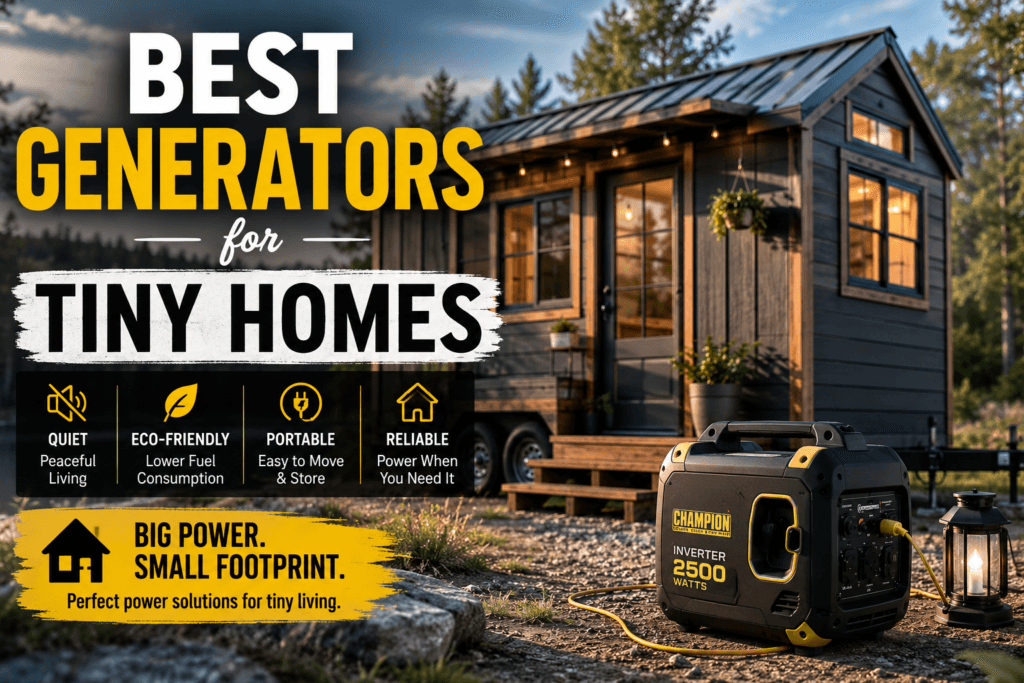
Tiny homes offer a simple, efficient lifestyle, but reliable backup power is still essential. Whether you’re living off-grid, parked on rural property, or simply preparing for unexpected power outages, choosing the right generator can keep your lights on, your refrigerator cold, and your essential appliances running.
The best generator for a tiny home depends on your power needs, available fuel sources, noise requirements, and whether you’re looking for emergency backup or full-time off-grid power.
In this guide, we’ll cover the best generators for tiny homes in 2026, explain what size generator you need, and help you choose the right backup power solution.
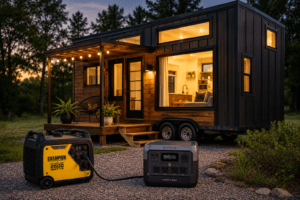
What Size Generator Does a Tiny Home Need?
Most tiny homes require between 2,000 and 7,500 running watts, depending on what you want to power.
Typical electrical loads include:
| Appliance | Approximate Running Watts |
|---|---|
| LED Lighting | 50–200 W |
| Refrigerator | 600–800 W |
| Microwave | 1,000–1,500 W |
| Coffee Maker | 800–1,200 W |
| Laptop | 50–100 W |
| Wi-Fi Router | 10–30 W |
| Small Electric Heater | 1,500 W |
| Window Air Conditioner | 800–1,500 W |
Always calculate both running watts and starting watts before choosing a generator.
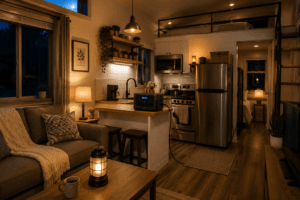
What Makes a Good Tiny Home Generator?
Look for these features:
- Quiet operation
- Fuel efficiency
- Inverter technology
- Clean power for electronics
- Long runtime
- Easy portability
- Electric start (optional)
- Dual-fuel capability (optional)
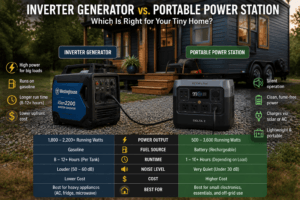
For many tiny homes, inverter generators or portable power stations are ideal because they are quieter and provide clean electricity for sensitive electronics.
Our Top Picks
Best Overall
The Westinghouse iGen4500c delivers excellent fuel efficiency, quiet operation, and enough power for most tiny homes while remaining portable.
Best Premium Choice
Honda’s EU2200i is widely respected for exceptional reliability, quiet performance, and clean inverter power, making it ideal for smaller tiny homes or essential loads.
Best Budget Option
A great value for homeowners needing dependable backup power without spending a premium price.
Best Battery Backup
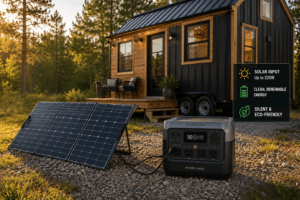
Perfect for indoor use, this portable power station provides silent, emission-free backup power for lights, electronics, and many small appliances. Portable power stations have become increasingly popular for off-grid cabins and tiny homes because they require no fuel and produce no exhaust.
Fuel Options
Gasoline
Advantages:
- Easy to find
- Lower purchase cost
- High power output
Disadvantages:
- Fuel storage required
- More maintenance
Propane
Advantages:
- Cleaner burning
- Long fuel shelf life
- Easier long-term storage
Disadvantages:
- Slightly lower power output
Dual-Fuel
Dual-fuel generators allow you to switch between gasoline and propane, providing additional flexibility during emergencies.
Battery Power Stations
Advantages:
- Silent
- No emissions
- Safe for indoor use
- Minimal maintenance
Disadvantages:
- Limited runtime unless recharged
- Higher cost per watt-hour than fuel-powered generators
Inverter vs Conventional Generators
For most tiny homeowners, inverter generators are the better choice.
Benefits include:
- Quieter operation
- Better fuel efficiency
- Clean power for electronics
- Lighter weight
- Lower engine speeds during light loads
Conventional generators remain a good choice if maximum wattage is your highest priority.
Safety Tips
Always:
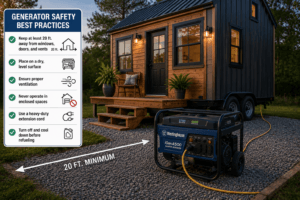
- Operate fuel-powered generators outdoors.
- Keep generators well away from doors, windows, and vents.
- Install carbon monoxide detectors.
- Store gasoline safely.
- Keep spare engine oil on hand.
- Test your generator monthly.
Never run a gasoline or propane generator inside your tiny home, garage, or enclosed porch because of the risk of carbon monoxide poisoning.
Common Mistakes to Avoid
Avoid these common errors:
- Buying more generator than you need
- Forgetting starting watts
- Running the generator indoors
- Ignoring monthly maintenance
- Storing untreated gasoline
- Using undersized extension cords
- Overloading the generator
Frequently Asked Questions
Can a 2,000-watt generator power a tiny home?
For many tiny homes, a 2,000-watt inverter generator can power essential appliances, but it may not run multiple high-wattage devices simultaneously.
Are inverter generators worth it?
Yes. Their quiet operation, clean electricity, and fuel efficiency make them an excellent choice for tiny homes.
Can I use a portable power station instead?
Absolutely. Portable power stations are ideal for indoor backup power, especially if your electrical needs are modest or you pair them with solar panels.
Should I buy a dual-fuel generator?
If you want the flexibility to run on gasoline or propane, a dual-fuel generator is an excellent option for emergency preparedness.
How often should I maintain my generator?
Follow the manufacturer’s maintenance schedule, including regular oil changes, air filter inspections, and monthly exercise runs to keep the generator ready for use.
Final Thoughts
The best generator for a tiny home is one that matches your actual power needs—not simply the biggest model available. For most owners, a quiet inverter generator offers the ideal balance of portability, efficiency, and reliable backup power. If silent operation and indoor safety are priorities, a high-capacity portable power station is another outstanding option.
By choosing the right generator and following safe operating practices, you’ll be ready to keep your tiny home powered whether you’re living off-grid or preparing for the next unexpected outage.