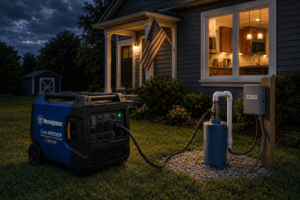
Having a private well means your home depends on electricity every time you need water. During a power outage, your well pump stops working unless you have a properly sized backup generator. That means no running water for drinking, cooking, showers, toilets, or livestock until power is restored.
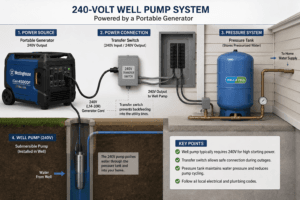
Choosing the right generator for a well pump requires more than simply matching running wattage. Electric motors draw a large surge of power when starting, so your generator must provide enough starting watts as well as continuous running power. Most residential deep-well pumps also require 240-volt power, making voltage compatibility just as important as generator size. Many homeowners find that generators in the 5,000–7,000 watt peak range are sufficient for common 1/2 HP to 1 HP well pumps, but the correct size depends on your specific pump and any additional appliances you plan to operate.
In this guide, we’ll compare the best generators for well pumps in 2026, explain how to size a generator correctly, and help you choose the right backup power solution for dependable water during an outage.
Quick Picks: Best Generators for Well Pumps
| Category | Generator | Best For |
|---|---|---|
| Best Overall | DuroMax XP13000HXT Tri-Fuel Generator | Large homes with well pumps |
| Best Portable Generator | Westinghouse WGen11500DFc | High starting wattage |
| Best Inverter Generator | Honda EU7000iS | Quiet operation and clean power |
| Best Dual-Fuel Generator | Champion 7500-Watt Dual Fuel Generator | Flexible emergency backup |
| Best Standby Generator | Generac Guardian 22kW | Automatic whole-home backup |
Why Well Pumps Need a Properly Sized Generator
Unlike lights or televisions, well pumps use electric motors that require a brief but significant surge of electricity during startup.
A generator for a well pump may also power:
- Refrigerator
- Freezer
- Furnace blower
- Internet router
- Lighting
- Microwave
- Garage door opener
- Sump pump
When calculating generator size, always include both the well pump’s starting surge and the running wattage of any other appliances you plan to use. Choosing a generator with extra headroom helps prevent overloads and improves reliability.
Best Overall
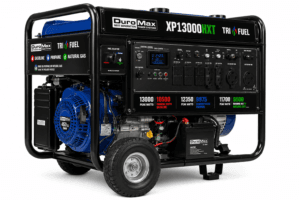
DuroMax XP13000HXT Tri-Fuel Generator
Why We Picked It
The DuroMax XP13000HXT is one of the best generators for homeowners with private wells because it combines high surge capacity with the flexibility of operating on gasoline, propane, or natural gas.
Its 120/240-volt output makes it suitable for many residential well pumps while still providing enough power for refrigerators, freezers, furnaces, lighting, and other essential household circuits when connected through a properly installed transfer switch.
Pros
- Tri-fuel capability
- High starting wattage
- 120/240V output
- Electric start
- Transfer switch compatible
- Excellent value
Cons
- Heavy
- Louder than enclosed inverter generators
Best For
- Deep well pumps
- Rural homes
- Large properties
- Extended outages
Best Portable Generator
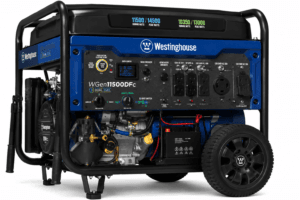
Westinghouse WGen11500DFc
Why We Picked It
The Westinghouse WGen11500DFc delivers the high surge capacity needed by many residential well pumps while offering the convenience of dual-fuel operation. Its remote electric start, long runtime, and dependable engine make it an excellent backup solution for homeowners who rely on well water.
Pros
- High surge capacity
- Dual-fuel capability
- Remote electric start
- Long runtime
- Excellent reliability
- 120/240V output
Cons
- Heavy
- Larger footprint
Best For
- Well pumps
- Rural homes
- Emergency water supply
- Whole-home essentials
Choosing the Right Generator for a Well Pump
Before purchasing a generator, consider:
- Pump horsepower (HP)
- Starting watts
- Running watts
- 120V or 240V operation
- Fuel type
- Runtime
- Transfer switch compatibility
- Additional household loads
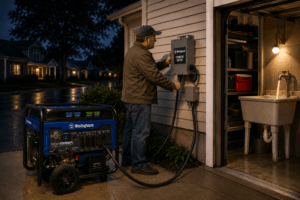
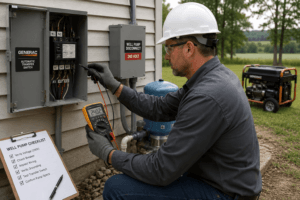
The best way to size a generator is to check the pump’s nameplate for horsepower, voltage, and amperage rather than relying on general estimates. Most deep-well pumps require 240V output, so verify that the generator provides native 120/240V power.
Best Inverter Generator
Honda EU7000iS
[IMAGE PLACEHOLDER – Honda EU7000iS Inverter Generator]
Why We Picked It
The Honda EU7000iS is one of the best inverter generators for homeowners with well pumps who also want quiet operation and clean power. It produces stable electricity that’s safe for sensitive electronics while providing 120/240-volt output for many residential well pump applications.
Although it doesn’t produce as much peak power as some large open-frame generators, it offers exceptional reliability, excellent fuel economy, and one of the quietest operating experiences in its class.
Pros
- Quiet inverter operation
- Clean power for electronics
- 120/240V output
- Excellent fuel efficiency
- Electric start
- Legendary Honda reliability
Cons
- Premium purchase price
- Lower surge capacity than larger conventional generators
Best For
- Homes with moderate well pump loads
- Rural homes
- Quiet neighborhoods
- Overnight outages
Best Dual-Fuel Generator
Champion 7500-Watt Dual Fuel Generator

Why We Picked It
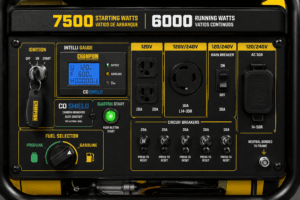
The Champion 7500-Watt Dual Fuel Generator delivers dependable backup power while allowing operation on either gasoline or propane. It provides enough starting power for many residential well pumps while still operating refrigerators, freezers, lighting, furnaces, and internet equipment.
Its dual-fuel capability makes it especially attractive for homeowners preparing for extended outages.
Pros
- Dual-fuel capability
- Electric start
- Excellent value
- Reliable engine
- Long runtime
- Easy maintenance
Cons
- Louder than inverter generators
- Lower output than larger premium models
Best For
- Small to medium well pumps
- Rural homes
- Emergency preparedness
- Budget-conscious homeowners
Best Standby Generator
Generac Guardian 22kW
Why We Picked It
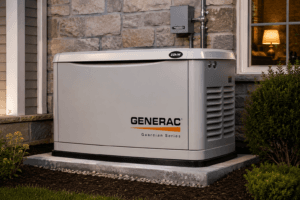
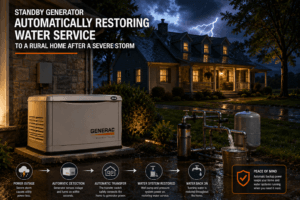
The Generac Guardian 22kW provides automatic backup power without requiring homeowners to manually start a generator. It automatically detects utility outages and restores electricity—including power for compatible well pumps—within seconds using an automatic transfer switch.
For homeowners who rely entirely on well water, automatic operation can provide valuable peace of mind during extended outages.
Pros
- Automatic startup
- Whole-home backup
- Natural gas or propane
- Remote monitoring
- Long runtime
- Excellent reliability
Cons
- Professional installation required
- Higher upfront investment
Best For
- Large rural homes
- Deep well systems
- Automatic backup
- Frequent outages
Generator Comparison
| Generator | Fuel Type | 120/240V Output | Best For |
|---|---|---|---|
| DuroMax XP13000HXT | Tri-Fuel | ✔ | Best Overall |
| Westinghouse WGen11500DFc | Gasoline / Propane | ✔ | Best Portable |
| Honda EU7000iS | Gasoline | ✔ | Best Inverter |
| Champion 7500 Dual Fuel | Gasoline / Propane | ✔ | Best Value |
| Generac Guardian 22kW | Natural Gas / Propane | ✔ | Automatic Backup |
Most residential well pumps require 240-volt power, so always verify that the generator provides native 120/240V output before purchasing. Checking the pump’s nameplate for voltage, horsepower, and amperage is the most accurate way to determine generator requirements.
Typical Well Pump Generator Sizing
| Well Pump Size | Recommended Generator Size* |
|---|---|
| 1/2 HP | 4,000–6,000 peak watts |
| 3/4 HP | 5,000–7,500 peak watts |
| 1 HP | 6,500–9,000 peak watts |
| 1½ HP | 9,000–12,000+ peak watts |
*Actual requirements vary based on pump type, depth, voltage, pressure tank settings, and motor starting current. Always verify your pump’s specifications before purchasing a generator.
Fuel Options
Gasoline
Advantages:
- Widely available
- High power output
- Easy to transport
Disadvantages:
- Limited shelf life
- Requires fuel stabilizer
- Needs periodic rotation
Propane
Advantages:
- Long shelf life
- Cleaner burning
- Lower engine maintenance
- Excellent emergency storage
Disadvantages:
- Slightly lower power output
- Requires propane tanks
Natural Gas
Advantages:
- Continuous fuel supply
- No refueling required
- Excellent for standby generators
Disadvantages:
- Requires natural gas service
- Not available in every rural area
Well Pump Backup Tips
Before an outage occurs:
- Verify whether your well pump uses 120V or 240V.
- Record the pump’s horsepower.
- Install a transfer switch or interlock kit.
- Test your generator before storm season.
- Keep emergency fuel on hand.
- Service your generator according to the manufacturer’s maintenance schedule.
Preparing ahead of time helps ensure you’ll have running water when utility power is unavailable.
Which Generator Is Best?
Choose the DuroMax XP13000HXT If:
- You have a deep well pump
- You need maximum surge power
- Fuel flexibility is important
- You power multiple household circuits
Choose the Westinghouse WGen11500DFc If:
- You want high portable output
- Long runtime is important
- You need dual-fuel capability
- You want dependable well pump backup
Choose the Honda EU7000iS If:
- Quiet operation matters
- You want premium reliability
- Clean power is important
- Your well pump fits within its output capacity
Choose the Champion 7500-Watt Dual Fuel Generator If:
- Budget is important
- You want dependable emergency backup
- Propane capability is valuable
- You have moderate electrical needs
Choose the Generac Guardian 22kW If:
- You want automatic backup
- Whole-home protection is your priority
- You rely on well water year-round
- You experience frequent outages
Features to Look For
Choosing a generator for a well pump requires more than simply buying the highest-wattage model. Since most well pumps use electric motors, they require substantial startup power and dependable voltage to operate correctly.
Here are the most important features to compare before purchasing a generator for your well system.
120/240-Volt Output
One of the first things to verify is your pump’s voltage.
Many residential deep-well pumps operate on:
- 240 volts
Some shallow well pumps operate on:
- 120 volts
Many generators designed for home backup provide both 120V and 240V output, making them suitable for well pump applications.
Always verify your pump’s voltage before purchasing.
High Starting Wattage
Electric motors require extra power during startup.
Your generator should have enough surge capacity to start the pump while also operating other essential appliances.
These may include:
- Refrigerator
- Freezer
- Furnace blower
- Internet router
- Lighting
- Sump pump
- Garage door opener
A generator with additional capacity reduces the risk of overload.
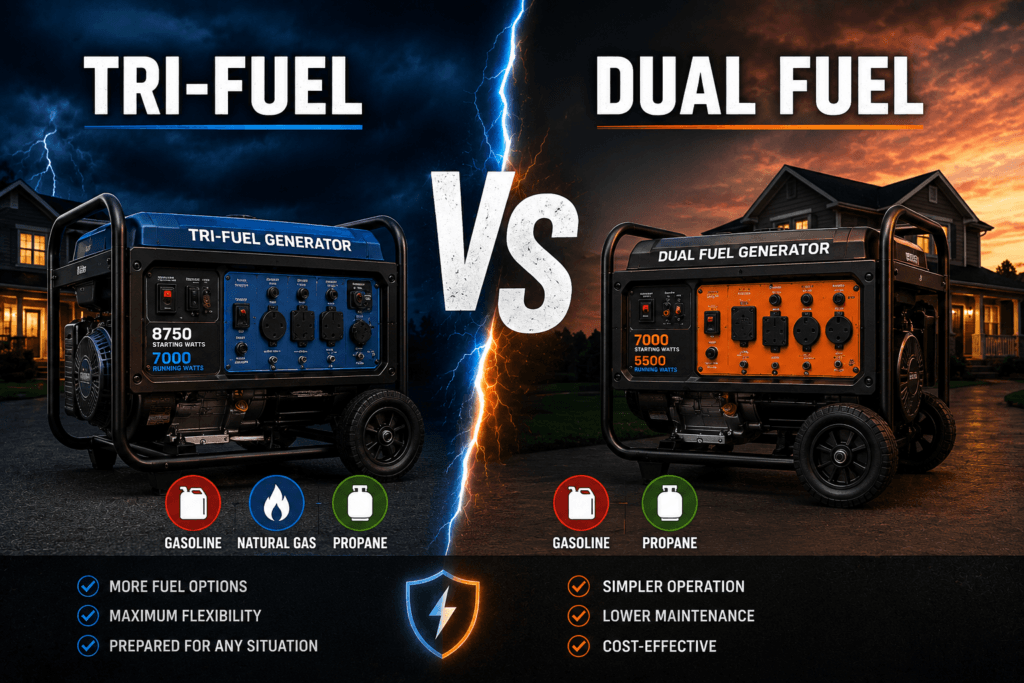
Dual-Fuel or Tri-Fuel Capability
Fuel flexibility is especially valuable for rural homeowners.
Dual-Fuel
Operates on:
- Gasoline
- Propane
Tri-Fuel
Operates on:
- Gasoline
- Propane
- Natural gas
Benefits include:
- Easier emergency fueling
- Longer propane storage
- Cleaner engine operation
- Greater flexibility during long outages
Electric Start
Electric start provides:
- Push-button starting
- Easier cold-weather operation
- Faster emergency startup
- Less physical effort
Many premium generators also include remote start.
Long Runtime
Well pumps may cycle on and off throughout the day during an outage.
Compare:
- Fuel tank size
- Runtime at 25% load
- Runtime at 50% load
Longer runtime means fewer refueling stops and more reliable access to water.
Automatic Transfer Switch
Standby generators use an automatic transfer switch (ATS).
Benefits include:
- Automatic startup
- Automatic power restoration
- Safe utility isolation
- Continuous water supply
- Convenience during outages
For homeowners who depend on well water every day, automatic operation can be especially valuable.
Carbon Monoxide (CO) Shutdown
Many portable generators now include carbon monoxide detection.
If unsafe CO levels are detected around the generator, the engine automatically shuts down.
Always operate portable generators outdoors in a well-ventilated location. Never operate a generator inside a garage, basement, crawl space, shed, or other enclosed structure. Keep it well away from doors, windows, and air intakes.
Transfer Switch Compatibility
A properly installed transfer switch or interlock kit allows the generator to safely power your home’s electrical system.
Benefits include:
- Safe operation
- Easier generator use
- Protection against dangerous backfeeding
- Ability to power well pump circuits directly
Common Buying Mistakes
Avoid these common mistakes before purchasing a well pump generator.
Buying Too Small
Many homeowners only calculate running watts.
Always include:
- Starting watts
- Well pump surge current
- Refrigerator startup
- Furnace blower
- Future electrical needs
Buying slightly more capacity often improves reliability.
Forgetting 240-Volt Output
Many portable generators provide only 120-volt outlets.
Before purchasing, verify your generator includes native 120/240V output if your well pump requires it.
Ignoring Pump Specifications
Always check the well pump’s nameplate.
Important information includes:
- Horsepower
- Voltage
- Amperage
- Phase
These specifications allow you to size your generator accurately.
Forgetting Fuel Storage
Prepare before outages occur.
Gasoline:
- Requires stabilizer
- Should be rotated regularly
Propane:
- Stores for years
- Burns cleaner
- Requires less maintenance
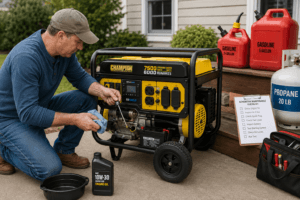
Skipping Maintenance
Routine maintenance helps ensure dependable operation.
Regularly:
- Change engine oil
- Inspect spark plugs
- Replace air filters
- Exercise the generator monthly
- Test electric-start batteries
- Inspect fuel lines
Proper maintenance greatly improves reliability during emergencies.
Waiting Until a Storm Is Forecast
Generator demand often increases before:
- Hurricanes
- Ice storms
- Severe thunderstorms
- Winter storms
Buying early gives you time to:
- Install a transfer switch
- Learn safe operation
- Store emergency fuel
- Test your generator
- Confirm your well pump operates properly
Frequently Asked Questions
What size generator do I need for a well pump?
It depends on:
- Pump horsepower
- Voltage
- Starting current
- Other appliances you plan to operate
Many homeowners choose generators in the 5,000 to 9,000 peak watt range for common residential well pumps, while larger systems may require significantly more power.
Can an inverter generator run a well pump?
Yes.
Some inverter generators with 120/240V output and adequate starting capacity can operate residential well pumps. Always verify the generator’s surge rating and your pump’s electrical requirements before purchasing.
Can one generator power my well pump and refrigerator?
Yes.
As long as the generator provides enough running and starting wattage for both appliances, it can operate them simultaneously.
Is propane better than gasoline?
Both fuels work well.
Propane offers:
- Longer shelf life
- Cleaner combustion
- Lower maintenance
Gasoline offers:
- Slightly higher power output
- Easy availability
Dual-fuel generators provide the flexibility to use either fuel.
Should I install a transfer switch?
Yes.
A properly installed transfer switch or interlock kit allows your generator to safely power household circuits, including your well pump, while helping prevent dangerous backfeeding.
How often should I exercise my generator?
Run your generator about once each month under load. This helps lubricate engine components, keeps electric-start batteries charged, and confirms that the generator is ready before an emergency occurs.
Final Thoughts
A reliable generator is one of the best investments for homeowners who depend on a private well. Without backup power, even a short outage can leave your home without running water for drinking, cooking, bathing, and sanitation. Choosing a generator with enough starting power, the correct voltage, and dependable performance helps ensure your water system continues operating when utility power fails.
For most homeowners, the DuroMax XP13000HXT Tri-Fuel Generator remains one of the best overall choices thanks to its impressive surge capacity, 120/240-volt output, and fuel flexibility. The Westinghouse WGen11500DFc is another excellent portable option with strong starting performance and dual-fuel capability. Homeowners who value quieter operation should consider the Honda EU7000iS, while the Champion 7500-Watt Dual Fuel Generator offers dependable performance at a more affordable price. If automatic backup is your priority, the Generac Guardian 22kW provides seamless whole-home protection, including support for most residential well pump systems.
Before purchasing, identify your well pump’s horsepower, voltage, and starting requirements, then choose a generator with enough capacity for both your water system and any additional appliances you plan to power. A properly sized generator can provide years of dependable service and ensure your family continues to have access to one of your home’s most important resources—running water.