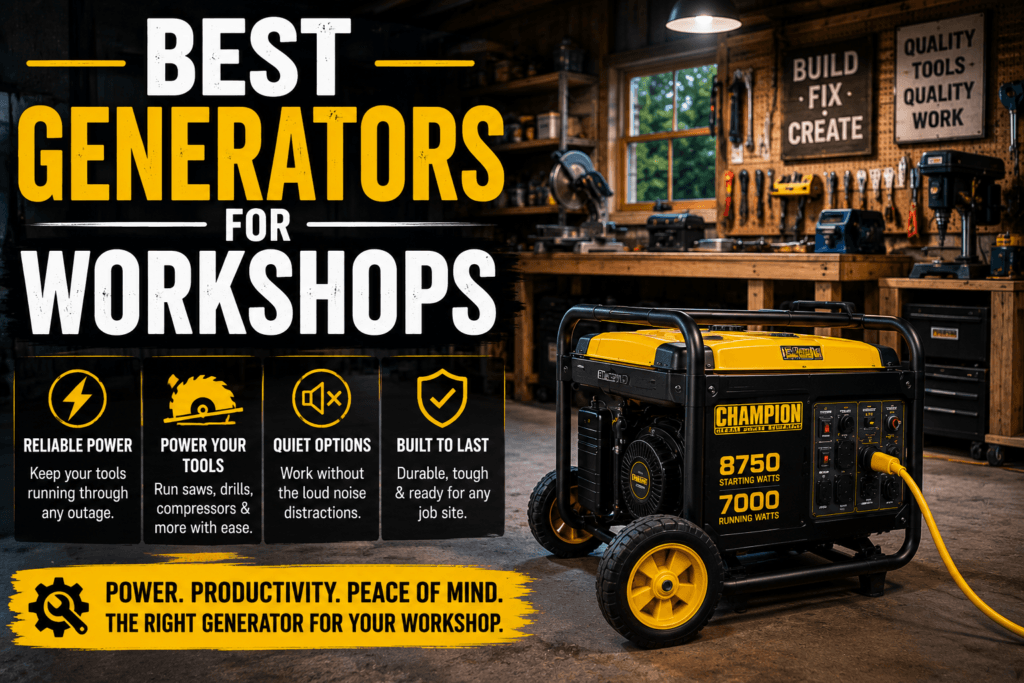
Whether you’re a weekend DIYer, a professional woodworker, a mechanic, or a metal fabricator, losing power can bring your workshop to a complete stop. A dependable generator keeps your tools running, protects valuable projects, and lets you continue working during power outages or at remote job sites.
The best generator for a workshop depends on the types of tools you use, how much power they require, and whether you need clean electricity for sensitive electronics like CNC machines, computers, or battery chargers.
In this guide, we’ll cover the best generators for workshops in 2026 and help you choose the right model for your needs.
What Size Generator Does a Workshop Need?
Most home workshops need 3,000 to 9,500 running watts, depending on the tools being used.
Typical power requirements include:
| Tool or Equipment | Approximate Running Watts |
|---|---|
| LED Shop Lights | 100–300 W |
| Battery Charger | 100–500 W |
| Drill Press | 500–900 W |
| Table Saw | 1,500–2,000 W |
| Air Compressor | 1,500–3,000 W |
| Miter Saw | 1,200–1,800 W |
| Circular Saw | 1,200–1,800 W |
| Bench Grinder | 500–1,000 W |
| Dust Collector | 1,000–2,000 W |
| Shop Vacuum | 800–1,500 W |
Many power tools require significantly more power when they first start, so always account for starting watts as well as running watts.
What Makes a Great Workshop Generator?
When shopping for a workshop generator, look for:
- High starting wattage
- Reliable engine
- Long runtime
- Electric start
- Multiple 120V outlets
- 240V outlet (if required)
- Clean inverter power for electronics
- Heavy-duty wheels
- Carbon monoxide shutdown
If your workshop includes computers, CNC equipment, laser engravers, or other sensitive electronics, an inverter generator is often the best choice because it produces cleaner power.
Our Top Picks
Best Overall
Why we like it:
- Plenty of power for most home workshops
- Runs on gasoline or propane
- Electric start
- Long runtime
- Excellent value
Best for:
- Woodworking shops
- Automotive garages
- Large DIY workshops
Best Quiet Workshop Generator
Why we like it:
- Extremely quiet
- Produces clean inverter power
- Excellent fuel efficiency
- Ideal for electronics and precision equipment
Best Heavy-Duty Workshop Generator
Why we like it:
- High starting wattage
- Runs on gasoline, propane, or natural gas
- Excellent for large compressors and heavy equipment
- Remote electric start
Best Budget Choice
A dependable budget-friendly option that’s ideal for hobby workshops and occasional backup power.
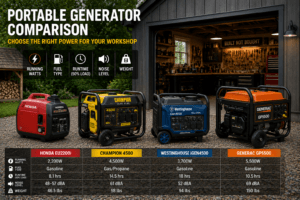
Inverter vs Conventional Generators
Inverter Generators
Advantages:
- Quiet operation
- Clean electricity
- Better fuel efficiency
- Ideal for electronics
- Lower engine speeds under light loads
Best for:
- CNC machines
- Computers
- Battery charging stations
- Home workshops
Conventional Generators
Advantages:
- Higher output
- Lower purchase price
- Excellent for heavy-duty power tools
- Better for large startup loads
Best for:
- Table saws
- Welders (when generator capacity allows)
- Air compressors
- Construction equipment
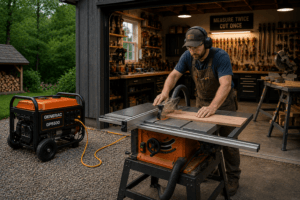
Should You Choose Dual Fuel?
Many workshop owners prefer dual-fuel generators because they offer flexibility.
Benefits include:
- Run on gasoline or propane
- Easier fuel availability during emergencies
- Propane stores much longer than gasoline
- Cleaner engine operation when using propane
For workshops that see frequent outages, dual-fuel models are an excellent investment.
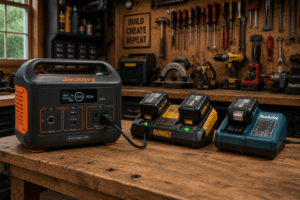
Portable Generator vs Portable Power Station
Battery-powered portable power stations are ideal for:
- Charging cordless tool batteries
- Laptops
- LED lighting
- Electronics
- Small hobby equipment
Fuel-powered generators remain the better choice for high-draw equipment like table saws, air compressors, and dust collection systems.
Generator Safety for Workshops
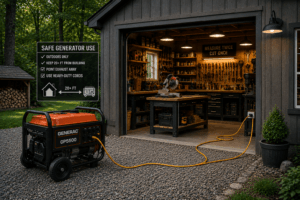
Always:
- Operate fuel-powered generators outdoors.
- Keep generators away from doors, windows, and vents.
- Install carbon monoxide detectors.
- Use heavy-duty extension cords.
- Keep fuel stored safely.
- Change oil according to the maintenance schedule.
- Test your generator monthly.
Never operate a gasoline, propane, or diesel generator inside your workshop, garage, or other enclosed space.
Common Mistakes to Avoid
Avoid these common errors:
- Buying too little generator capacity
- Ignoring startup wattage
- Using lightweight extension cords
- Running the generator indoors
- Overloading the generator
- Skipping routine maintenance
- Using stale gasoline
- Forgetting monthly exercise runs
Frequently Asked Questions
What size generator is best for a woodworking shop?
Most woodworking shops are well served by a 5,000 to 9,500 running watt generator, depending on how many tools are used simultaneously.
Can a generator run a table saw?
Yes. Most portable generators with sufficient starting and running wattage can power a table saw. Be sure to check the saw’s startup requirements before purchasing.
Is an inverter generator worth it for a workshop?
Yes, especially if you use sensitive electronics, CNC equipment, or computers. Inverter generators provide cleaner and more stable power.
Should I buy a dual-fuel generator?
A dual-fuel generator is an excellent choice if you want the flexibility of using either gasoline or propane during extended outages.
How often should I maintain my generator?
Follow the manufacturer’s maintenance schedule, including oil changes, air filter inspections, spark plug checks, monthly exercise runs, and fuel system maintenance.
Final Thoughts
The best generator for your workshop depends on the tools you use and the amount of power you need. For most home workshops, a 5,000–9,500-watt dual-fuel portable generator provides an excellent combination of performance, flexibility, and value. If quiet operation and clean power are priorities, an inverter generator is well worth considering.
Choosing the right generator today means you’ll be able to keep your projects moving, protect valuable equipment, and stay productive whenever the power goes out.