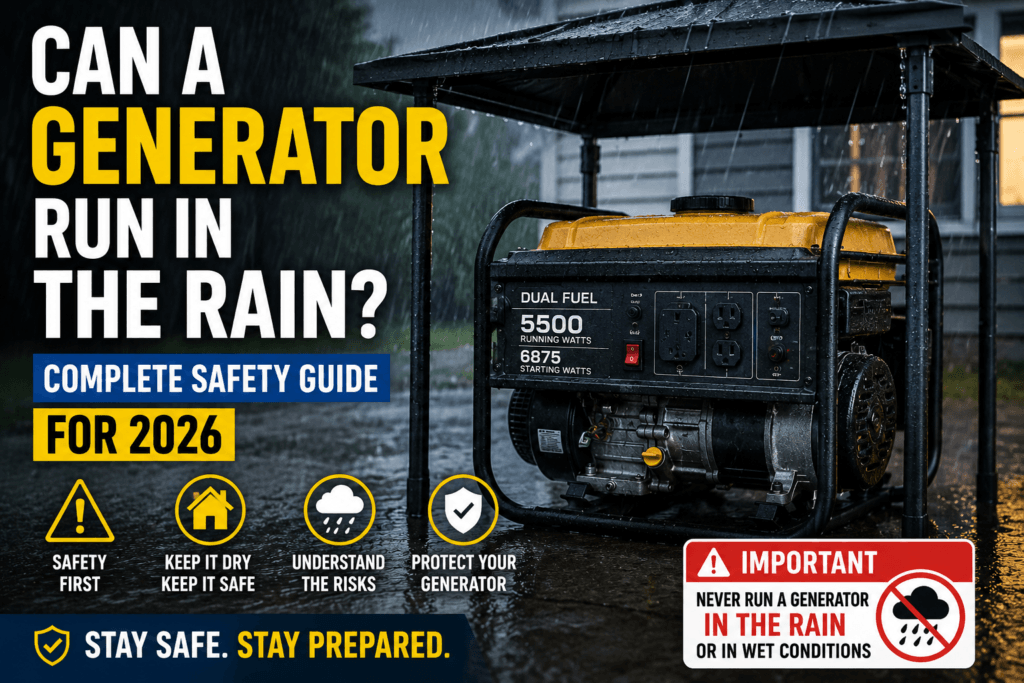
Power outages are often caused by severe weather—including thunderstorms, hurricanes, snowstorms, and heavy rain. Unfortunately, that’s exactly when most people need their generators the most.
So, can you safely run a generator in the rain?
The short answer is: No—not if the generator is exposed directly to rain. Water and electricity are a dangerous combination. Running a portable generator while it’s getting wet can damage the generator, ruin connected appliances, and significantly increase the risk of electrical shock or electrocution.
The good news is that there are safe ways to operate a generator during rainy weather. In this guide, you’ll learn exactly what you should—and shouldn’t—do to keep your backup power running safely.
Why Running a Generator in the Rain Is Dangerous
Portable generators are designed for outdoor use, but they are not designed to sit uncovered in heavy rain.
Water can create several serious hazards:
- Electric shock
- Electrocution
- Short circuits
- Damage to outlets
- Generator failure
- Corrosion
- Reduced lifespan
- Fire hazards from damaged wiring
If rain enters the electrical outlets, control panel, or alternator, it can cause immediate or long-term damage.
What Happens if Your Generator Gets Wet?
Depending on how much water enters the generator, several problems can occur.
Electrical Short Circuits
Moisture inside electrical components can create short circuits that prevent the generator from producing power.
Rust and Corrosion
Rainwater speeds up corrosion on:
- Electrical terminals
- Wiring
- Connectors
- Fasteners
- Fuel system components
Over time, corrosion can cause difficult-to-diagnose electrical problems.
Permanent Component Damage
Sensitive components like the:
- Automatic Voltage Regulator (AVR)
- Alternator
- Circuit breakers
- Electronic control modules
can all be damaged by water intrusion.

Can You Run a Generator Under a Covered Porch?
Generally, no.
Although the generator may stay dry, running it under a porch, patio, garage, carport, or attached structure creates another much more serious danger:
Carbon Monoxide Poisoning
Portable generators produce deadly carbon monoxide (CO).
Carbon monoxide:
- Has no smell
- Has no color
- Can enter nearby windows
- Can accumulate quickly
- Can become fatal within minutes
Even partially enclosed areas are unsafe.
Always operate portable generators well away from homes, garages, doors, crawl spaces, and open windows.
Safe Ways to Run a Generator in the Rain
Fortunately, several safe solutions exist.
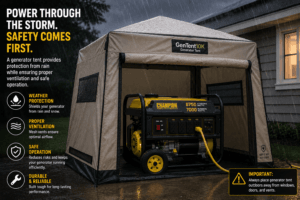
1. Use a Generator Tent
Generator tents are specially designed covers that:
- Keep rain off the generator
- Allow proper airflow
- Leave the exhaust area open
- Protect electrical outlets
These are one of the safest and most popular options.
2. Use a Generator Running Cover
Some manufacturers sell covers specifically designed for operation while the generator is running.
These differ from storage covers because they include:
- Ventilation openings
- Heat-resistant materials
- Exhaust clearance
Never use a regular storage cover while the generator is operating.
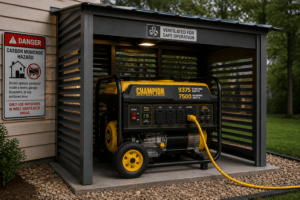
3. Build a Generator Shelter
Many homeowners build permanent generator shelters.
A good shelter should provide:
- Open sides for ventilation
- A waterproof roof
- Adequate exhaust clearance
- Easy maintenance access
Can You Put a Tarp Over a Generator?
No.
A tarp is not a safe solution.
Problems include:
- Heat buildup
- Fire risk
- Poor ventilation
- Exhaust blockage
- Melted plastic
- Carbon monoxide accumulation
Instead, use a cover specifically designed for running generators.
Can an Inverter Generator Run in the Rain?
No.
Although inverter generators have enclosed cases, they still contain:
- Electrical outlets
- Cooling vents
- Air intakes
- Electronic components
These must remain protected from direct rain.
The same safety rules apply to inverter generators as conventional portable generators.
What if It Starts Raining While the Generator Is Running?
If unexpected rain begins:
- Disconnect sensitive loads if safe to do so.
- Shut the generator down if it is exposed to heavy rain.
- Allow it to cool.
- Move it to a protected outdoor location.
- Restart it only after it is safely sheltered.
Never attempt to move a running generator through standing water.
How Far Away Should a Generator Be From Your House?
For safety, a portable generator should be positioned:
- Outdoors only
- On a dry, level surface
- Away from puddles
- Away from roof runoff
- Away from windows and doors
- Away from dryer vents and crawl-space vents
Keeping the generator dry is important—but keeping exhaust gases away from your home is even more critical.
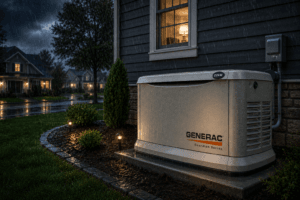
What About Whole-House Standby Generators?
Standby generators are different.
They are specifically engineered to:
- Operate outdoors year-round
- Handle rain and snow
- Resist harsh weather
- Automatically start during outages
Their weatherproof enclosures are designed by the manufacturer for permanent outdoor installation.
Portable generators do not have the same level of weather protection.
Additional Rain Safety Tips
Before every storm:
- Check the weather forecast.
- Test your generator.
- Fill approved fuel containers.
- Inspect extension cords.
- Keep the generator on high ground.
- Avoid standing water.
- Use heavy-duty outdoor-rated cords.
- Install carbon monoxide detectors inside your home.
Planning ahead is much safer than trying to improvise during severe weather.
Common Mistakes to Avoid
Never:
- Run a generator inside a garage.
- Operate it in a basement.
- Place it under an attached porch.
- Cover it with a tarp while running.
- Operate it in standing water.
- Touch it with wet hands.
- Refuel while the engine is hot.
- Block the exhaust.
These mistakes can lead to equipment damage, fire, or life-threatening injuries.
Frequently Asked Questions
Can a generator get rained on?
Yes, but it shouldn’t. Direct exposure to rain can damage electrical components and create a serious shock hazard.
Is it okay to run a generator in light rain?
Not if the generator is uncovered. Even light rain can enter electrical outlets and cooling vents. Use a purpose-built generator running cover or shelter that allows proper ventilation.
Can I use a canopy over my generator?
A freestanding canopy may help if it provides plenty of clearance and unrestricted airflow, but it should never trap heat or exhaust gases. Avoid enclosing the generator on the sides.
Can I leave my generator outside overnight?
Portable generators should not be left unattended for long periods, especially during bad weather. Secure them against theft and protect them from rain while maintaining safe ventilation.
What is the safest way to run a generator during a storm?
Place the generator outdoors on a dry, level surface, well away from your home, and use a generator tent or running cover specifically designed for safe operation in wet weather.
Final Thoughts
While storms are one of the main reasons people rely on generators, operating a portable generator in the rain without proper protection is unsafe. Water can damage the generator, create electrical hazards, and put you at risk of serious injury.
The safest approach is to use a purpose-built generator tent or ventilated shelter, keep the generator outdoors on a dry surface, and always maintain adequate distance from your home to prevent carbon monoxide exposure. With the right setup and preparation, your generator can provide reliable backup power while helping keep your family safe during severe weather.