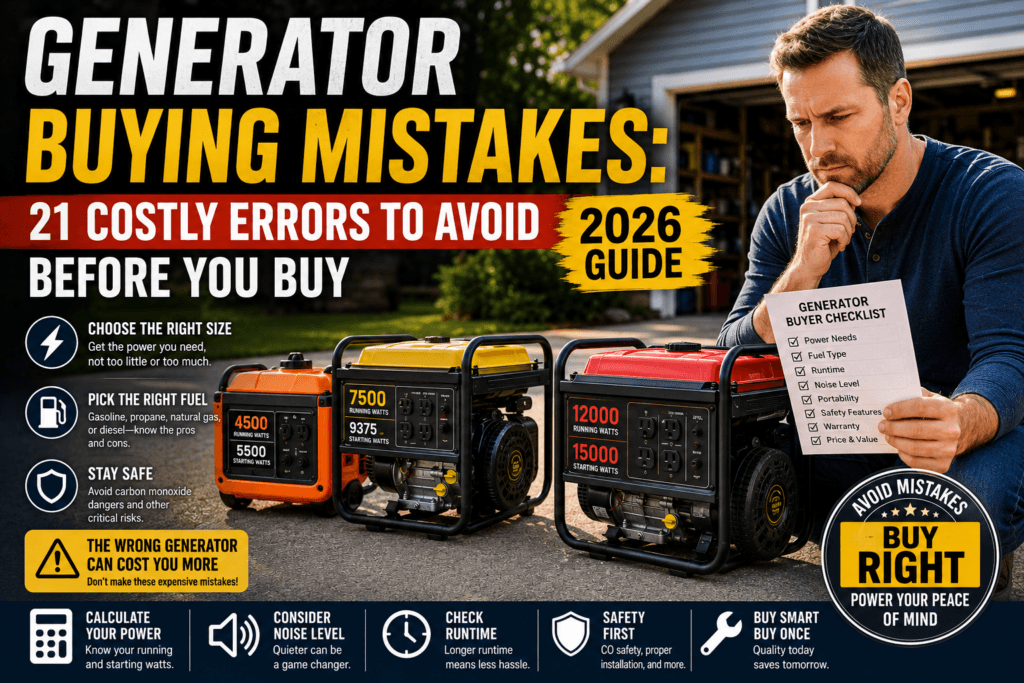
Buying a generator is one of the smartest investments you can make for your home, but choosing the wrong one can lead to frustration, wasted money, and even dangerous situations during a power outage.
Many first-time buyers focus only on price or maximum wattage without considering fuel consumption, noise level, runtime, portability, or the appliances they actually need to power. The result is often a generator that is too small, too large, too noisy, or simply not the right fit.
This guide covers 21 of the most common generator buying mistakes and shows you how to avoid them, helping you choose the right generator with confidence.
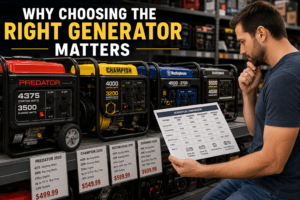
Why Choosing the Right Generator Matters
A generator isn’t just another appliance—it’s emergency equipment.
The right generator can:
- Keep your refrigerator running
- Power medical devices
- Prevent frozen pipes
- Keep your internet online
- Provide lighting during outages
- Protect your family’s comfort and safety
Choosing the wrong one may leave you without enough power when you need it most.
Mistake #1: Buying the Cheapest Generator
Price is important, but it shouldn’t be the only factor.
Very inexpensive generators may have:
- Lower-quality components
- Shorter warranties
- Louder engines
- Fewer safety features
- Less reliable customer support
Instead, compare overall value, reliability, and features.
Mistake #2: Buying a Generator That’s Too Small
One of the biggest mistakes is underestimating your power needs.
A generator that’s too small may:
- Trip breakers
- Overload easily
- Struggle with motor startup
- Shut down unexpectedly
Before buying, calculate both your running watts and starting watts.
Mistake #3: Buying a Generator That’s Too Large
Bigger isn’t always better.
Oversized generators often:
- Cost more
- Burn more fuel
- Take up more storage space
- Weigh significantly more
Choose a generator sized for your actual needs instead of buying the largest model available.
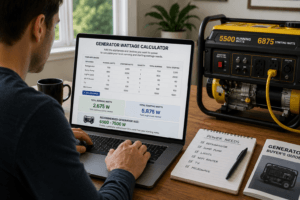
Mistake #4: Ignoring Starting Watts
Many appliances require extra power when they first start.
Examples include:
- Refrigerators
- Freezers
- Sump pumps
- Air conditioners
- Well pumps
If you only calculate running watts, your generator may overload when these appliances start.
Mistake #5: Choosing the Wrong Fuel Type
Each fuel has advantages and disadvantages.
Gasoline
- Easy to find
- Good power output
- Requires fuel rotation
Propane
- Longer storage life
- Cleaner burning
- Slightly lower power output on many generators
Diesel
- Fuel efficient
- Excellent for heavy-duty use
Natural Gas
- Continuous fuel supply
- Common for standby generators
Choose the fuel that best matches your emergency plans.
Mistake #6: Ignoring Runtime
A generator with a small fuel tank may require frequent refueling.
Compare:
- Fuel tank size
- Runtime at 25% load
- Runtime at 50% load
Longer runtime can make overnight outages much easier to manage.
Mistake #7: Forgetting About Noise
Some conventional generators produce over 70–80 decibels, while many inverter generators are much quieter.
If you live in a neighborhood, campground, or use the generator frequently, noise level matters.
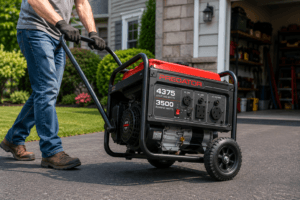
Mistake #8: Forgetting About Weight
Some portable generators weigh well over 200 pounds.
Consider:
- Built-in wheels
- Folding handles
- Lift points
- Storage location
Portability can be just as important as power.
Mistake #9: Not Planning for Fuel Storage
Buying a gasoline generator also means planning for safe fuel storage.
Use:
- Approved fuel containers
- Fuel stabilizer (when appropriate)
- Proper ventilation
- Safe storage away from ignition sources
Mistake #10: Ignoring Carbon Monoxide Safety
Never operate a portable generator:
- Inside a garage
- Inside your home
- Under an attached porch
- Near open windows
Install carbon monoxide detectors and always operate generators outdoors.
Mistake #11: Assuming All Generators Are Inverter Generators
Inverter generators and conventional generators serve different purposes.
Inverter generators are generally:
- Quieter
- More fuel efficient
- Better for sensitive electronics
Conventional generators are often:
- More affordable per watt
- Better for larger loads
- Common for job sites
Mistake #12: Forgetting About Transfer Switches
If you want to power household circuits safely, you may need:
- A transfer switch
- An interlock kit
- Professional installation (where required)
Never connect a generator directly to your home’s wiring without an approved transfer method.
Mistake #13: Buying Without Reading Reviews
Look beyond star ratings.
Pay attention to:
- Long-term reliability
- Customer support
- Replacement part availability
- Common complaints
Mistake #14: Ignoring Warranty Coverage
A longer warranty may indicate greater manufacturer confidence.
Review:
- Warranty length
- What’s covered
- Service locations
- Parts availability
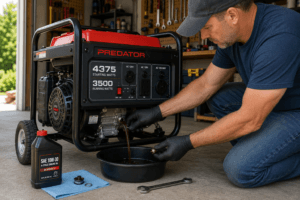
Mistake #15: Buying More Generator Than You Can Maintain
Large generators often require:
- More oil
- More fuel
- More storage space
- More frequent maintenance
Choose a generator you can realistically maintain.
Mistake #16: Overlooking Fuel Efficiency
A less efficient generator may cost much more to operate during extended outages.
Compare fuel consumption—not just purchase price.
Mistake #17: Forgetting Future Needs
Think beyond today’s power needs.
Future additions might include:
- A sump pump
- A home office
- Medical equipment
- A larger refrigerator
- Additional freezers
Buying with a little room for growth can save money later.
Mistake #18: Ignoring Weather Protection
Portable generators should never be operated in direct rain.
Plan ahead with:
- A generator running cover
- A generator tent
- A properly ventilated shelter
Mistake #19: Buying Without Measuring Storage Space
Before purchasing:
- Measure your garage.
- Check doorway widths.
- Consider vehicle transport.
- Plan where fuel will be stored.
Mistake #20: Waiting Until the Storm Is Coming
Generator demand often spikes before severe weather.
Buying early gives you time to:
- Learn how it works
- Test it under load
- Store fuel safely
- Perform break-in procedures
Mistake #21: Buying Without a Maintenance Plan
Even the best generator needs regular maintenance.
Keep a schedule for:
- Oil changes
- Air filter cleaning
- Spark plug replacement
- Battery checks
- Monthly exercise runs
Preventive maintenance helps ensure your generator is ready when the power goes out.
Quick Generator Buying Checklist
Before purchasing, ask yourself:
- How many watts do I actually need?
- Which fuel type fits my situation?
- How long do I need it to run?
- Is it quiet enough?
- Can I move it easily?
- Where will I store it?
- How will I connect it safely?
- Do I have enough fuel?
- Do I have carbon monoxide detectors?
- Am I prepared to maintain it?
Frequently Asked Questions
What is the biggest mistake people make when buying a generator?
Buying a generator without calculating their actual power needs. This often results in purchasing a unit that’s either too small to handle startup loads or larger than necessary.
Should I buy a bigger generator just in case?
A modest amount of extra capacity can be helpful, but buying a generator that’s far larger than your needs may increase purchase cost, fuel consumption, and maintenance requirements.
Is an inverter generator worth the extra money?
For many homeowners, yes. Inverter generators are generally quieter, more fuel-efficient, and produce cleaner electricity for sensitive electronics. However, conventional generators may be a better choice for high-power applications.
When is the best time to buy a generator?
The best time is before storm season or any anticipated outage. Buying early allows you to compare models, test the generator, and become familiar with its operation.
Final Thoughts
Choosing the right generator is about more than just picking the biggest engine or the lowest price. By avoiding these common buying mistakes, you’ll be better prepared to select a generator that fits your home’s power needs, budget, and long-term plans.
Take the time to compare features, calculate your required wattage, understand fuel options, and prioritize safety. A well-chosen generator can provide reliable backup power for years and give you peace of mind when the unexpected happens.