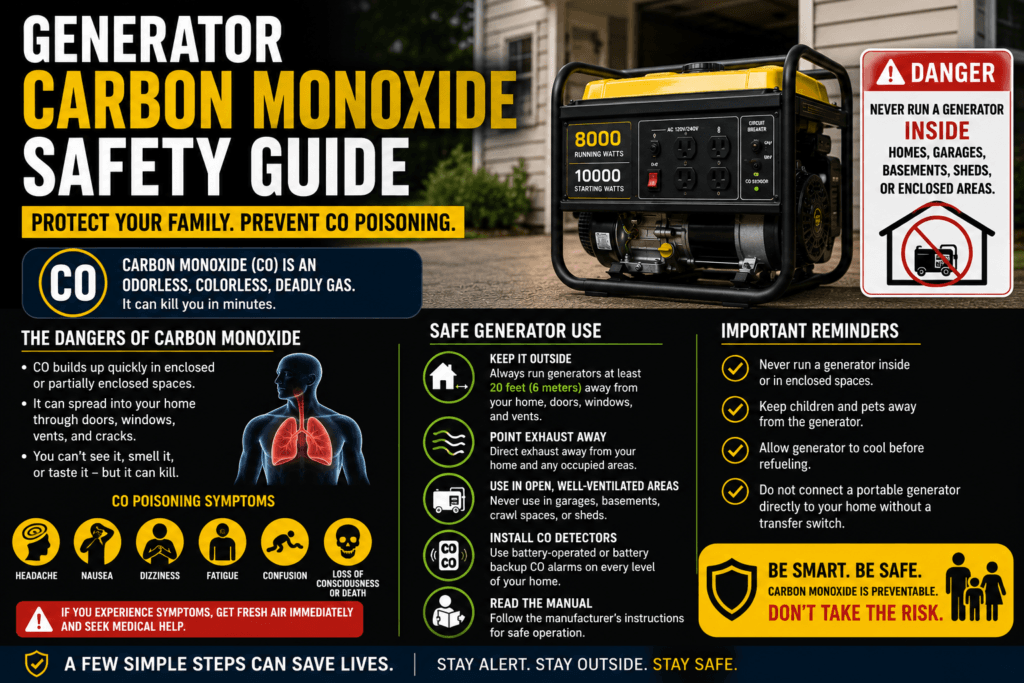
Portable generators are one of the best ways to keep your home powered during outages, but they also present one of the biggest hidden dangers: carbon monoxide (CO).
Every year, people are seriously injured or killed because generators are operated too close to homes, inside garages, or in other enclosed spaces. The danger is especially high during storms, when people may be tempted to move a generator closer to stay dry or make refueling easier.
The good news is that carbon monoxide poisoning is almost entirely preventable when generators are used correctly.
This guide explains what carbon monoxide is, why generators produce it, where to place your generator safely, and the steps you should take to protect your family during every power outage.

What Is Carbon Monoxide?
Carbon monoxide (CO) is a poisonous gas produced whenever gasoline, propane, diesel, or natural gas burns.
It is especially dangerous because it is:
- Colorless
- Odorless
- Tasteless
- Invisible
- Highly toxic
You cannot see or smell carbon monoxide, which is why it is often called the “silent killer.”
Why Do Generators Produce Carbon Monoxide?
All fuel-burning generators create carbon monoxide as part of the combustion process.
This includes:
- Portable gasoline generators
- Dual-fuel generators
- Propane generators
- Diesel generators
- Natural gas standby generators
Even newer generators with carbon monoxide sensors still produce CO—they simply include additional safety features that may shut the unit down under certain conditions.
Why Carbon Monoxide Is So Dangerous
When carbon monoxide is inhaled, it replaces oxygen in your bloodstream.
As oxygen levels drop, your body’s organs begin to suffer from oxygen deprivation.
Without immediate action, carbon monoxide poisoning can quickly become life-threatening.
Symptoms of Carbon Monoxide Poisoning
Early symptoms often resemble the flu.
Common warning signs include:
- Headache
- Dizziness
- Weakness
- Nausea
- Vomiting
- Fatigue
- Confusion
- Blurred vision
More severe symptoms include:
- Loss of coordination
- Difficulty walking
- Chest pain
- Shortness of breath
- Fainting
- Loss of consciousness
If several people in the home begin experiencing similar symptoms during a power outage, carbon monoxide should be suspected immediately.
What To Do If You Suspect Carbon Monoxide Poisoning
If you believe carbon monoxide is present:
- Turn off the generator if it is safe to do so.
- Leave the building immediately.
- Move everyone into fresh air.
- Call 911 or your local emergency services.
- Do not re-enter the building until emergency responders say it is safe.
Do not ignore symptoms, even if they seem mild.
Where Should You Place a Generator?
Always operate portable generators:
- Outdoors only
- On a dry, level surface
- Well away from doors
- Away from open windows
- Away from crawl-space vents
- Away from dryer vents
- Away from attached garages
Never assume that an open garage door provides enough ventilation.

Places You Should NEVER Run a Generator
Never operate a portable generator:
- Inside a garage
- Inside your home
- In a basement
- On a porch
- Under a deck
- Inside a shed
- Inside a workshop
- In a crawl space
- Near open windows
- Near air-conditioning intakes
Even partially enclosed areas can allow dangerous carbon monoxide levels to build up.
How Far Should a Generator Be From the House?
A generator should be placed well away from your home, with the exhaust directed away from doors, windows, and vents.
The farther the generator is from occupied areas while still allowing safe electrical connections, the better.
Always follow the placement recommendations provided in your generator’s owner’s manual.
Never Point the Exhaust Toward the House
Even if the generator is outdoors, exhaust gases can drift into the home.
Wind can change direction quickly during storms.
Always point the exhaust away from:
- Doors
- Windows
- Garage openings
- Fresh-air intakes
Install Carbon Monoxide Detectors
Every home with a generator should have working carbon monoxide alarms.
Install detectors:
- Outside every sleeping area
- On every level of the home
- According to the manufacturer’s instructions
Test them regularly and replace batteries as needed.

Generators With Carbon Monoxide Shutoff Technology
Many newer portable generators include automatic carbon monoxide shutdown systems.
These systems monitor CO levels around the generator and may shut the engine off if dangerous concentrations are detected.
While this technology adds an extra layer of protection, it should never replace proper generator placement or safe operating practices.
Running a Generator During Rain
Storms often bring heavy rain, but never move your generator into an enclosed area just to keep it dry.
Instead:
- Use a generator running cover designed for safe operation.
- Use a properly ventilated generator tent.
- Build or purchase a weather-resistant generator shelter that allows unrestricted airflow.
Never cover a running generator with a tarp or blanket.
Additional Generator Safety Tips
Always:
- Read the owner’s manual.
- Keep children and pets away from the generator.
- Allow the engine to cool before refueling.
- Store fuel in approved containers.
- Inspect extension cords before use.
- Never overload the generator.
- Perform routine maintenance.
Safe habits help prevent accidents long before an emergency occurs.
Common Carbon Monoxide Safety Mistakes
Avoid these dangerous mistakes:
- Running a generator in a garage with the door open
- Operating under an attached porch
- Placing the generator too close to windows
- Using the generator inside a shed
- Blocking the exhaust
- Ignoring a sounding CO alarm
- Refueling while the engine is hot
- Assuming carbon monoxide can be smelled
These errors have caused many preventable injuries and fatalities.
Frequently Asked Questions
Can I run a generator in my garage if the door is open?
No. An open garage door does not provide enough ventilation to prevent dangerous carbon monoxide buildup.
Can carbon monoxide enter my home from outside?
Yes. Exhaust gases can enter through open windows, doors, vents, crawl spaces, and other openings.
Do inverter generators produce carbon monoxide?
Yes. Any fuel-burning generator—including inverter generators—produces carbon monoxide.
Do standby generators produce carbon monoxide?
Yes. Standby generators also produce CO, but they are permanently installed outdoors according to manufacturer guidelines and local building codes.
Are carbon monoxide detectors really necessary?
Absolutely. Working CO detectors provide an important warning if dangerous carbon monoxide enters your home and should be considered essential whenever you use a generator.
Final Thoughts
Carbon monoxide is one of the most serious hazards associated with portable generators, but it is also one of the easiest to prevent. By operating your generator outdoors, keeping it well away from your home, installing carbon monoxide detectors, and following the manufacturer’s safety instructions, you can significantly reduce the risk of CO poisoning.
When the power goes out, your generator should provide peace of mind—not create another emergency. Taking a few extra precautions before and during an outage can help protect your home, your family, and everyone around you.