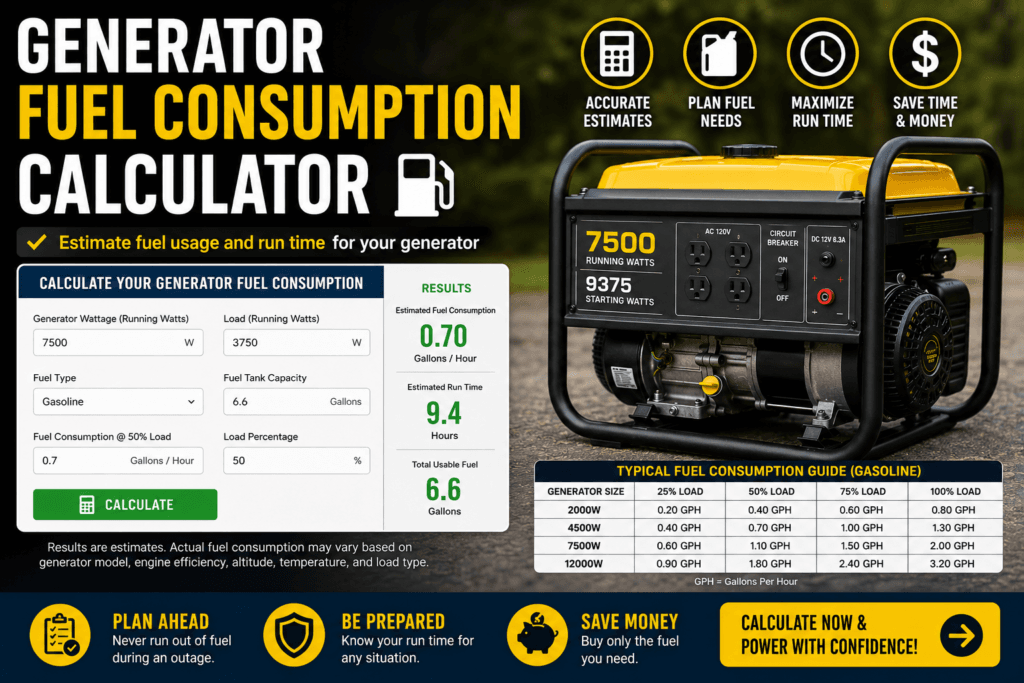
When the power goes out, fuel becomes one of the most important parts of your backup power plan. A generator is only useful if you have enough fuel to keep it running.
The problem is that many homeowners do not know how much gasoline, propane, diesel, or natural gas their generator will actually use.
A small inverter generator may run all night on a small tank. A large portable generator powering central air, refrigerators, lights, and appliances may burn fuel much faster.
This guide will help you estimate generator fuel consumption, understand what affects runtime, and plan how much fuel to store before an outage.
Quick Generator Fuel Consumption Calculator
Use this simple formula:
Fuel Needed = Fuel Used Per Hour × Number of Hours Running
Example:
If your generator uses 0.75 gallons per hour and you run it for 10 hours:
0.75 × 10 = 7.5 gallons of fuel
So you would need about 7.5 gallons for 10 hours of runtime.
Average Generator Fuel Consumption by Size
| Generator Size | Gasoline Use Per Hour | Best For |
|---|---|---|
| 2,000 watts | 0.10–0.25 gal/hr | Wi-Fi, lights, fridge, small devices |
| 3,500 watts | 0.25–0.45 gal/hr | Refrigerator, freezer, lights, sump pump |
| 5,000 watts | 0.40–0.75 gal/hr | Several household essentials |
| 7,500 watts | 0.60–1.00 gal/hr | Larger home backup loads |
| 10,000 watts | 0.80–1.40 gal/hr | Transfer switch, larger appliances |
| 12,000+ watts | 1.00–2.00+ gal/hr | Heavy-duty home backup |
These are general estimates. Actual fuel use depends on the generator model, engine size, fuel type, and electrical load.
What Affects Generator Fuel Consumption?
1. Electrical Load
The more watts you use, the more fuel your generator burns.
A generator powering only a refrigerator, freezer, router, and lights will use much less fuel than one powering a central air conditioner, well pump, microwave, and electric water heater.
2. Generator Size
Large generators usually burn more fuel because they have larger engines.
A 12,000-watt generator running lightly may still use more fuel than a smaller inverter generator powering the same small load.
3. Fuel Type
Common generator fuels include:
- Gasoline
- Propane
- Diesel
- Natural gas
Each fuel burns differently and produces different power output.
4. Maintenance
Poor maintenance can increase fuel use.
Dirty air filters, old spark plugs, stale fuel, and low oil can make the engine work harder.

Gasoline Generator Fuel Consumption
Gasoline is the most common portable generator fuel.
Pros
- Easy to find
- High power output
- Works with most portable generators
Cons
- Short storage life
- Hard to find during major outages
- Must be stored safely
Example Gasoline Estimate
If a 7,500-watt generator uses about 0.75 gallons per hour at moderate load:
| Runtime | Fuel Needed |
|---|---|
| 6 hours | 4.5 gallons |
| 12 hours | 9 gallons |
| 24 hours | 18 gallons |
| 3 days, 12 hrs/day | 27 gallons |
Propane Generator Fuel Consumption
Propane is popular because it stores longer than gasoline.
A standard 20-pound propane tank holds about 4.6 gallons of propane.
Pros
- Long storage life
- Cleaner burning
- Good for emergency storage
- Common with dual-fuel generators
Cons
- Lower power output than gasoline on many generators
- Can be used faster under heavy loads
- Tanks can run out quickly during long outages
Example Propane Estimate
A mid-size generator may run about 6–10 hours on a 20-pound propane tank, depending on load.
| Propane Supply | Estimated Runtime |
|---|---|
| 20-lb tank | 6–10 hours |
| Two 20-lb tanks | 12–20 hours |
| 40-lb tank | 12–20 hours |
| 100-lb tank | 30–50+ hours |
Diesel Generator Fuel Consumption
Diesel generators are known for efficiency and durability.
Pros
- Fuel efficient
- Strong for heavy loads
- Long engine life
- Common for commercial backup power
Cons
- Diesel generators can cost more
- Diesel fuel needs proper storage
- Less common for small portable units
A diesel generator may use less fuel per hour than a similar gasoline generator, especially under steady loads.
Natural Gas Generator Fuel Consumption
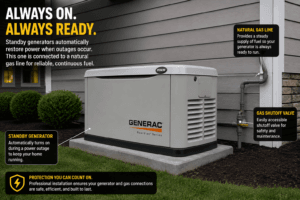
Natural gas is common for standby generators.
Pros
- No gasoline storage
- Continuous fuel supply in many areas
- Great for whole-house standby systems
Cons
- Requires utility gas service
- Output may be lower than gasoline or diesel
- Gas supply may not be available everywhere
Natural gas consumption is usually measured in cubic feet per hour instead of gallons.
How to Estimate Fuel for an Outage
Use this simple planning method.
Step 1: Decide What You Need to Power
Essential loads may include:
- Refrigerator
- Freezer
- Sump pump
- Furnace blower
- Wi-Fi router
- Phone chargers
- Medical equipment
- A few LED lights
Avoid powering unnecessary large appliances unless your generator is sized for them.
Step 2: Estimate Your Running Hours Per Day
You may not need to run the generator 24 hours per day.
Many homeowners run a generator in cycles, such as:
- 2–3 hours in the morning
- 4–6 hours during the day
- 2–4 hours in the evening
This saves fuel while keeping refrigerators and freezers cold.
Step 3: Estimate Fuel Per Hour
Use your owner’s manual if available. If not, use the chart above as a rough estimate.
Step 4: Multiply
Fuel per hour × hours per day × number of days = total fuel needed
Example:
A generator uses 0.6 gallons per hour.
You plan to run it 10 hours per day for 3 days.
0.6 × 10 × 3 = 18 gallons
You would want about 18 gallons of gasoline, plus a safety margin.
Fuel Planning Table
| Generator Use Plan | Fuel Burn Rate | Hours Per Day | Fuel Per Day | 3-Day Fuel Need |
|---|---|---|---|---|
| Light emergency use | 0.25 gal/hr | 8 hrs | 2 gal | 6 gal |
| Moderate home backup | 0.60 gal/hr | 10 hrs | 6 gal | 18 gal |
| Heavy home backup | 1.00 gal/hr | 12 hrs | 12 gal | 36 gal |
| Large loads/AC use | 1.50 gal/hr | 12 hrs | 18 gal | 54 gal |
How to Make Generator Fuel Last Longer
Use Only Essential Appliances
The fastest way to save fuel is to reduce load.
Power the most important items first.
Use LED Lights
LED bulbs use far less power than older incandescent bulbs.
Avoid Electric Heat
Electric heaters use a lot of watts and drain fuel quickly.
Turn Off Big Loads When Not Needed
Avoid running:
- Electric water heaters
- Clothes dryers
- Electric ovens
- Central air unless necessary
- Space heaters
Use Eco Mode
Many inverter generators have eco mode, which lowers engine speed when demand is low.
Keep Up With Maintenance
Change oil, clean filters, replace spark plugs, and use fresh fuel.

Common Fuel Storage Mistakes
Avoid these mistakes:
- Storing gasoline too long without stabilizer
- Keeping fuel cans near flames or heat
- Using unapproved containers
- Refueling while the generator is hot
- Storing propane tanks indoors
- Forgetting to rotate fuel
Fuel safety is just as important as generator safety.
Frequently Asked Questions
How much gas does a generator use per hour?
Small inverter generators may use about 0.10–0.25 gallons per hour, while large portable generators may use 1 gallon per hour or more under heavier loads.
How much fuel do I need for a 24-hour power outage?
For light use, you may need 3–8 gallons. For moderate home backup, you may need 10–20 gallons. For large loads, you may need significantly more.
Does a generator use more fuel with more appliances plugged in?
Yes. More electrical load makes the engine work harder, which increases fuel consumption.
Is propane better than gasoline for long outages?
Propane stores better than gasoline, but gasoline often produces more power. A dual-fuel generator gives you more flexibility.
Can I run my generator 24 hours a day?
Many generators can run for long periods if properly maintained, but they still need refueling, oil checks, cooling time, and safe operation outdoors.
Final Thoughts
A generator fuel consumption calculator helps you plan before an emergency happens. The key is knowing your generator’s fuel burn rate, estimating how many hours per day you will run it, and storing enough fuel safely.
For most homeowners, the best strategy is to power only essential appliances, avoid unnecessary high-wattage loads, and keep extra fuel ready before storm season. A little planning can make your generator last much longer when the power goes out.