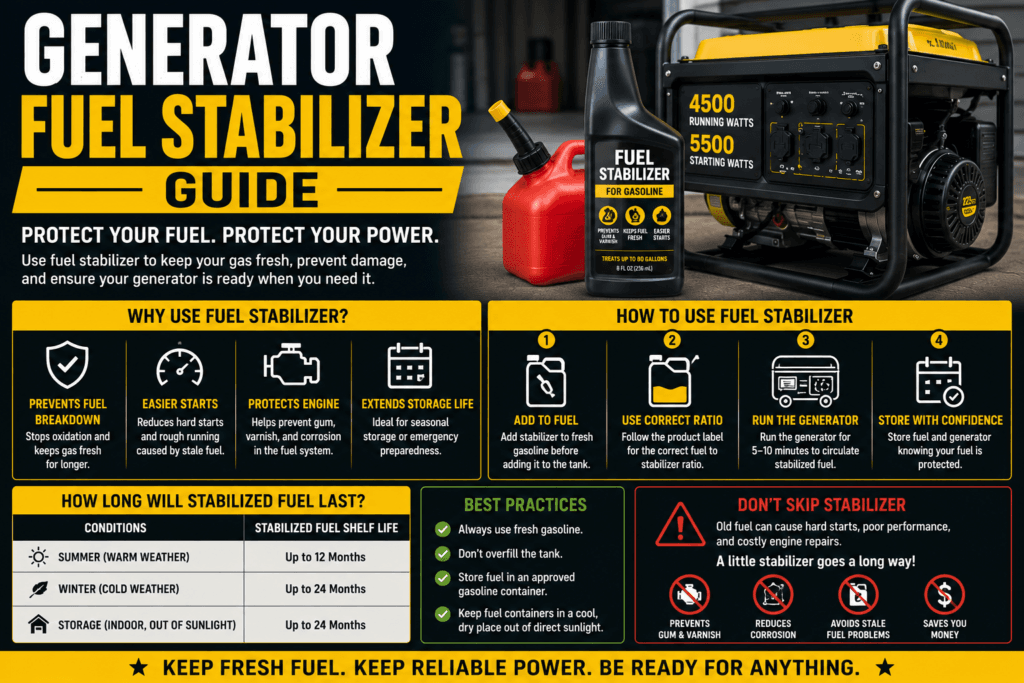
If you own a portable generator, standby generator, or inverter generator, using a fuel stabilizer is one of the easiest and least expensive ways to protect your investment. Fuel stabilizer helps keep gasoline fresh during storage, reduces engine problems, and improves your generator’s reliability when you need it most.
In this guide, you’ll learn what fuel stabilizer does, when to use it, how to add it correctly, how long stabilized gasoline lasts, and the common mistakes to avoid.
What Is Fuel Stabilizer?
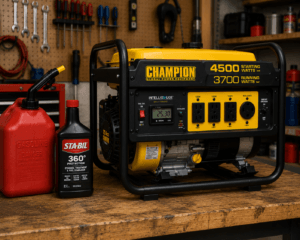
Fuel stabilizer is a specially formulated additive that slows the natural breakdown of gasoline during storage.
Over time, gasoline reacts with oxygen, causing it to:
- Lose volatility
- Form varnish and gum deposits
- Clog carburetors
- Make engines difficult to start
- Reduce generator performance
Fuel stabilizer helps reduce these problems by keeping gasoline usable for a longer period.
Why Your Generator Needs Fuel Stabilizer
Unlike your car, a generator may sit unused for weeks or even months between power outages.
Without fuel stabilizer, gasoline can deteriorate before you ever need the generator.
Benefits include:
- Easier engine starting
- Longer fuel life
- Cleaner carburetor
- Reduced fuel system deposits
- Better engine performance
- Fewer maintenance issues
- Improved emergency reliability
How Long Does Gasoline Last?
Approximate fuel life:
Without Fuel Stabilizer
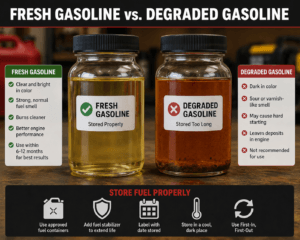
- About 3–6 months under typical storage conditions
With Fuel Stabilizer
- Up to 12 months or longer, depending on the stabilizer used and storage conditions
Even stabilized fuel should be rotated periodically to keep your emergency supply fresh.
How to Add Fuel Stabilizer
Most products are mixed directly into fresh gasoline. Always follow the mixing ratio printed on the product label.
A typical process looks like this:
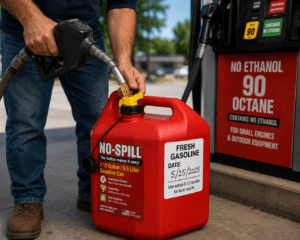
- Fill an approved gasoline container with fresh fuel.
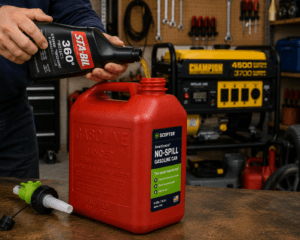
- Add the recommended amount of fuel stabilizer.
- Seal the container.
- Gently shake the container to mix.
- Pour the treated fuel into the generator.
- Run the generator for 10–15 minutes so the stabilized fuel circulates through the fuel system.
Running the generator after adding stabilizer helps protect the carburetor and fuel lines.
Should You Add Stabilizer Before or After Filling?
The best practice is to add the stabilizer either just before or immediately after filling the container with fresh gasoline. As the gasoline flows into the container, it naturally mixes with the stabilizer.
When Should You Use Fuel Stabilizer?
Use fuel stabilizer whenever gasoline may sit unused for more than a few months.
Common situations include:
- Storm season preparation
- Winter storage
- Summer storage
- Emergency fuel supplies
- Backup generators used infrequently
- Seasonal cabins
- RV generators
Fuel Stabilizer Doesn’t Last Forever
Fuel stabilizer extends gasoline’s usable life, but it doesn’t preserve fuel indefinitely.
To keep your fuel supply dependable:
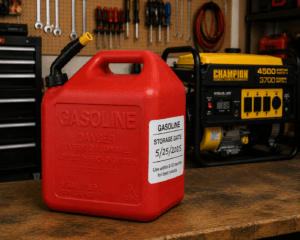
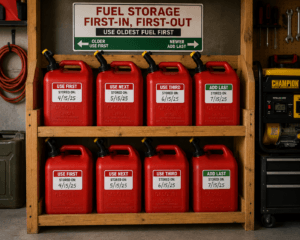
- Label every fuel container with the purchase date.
- Rotate stored gasoline regularly.
- Replace old fuel according to the stabilizer manufacturer’s recommendations.
- Use older fuel in your vehicle or outdoor power equipment before it ages beyond its recommended storage life.
Fuel Storage Best Practices
For the best results:
- Store gasoline in approved fuel containers.
- Keep containers tightly sealed.
- Store fuel in a cool, dry location.
- Keep gasoline away from heat sources.
- Avoid direct sunlight.
- Keep containers off damp concrete floors when possible.
- Never store gasoline inside living areas.
Can Fuel Stabilizer Fix Old Gasoline?
No.
Fuel stabilizer is designed to help preserve fresh gasoline. It cannot restore gasoline that has already degraded or become stale.
If gasoline smells sour, has changed color significantly, or has been stored improperly for an extended period, it should be disposed of according to local hazardous waste regulations.
Common Fuel Stabilizer Mistakes
Avoid these common errors:
- Waiting until gasoline is already old before adding stabilizer
- Using the wrong mixing ratio
- Forgetting to run the generator after treatment
- Assuming stabilized gasoline lasts forever
- Storing fuel in unapproved containers
- Forgetting to rotate stored fuel
- Leaving fuel containers open
Frequently Asked Questions
Does every generator need fuel stabilizer?
If your generator runs on gasoline and isn’t used regularly, fuel stabilizer is highly recommended.
Can I add too much fuel stabilizer?
Always follow the manufacturer’s instructions. Using significantly more than recommended may not improve protection and could affect engine performance.
Should I run my generator after adding stabilizer?
Yes. Running the generator for several minutes allows treated fuel to circulate through the carburetor and fuel lines.
Can stabilized gasoline be used in my car?
In many cases, stabilized gasoline can be used before it reaches the end of its recommended storage life. Always follow the stabilizer manufacturer’s guidance and your vehicle manufacturer’s recommendations.
Is fuel stabilizer expensive?
No. Compared to the cost of carburetor repairs or generator service, fuel stabilizer is one of the least expensive maintenance products you can buy.
Tips for Long-Term Generator Storage
If you won’t be using your generator for several months:
- Change the engine oil.
- Add fresh stabilized gasoline or follow the manufacturer’s storage recommendations.
- Run the generator to circulate the treated fuel.
- Clean the exterior.
- Disconnect the battery (if equipped).
- Store the generator in a dry, protected location.
- Cover it to keep out dust while allowing for proper ventilation.

Final Thoughts
Fuel stabilizer is a simple, affordable product that can significantly improve your generator’s reliability. By treating fresh gasoline before storage, rotating your fuel supply, and following proper storage practices, you can help prevent carburetor problems, reduce maintenance, and ensure your generator is ready when the power goes out.
A few minutes of preparation today can save hours of frustration during your next emergency.