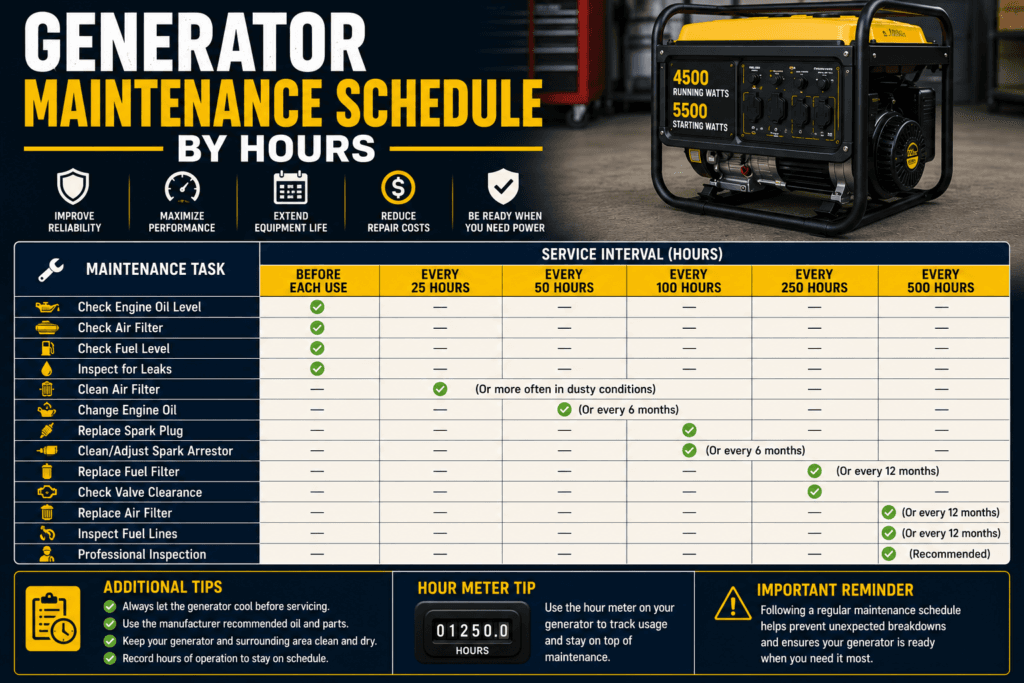
Proper generator maintenance is one of the best ways to extend the life of your equipment and ensure it starts when you need it most. Instead of waiting for something to break, following a maintenance schedule based on operating hours helps keep your generator running safely and efficiently.
In this guide, you’ll learn what maintenance should be performed after the first few hours of operation, every 50 hours, every 100 hours, every 200 hours, and annually. While maintenance schedules vary slightly between manufacturers, this guide covers the recommendations that apply to most portable gasoline generators.
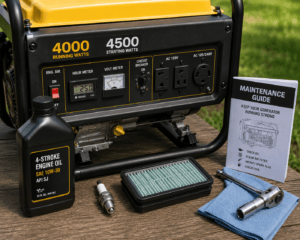
Why Maintenance by Hours Is Important
Unlike cars that are maintained based on mileage, generators are serviced based on operating hours.
Every hour your generator runs contributes to:
- Engine wear
- Oil contamination
- Air filter buildup
- Spark plug wear
- Fuel system deposits
Following a maintenance schedule helps:
- Extend engine life
- Improve fuel efficiency
- Reduce breakdowns
- Improve reliability during emergencies
- Protect your warranty
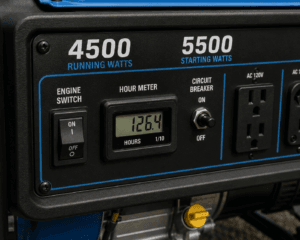
Before Every Use
Always perform a quick inspection before starting your generator.
Checklist
✅ Check engine oil level
✅ Check fuel level
✅ Look for oil leaks
✅ Inspect fuel lines
✅ Inspect extension cords
✅ Check air filter
✅ Verify cooling vents are clear
✅ Inspect wheels and frame
✅ Make sure the carbon monoxide detector is functioning
First 5–25 Hours (Break-In Service)
Many manufacturers recommend changing the oil after the initial break-in period. Check your owner’s manual for the exact interval.
Maintenance
- Change engine oil
- Inspect for loose hardware
- Check for leaks
- Inspect fuel system
- Verify smooth engine operation
The first oil change removes tiny metal particles created during engine break-in.
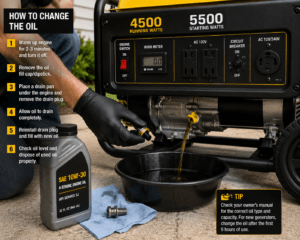
Every 50 Hours
This is one of the most important maintenance intervals.
Perform These Tasks
- Change engine oil (or as specified by the manufacturer)
- Inspect spark arrestor
- Tighten loose bolts
- Check fuel lines
- Inspect exhaust system
- Clean dirt and debris from the generator
If you’re operating in dusty or dirty conditions, you may need to service the air filter more frequently.
Every 100 Hours
After every 100 hours of operation, perform a more thorough inspection.
Maintenance Checklist
- Inspect spark plug
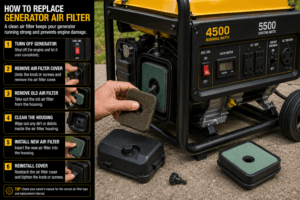
- Clean or replace air filter
- Clean cooling fins
- Inspect electrical outlets
- Check recoil starter
- Inspect fuel tank and cap
- Check battery condition (electric-start models)
Every 200 Hours
As operating hours increase, inspect additional components.
Recommended Maintenance
- Replace spark plug if needed
- Inspect fuel filter (if equipped)
- Inspect fuel lines for cracking or wear
- Inspect engine mounts
- Check vibration isolators
- Inspect all electrical connections
Every 300–500 Hours
Depending on your generator model, additional maintenance may include:
- Valve clearance inspection
- Fuel system inspection
- Governor adjustment (if required)
- Complete engine inspection
- Replace worn fuel hoses
- Inspect alternator cooling passages
Always follow your generator manufacturer’s recommended service intervals.
Annual Maintenance
Even if your generator has very few operating hours, annual maintenance is recommended.
Annual Checklist
- Change engine oil
- Replace spark plug if recommended
- Replace air filter if dirty
- Drain or replace old gasoline
- Add fresh fuel with stabilizer
- Test battery
- Inspect electrical wiring
- Clean the entire generator
- Test under electrical load
Annual maintenance helps ensure your generator is ready before storm season or winter weather.
If Your Generator Sits Unused
Generators that sit unused for months require special attention.
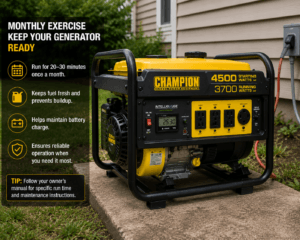
Every month:
- Start the generator.
- Let it warm up.
- Run it for 15–30 minutes.
- Connect a small electrical load.
- Listen for unusual noises.
This keeps engine seals lubricated and helps prevent carburetor problems.
Generator Maintenance Schedule Chart
| Operating Hours | Maintenance |
|---|---|
| Before Every Use | Check oil, fuel, leaks, cords, air filter |
| 5–25 Hours | First oil change, inspect hardware |
| Every 50 Hours | Change oil, inspect exhaust, tighten bolts |
| Every 100 Hours | Inspect spark plug, clean air filter, inspect outlets |
| Every 200 Hours | Inspect fuel system, engine mounts, electrical connections |
| 300–500 Hours | Valve inspection, fuel system service, major inspection |
| Annually | Complete inspection, fresh fuel, battery test, load test |
Tips to Extend Generator Life
- Change oil on schedule.
- Use fresh gasoline.
- Add fuel stabilizer for stored fuel.
- Keep the generator clean.
- Never overload the generator.
- Store it in a dry location.
- Replace worn parts promptly.
- Exercise the generator monthly.
Common Maintenance Mistakes
Avoid these common errors:
- Skipping oil changes
- Ignoring the hour meter
- Using stale gasoline
- Forgetting monthly exercise runs
- Running with a dirty air filter
- Refueling while the engine is hot
- Storing the generator without treating the fuel
- Waiting until an outage to test the generator
Frequently Asked Questions
How often should I change generator oil?
Many portable generators require an oil change every 50–100 operating hours after the initial break-in oil change. Always follow the schedule in your owner’s manual.
What if my generator doesn’t have an hour meter?
Keep a written maintenance log or estimate runtime after each use. You can also install an aftermarket hour meter on many portable generators.
Should I replace the spark plug every year?
If you use your generator regularly or your manufacturer recommends annual replacement, changing the spark plug is inexpensive preventive maintenance.
How often should I run my generator?
Running it once a month for 15–30 minutes with a light electrical load helps keep the engine and fuel system in good condition.
Is annual maintenance necessary if I rarely use my generator?
Yes. Oil ages, gasoline degrades, and batteries lose charge even if the generator isn’t used often. Annual maintenance helps ensure it’s ready when you need it.
Final Thoughts
Following a maintenance schedule based on operating hours is the best way to maximize your generator’s lifespan and reliability. Regular oil changes, inspections, monthly exercise runs, and annual service can help prevent costly repairs and ensure your generator is prepared for the next power outage.
Keeping a simple maintenance log and checking the hour meter after each use makes staying on schedule easy—and gives you confidence that your backup power system will be ready when your family needs it most.