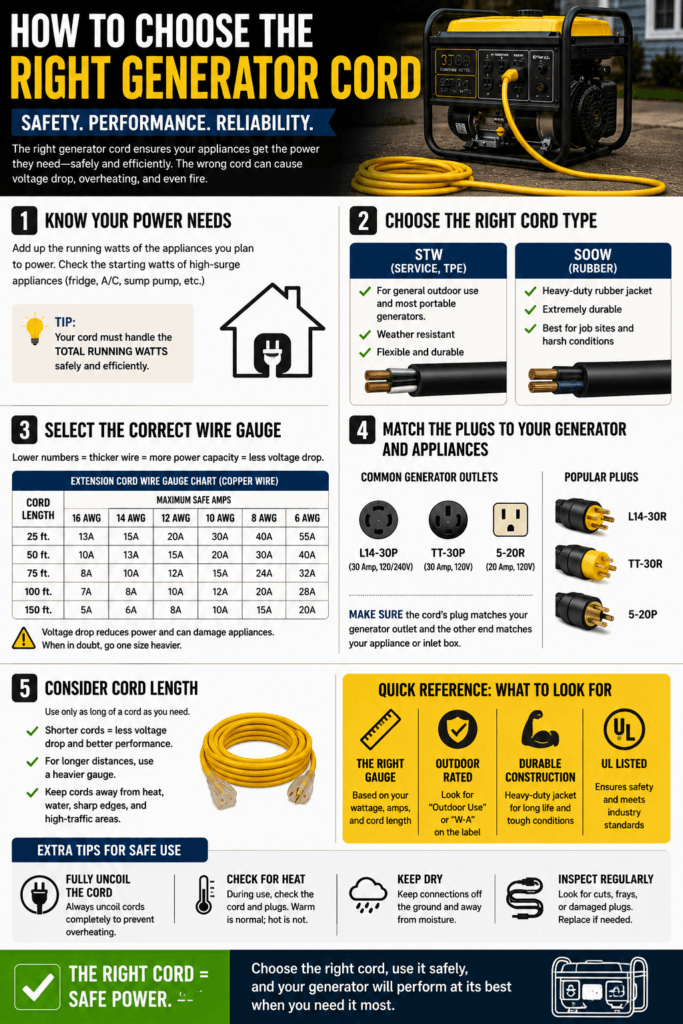
A generator is only as safe and effective as the cord you connect to it. Choosing the wrong extension cord can cause voltage drop, overheating, damaged appliances, nuisance breaker trips, or even electrical fires.
Many homeowners spend thousands of dollars on a quality generator but unknowingly use an undersized or incorrect extension cord, limiting the generator’s performance and creating unnecessary safety risks.
This guide explains everything you need to know about choosing the right generator cord, including wire gauge, cord length, amperage, plug types, weather resistance, and common mistakes to avoid.
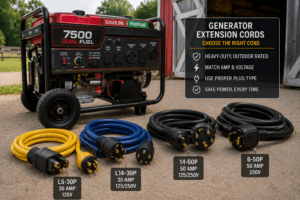
Why the Right Generator Cord Matters
A generator cord is responsible for safely carrying electricity from your generator to your appliances or transfer switch.
Using the correct cord helps:
- Deliver full power
- Reduce voltage drop
- Prevent overheating
- Protect sensitive electronics
- Improve generator efficiency
- Reduce fire hazards
- Extend cord life
Using the wrong cord can create dangerous conditions even if your generator is working perfectly.
Step 1: Know How Much Power You’ll Be Using
Before choosing a cord, determine:
- Running watts
- Starting watts
- Total electrical load
- Generator output amperage
Higher electrical loads require heavier-duty cords.
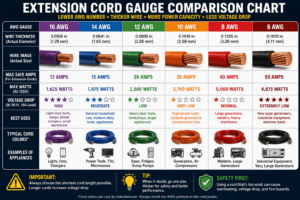
Step 2: Understand Extension Cord Gauge
Generator cords are rated by American Wire Gauge (AWG).
The lower the AWG number, the thicker the wire.
| Wire Gauge | Best Use |
|---|---|
| 16 AWG | Small electronics only (not recommended for most generators) |
| 14 AWG | Small appliances and light loads |
| 12 AWG | Medium-duty household appliances |
| 10 AWG | Heavy-duty generator use |
| 8 AWG | High-power generators |
| 6 AWG | Large portable generators and transfer switch connections |
For most portable generators powering household appliances, 10 AWG or heavier is often the safest choice.
Step 3: Choose the Correct Cord Length
Longer cords increase electrical resistance, which can reduce voltage.
General guidelines:
| Cord Length | Recommendation |
|---|---|
| 25 ft | Excellent |
| 50 ft | Good for most homes |
| 75 ft | Acceptable with proper wire gauge |
| 100 ft | Use heavier wire to reduce voltage drop |
Whenever possible:
- Use the shortest cord practical.
- Avoid connecting multiple extension cords together.
Step 4: Match the Amperage Rating
Your extension cord should be rated for at least the maximum amperage your generator can deliver.
Common ratings include:
- 15 amps
- 20 amps
- 30 amps
- 50 amps
Never use a cord with a lower amp rating than the generator outlet.
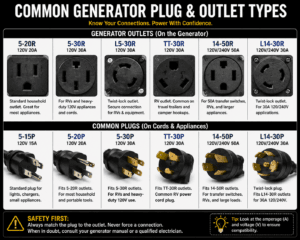
Step 5: Match the Plug Type
Generators use different outlet configurations.
Common plug types include:
- Standard 120V household outlets
- 120V 20-amp locking outlets
- 120/240V 30-amp twist-lock outlets
- 120/240V 50-amp outlets
Always verify that the extension cord plug matches the generator outlet exactly.
Never force incompatible plugs together or modify a cord.
Indoor vs. Outdoor Extension Cords
Only use outdoor-rated extension cords with generators.
Outdoor cords are designed to withstand:
- Rain
- Sunlight
- Dirt
- Temperature changes
- Abrasion
Indoor cords are not intended for outdoor generator use.
Weather Resistance
Look for cords with features such as:
- Heavy-duty insulation
- Water-resistant jacket
- UV resistance
- Flexible cold-weather construction
- Molded connectors
These features help improve durability during emergencies.
Generator Cord vs. Standard Extension Cord
Heavy-duty generator cords are designed for higher electrical loads than standard household extension cords.
Generator cords typically offer:
- Larger wire gauge
- Higher amp ratings
- Locking connectors
- Better weather resistance
- Thicker insulation
For larger generators, a dedicated generator cord is usually the safer choice.
Common Generator Cord Mistakes
Avoid these common mistakes:
- Using cords that are too small
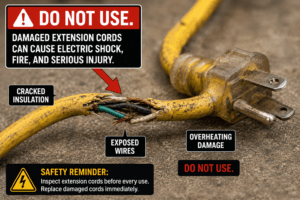
- Using damaged cords
- Running cords through standing water
- Connecting multiple cords together
- Exceeding the cord’s amp rating
- Using indoor extension cords outside
- Ignoring worn plugs or cracked insulation
Replacing a damaged cord is far less expensive than repairing damaged appliances or dealing with an electrical fire.
Generator Cord Safety Tips
Always:
- Inspect cords before each use.
- Keep connections off wet ground.
- Fully uncoil extension cords during use.
- Protect cords from vehicle traffic.
- Avoid pinching cords in doors or windows.
- Store cords clean and dry after use.
Proper care extends the life of your extension cords and improves safety.
How to Store Generator Cords
When the outage is over:
- Disconnect the generator.
- Wipe dirt and moisture from the cord.
- Coil it loosely.
- Store it in a dry location.
- Inspect it before the next use.
Avoid tight bends, which can damage internal wiring.
Frequently Asked Questions
What size extension cord should I use for a generator?
The correct size depends on your generator’s output, the connected load, and the cord length. For many portable generators powering household appliances, 10 AWG or heavier cords are commonly recommended.
Can I connect two extension cords together?
It’s generally best to avoid connecting multiple extension cords. Longer runs increase voltage drop and can reduce performance. If a longer distance is necessary, use a single appropriately rated cord.
Can I use a regular household extension cord?
Light-duty household cords are not suitable for most generator applications. Always choose an outdoor-rated cord with the proper wire gauge and amperage rating.
Why does my extension cord get hot?
A hot cord often indicates excessive electrical load, an undersized wire gauge, poor connections, or a damaged cord. Stop using the cord until the cause has been identified.
How long do generator extension cords last?
With proper care and storage, heavy-duty generator cords can last for many years. Inspect them regularly and replace any cord showing signs of wear or damage.
Final Thoughts
Choosing the right generator cord is just as important as choosing the right generator. The proper wire gauge, length, amperage rating, and plug type help ensure safe, efficient power delivery while protecting your appliances and reducing electrical hazards.
Before every outage, inspect your extension cords, verify they’re rated for your generator, and replace any damaged cords. Investing in a quality generator cord today can prevent expensive problems and help keep your home powered safely when it matters most.