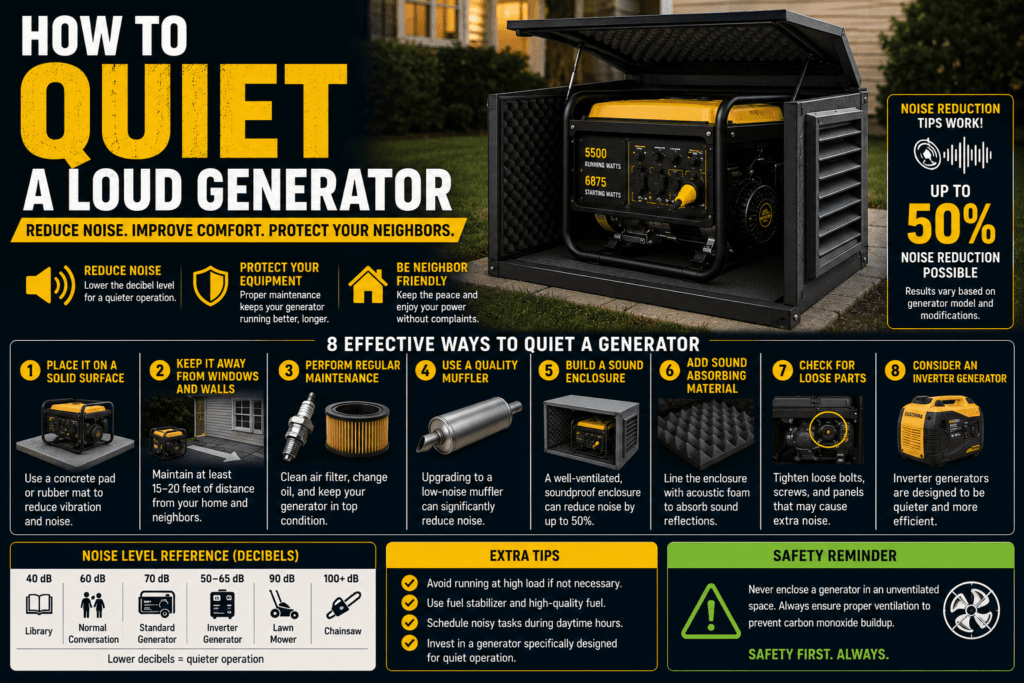
Portable generators are incredibly useful during power outages, camping trips, RV adventures, and job site work—but they can also be surprisingly loud. Some conventional generators produce noise levels similar to a lawn mower, making them disruptive to your family and neighbors.
The good news is that there are several safe and effective ways to reduce generator noise without affecting performance.
In this guide, you’ll learn why generators are loud, how to measure noise levels, and the best methods to make your generator run more quietly.
Why Are Generators So Loud?
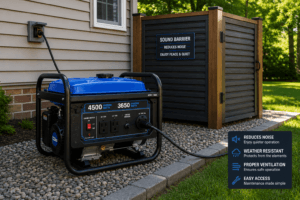
Most generator noise comes from several sources:
- Engine combustion
- Exhaust system
- Cooling fan
- Engine vibration
- Alternator
- Thin metal frame amplifying sound
Conventional generators usually produce more noise than inverter generators because they run at a constant engine speed regardless of the electrical load.
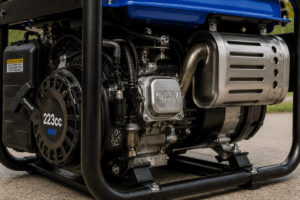
How Loud Is a Generator?
Noise is measured in decibels (dB).
Typical generator noise levels:
| Generator Type | Approximate Noise Level |
|---|---|
| Quiet inverter generator | 50–60 dB |
| Mid-size inverter generator | 60–68 dB |
| Conventional portable generator | 68–80 dB |
| Large construction generator | 80–90+ dB |
For comparison:
| Sound | Approximate Noise |
|---|---|
| Normal conversation | 60 dB |
| Vacuum cleaner | 70 dB |
| Lawn mower | 90 dB |
1. Move the Generator Farther Away
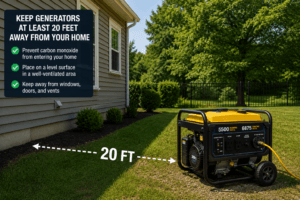
One of the easiest ways to reduce perceived noise is simply increasing the distance between the generator and the area where people are gathered.
As a general rule:
- The farther away the generator is, the quieter it will sound.
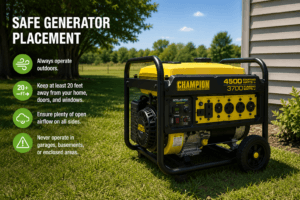
Always:
- Follow the manufacturer’s recommendations.
- Keep the generator outdoors.
- Operate it on a stable surface.
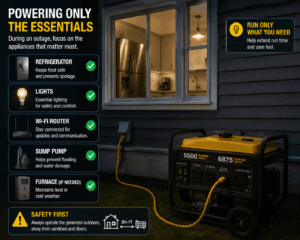
- Keep it away from doors, windows, and vents.
- Point the exhaust away from occupied areas.
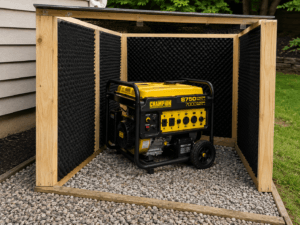
2. Build a Sound Barrier
A sound barrier blocks and redirects noise before it reaches your home or campsite.
Popular materials include:
- Plywood panels
- Outdoor acoustic panels
- Cement board
- Fence panels
Leave plenty of open space around the generator for cooling airflow.
Never completely enclose a running generator.
3. Place the Generator on a Rubber Anti-Vibration Mat
Much of a generator’s noise comes from vibration transferring into the ground.
A thick rubber mat helps:
- Reduce vibration
- Minimize rattling
- Lower perceived noise
- Protect driveways and patios
This is one of the least expensive ways to reduce generator noise.
4. Tighten Loose Parts
Loose bolts, panels, handles, or frame components can create unnecessary rattling.
Periodically inspect:
- Engine mounting bolts
- Wheels
- Handles
- Muffler hardware
- Frame bolts
- Control panel fasteners
Tightening loose hardware can noticeably reduce vibration and noise.
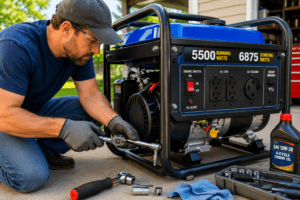
5. Keep Up With Maintenance
A poorly maintained generator often becomes noisier over time.
Regular maintenance includes:
- Changing engine oil
- Cleaning or replacing the air filter
- Replacing worn spark plugs
- Inspecting the exhaust system
- Cleaning cooling fins
A properly maintained engine usually runs smoother and quieter.
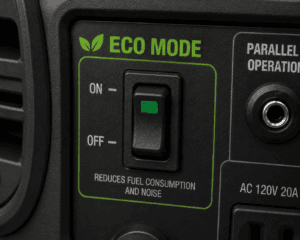
6. Use Eco Mode (If Available)
Many inverter generators include an Eco Mode (sometimes called Economy Mode).
Eco Mode automatically lowers engine speed when electrical demand is low.
Benefits include:
- Lower noise
- Better fuel economy
- Longer engine life
- Reduced emissions
7. Install a Better Muffler (If Approved)
Some generators can accept aftermarket or upgraded mufflers that reduce exhaust noise.
Before modifying the exhaust system:
- Verify compatibility with your generator model.
- Follow the manufacturer’s recommendations.
- Avoid modifications that could affect safety, emissions compliance, or warranty coverage.
8. Reduce Generator Load
A generator working near its maximum capacity often becomes louder.
Whenever possible:
- Turn off unnecessary appliances.
- Stagger high-power devices.
- Stay below the generator’s rated running wattage.
Reducing the electrical load can help the engine run more smoothly
9. Upgrade to an Inverter Generator
If quiet operation is a priority, an inverter generator is often the best solution.
Compared with conventional generators, inverter models typically offer:
- Much quieter operation
- Better fuel efficiency
- Cleaner electricity for electronics
- Lower engine speeds under light loads
- Easier portability
For camping, RV use, and residential neighborhoods, inverter generators are often the preferred choice.
Common Mistakes to Avoid
Never:
- Run a generator inside a garage.
- Build an airtight enclosure.
- Block cooling airflow.
- Cover a running generator with a tarp.
- Modify the exhaust without considering safety and manufacturer guidance.
- Operate the generator too close to occupied areas.
These mistakes can create fire hazards, overheating, or dangerous carbon monoxide exposure.
Frequently Asked Questions
Can I build a generator box?
You can build a well-ventilated sound-reducing enclosure designed to allow adequate cooling and safely direct exhaust away. Never fully enclose a running generator or restrict airflow.
Does placing a generator on grass make it quieter?
Soft surfaces may absorb some vibration, but always place the generator on a firm, level surface as recommended by the manufacturer. Avoid wet or muddy ground.
Are inverter generators quieter?
Yes. Inverter generators are generally much quieter because they can automatically reduce engine speed when electrical demand is low.
Can I use blankets or foam around my generator?
No. Blankets, household foam, or other combustible materials can block airflow, increase fire risk, and contribute to overheating. Use only sound-reduction methods that maintain safe ventilation.
How much quieter can a generator become?
Results vary depending on the method used, but combining several safe noise-reduction techniques—such as increasing distance, reducing vibration, and using sound barriers—can make a noticeable difference.
Final Thoughts
A loud generator doesn’t have to ruin your power outage, camping trip, or outdoor event. Simple improvements like moving the generator farther away, reducing vibration, keeping up with maintenance, and using properly designed sound barriers can significantly reduce noise while maintaining safe operation.
If quiet performance is one of your top priorities, investing in a quality inverter generator may provide the biggest long-term improvement in both comfort and convenience.