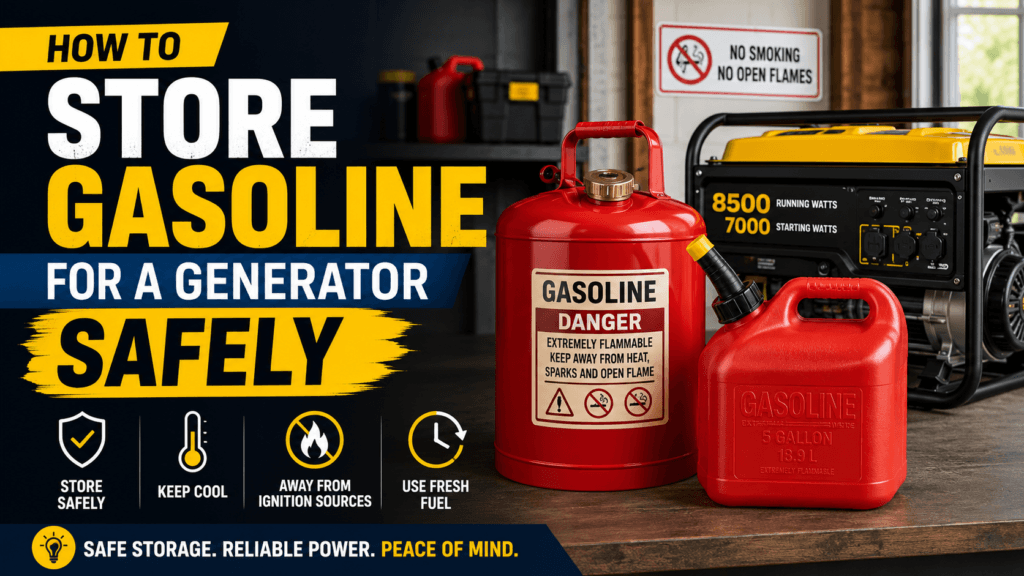
Keeping extra gasoline on hand can make the difference between having reliable backup power during an outage and running out of fuel when you need it most. However, gasoline is highly flammable and must be stored correctly to reduce the risk of fire, fuel degradation, and engine problems.
In this guide, you’ll learn the safest ways to store gasoline for your generator, how long fuel lasts, the best fuel containers to use, and common mistakes to avoid.
Why Proper Gasoline Storage Matters
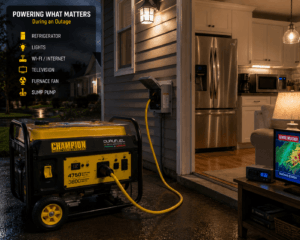
Gasoline doesn’t stay fresh forever. Over time, it begins to oxidize and break down, which can lead to:
- Hard starting
- Clogged carburetors
- Reduced engine performance
- Expensive repairs
- Fuel system damage
Storing fuel correctly helps ensure your generator is ready to run during power outages, severe weather, or emergencies.
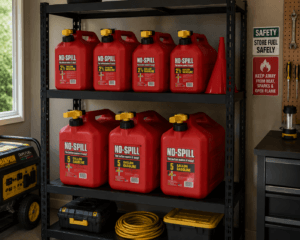
Use Only Approved Gasoline Containers
Never store gasoline in milk jugs, water bottles, glass containers, or other makeshift containers.
Instead, use:
- OSHA-approved fuel cans
- EPA-approved gasoline containers
- Metal safety cans
- Heavy-duty plastic fuel containers designed specifically for gasoline
These containers are built to reduce spills, prevent vapor leaks, and safely withstand pressure changes.
Store Gasoline in a Cool, Dry Place
The ideal storage location is:
- Cool
- Dry
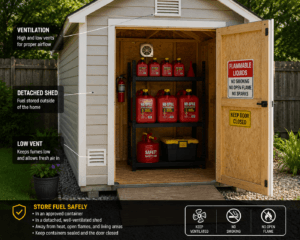
- Well-ventilated
- Away from direct sunlight
- Away from furnaces, water heaters, pilot lights, and electrical equipment
Never store gasoline inside living spaces such as:
- Bedrooms
- Basements
- Utility rooms
- Closets
- Attached living areas
If possible, use a detached garage, shed, or other well-ventilated outbuilding.
Keep Fuel Away From Heat Sources
Gasoline vapors are extremely flammable.
Keep fuel away from:
- Open flames
- Space heaters
- Water heaters
- Pilot lights
- Cigarettes
- Grills
- Welding equipment
- Electrical sparks
Never smoke while handling gasoline.
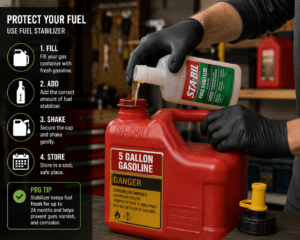
Add Fuel Stabilizer
If gasoline will be stored for more than a few months, add a quality fuel stabilizer according to the product directions.
Benefits include:
- Longer fuel life
- Cleaner carburetor
- Easier generator starts
- Reduced varnish buildup
After adding stabilizer:
- Seal the container tightly.
- Shake gently to mix.
- Label the container with the storage date.
How Long Does Gasoline Last?
Approximate storage life:
Without fuel stabilizer:
- 3 to 6 months
With fuel stabilizer:
- Up to 12 months (or longer, depending on the stabilizer and storage conditions)
Even stabilized fuel should be rotated regularly to keep your emergency supply fresh.
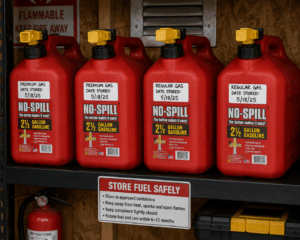
Rotate Your Fuel Supply
Many generator owners use a simple rotation system:
- Label every fuel can with the purchase date.
- Use the oldest fuel first in your vehicle or outdoor equipment.
- Refill the empty container with fresh gasoline.
- Add stabilizer if storing again.
This keeps your emergency fuel supply fresh year-round.
How Much Gasoline Should You Store?
The amount depends on your generator and how long you want to operate during an outage.
For many homeowners:
- 10–20 gallons can provide several days of moderate generator use.
- Larger portable generators or extended outages may require more fuel.
Always follow local fire codes and storage limits for gasoline.
Keep Fuel Containers Off Concrete Floors
Many people place gasoline directly on concrete garage floors.
A better practice is to store containers on:
- Wooden pallets
- Shelving
- Rubber mats
This helps reduce moisture exposure and keeps containers cleaner.
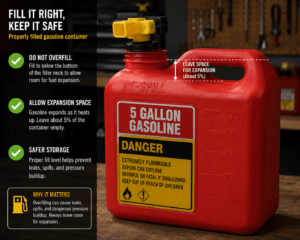
Never Fill Containers Completely Full
Leave a small amount of empty space at the top of the container.
Gasoline expands as temperatures rise, and overfilling can increase the risk of spills or pressure buildup.
Inspect Fuel Containers Regularly
Check containers for:
- Cracks
- Rust
- Swelling
- Leaks
- Loose caps
- Damaged seals
Replace damaged containers immediately.
Keep Gasoline Away From Children and Pets
Store gasoline:
- Out of reach of children
- In locked storage if possible
- Clearly labeled
- Away from pet food and animal areas
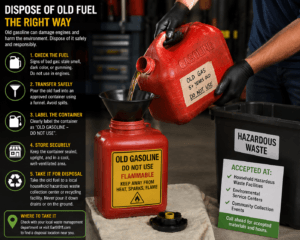
Never Use Old, Bad Gasoline
Old gasoline may cause:
- Hard starting
- Rough running
- Stalling
- Carburetor clogging
If fuel smells sour, has changed color significantly, or has been improperly stored for a long time, dispose of it according to your local hazardous waste regulations rather than using it in your generator.
Common Gasoline Storage Mistakes
Avoid these common errors:
- Using unapproved containers
- Storing fuel indoors
- Leaving containers in direct sunlight
- Forgetting to add fuel stabilizer
- Never rotating stored fuel
- Overfilling containers
- Storing fuel near ignition sources
- Ignoring damaged containers
Frequently Asked Questions
Can I store gasoline in my attached garage?
Many people do, but it should only be done in approved containers, in a cool, well-ventilated area, and away from ignition sources. A detached shed or garage is generally a safer option when available.
How often should I replace stored gasoline?
Rotate gasoline every few months if unstabilized. Stabilized gasoline generally lasts much longer, but regular rotation is still recommended.
Should I keep my generator’s fuel tank full during storage?
For long-term storage, follow your generator manufacturer’s recommendations. Many manufacturers recommend draining the fuel system or using stabilized fuel before storage.
Is premium gasoline better for generators?
Most portable generators are designed to run on regular unleaded gasoline. Always use the octane rating recommended in your owner’s manual.
Final Thoughts
Proper gasoline storage is one of the simplest ways to ensure your generator is ready when the power goes out. By using approved containers, storing fuel safely, adding fuel stabilizer, and rotating your fuel supply, you can extend fuel life, protect your generator, and improve safety around your home.
A little preparation today can make a major difference during your next emergency.