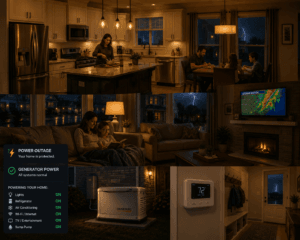
Large homes require significantly more backup power than small houses or apartments. Between central air conditioning, multiple refrigerators, freezers, well pumps, electric water heaters, HVAC systems, home offices, security systems, and numerous electronic devices, electrical demand can increase quickly during a power outage.
Choosing the right generator for a large home means balancing power output, fuel type, runtime, reliability, and future expansion. Many homeowners with larger properties choose either a high-output portable generator connected through a transfer switch or a permanently installed standby generator that restores power automatically. Recent testing continues to rank large standby generators from Generac, Kohler, and Champion among the best choices for whole-home protection, while high-output portable models remain excellent value alternatives.
In this guide, we’ll compare the best generators for large homes in 2026, explain what features matter most, and help you choose the right backup power system for your family’s needs.
Quick Picks: Best Generators for Large Homes
| Category | Generator | Best For |
|---|---|---|
| Best Overall | DuroMax XP13000HXT Tri-Fuel Generator | Large home backup |
| Best Standby Generator | Generac Guardian 22kW | Automatic whole-home protection |
| Best Portable Generator | Westinghouse WGen11500DFc | High-output portable backup |
| Best Inverter Generator | Champion 9000-Watt Tri-Fuel Inverter Generator | Quiet whole-home essentials |
| Best Value | Champion 7500-Watt Dual Fuel Generator | Budget-friendly large home backup |
Why Large Homes Need More Generator Capacity
Larger homes often have multiple electrical systems operating simultaneously.
A backup generator may need to power:
- Central air conditioning
- Multiple refrigerators
- Freezers
- Well pumps
- Sump pumps
- Electric garage doors
- Internet equipment
- Security systems
- Medical devices
- Lighting throughout the home
Many large homes require 10,000 watts or more for comfortable backup, while whole-home standby systems may range from approximately 20kW to 26kW, depending on the home’s electrical load.
Best Overall
DuroMax XP13000HXT Tri-Fuel Generator

Why We Picked It
The DuroMax XP13000HXT delivers exceptional performance for large homes by combining high power output with the flexibility of operating on gasoline, propane, or natural gas.
It provides enough capacity for many essential household circuits including refrigerators, freezers, well pumps, furnaces, lighting, and, depending on load requirements, some central air conditioning systems when properly connected through a transfer switch.
Pros
- Tri-fuel capability
- Excellent surge capacity
- Electric start
- Remote start
- Transfer switch compatible
- Outstanding overall value
Cons
- Heavy
- Louder than enclosed inverter generators
Best For
- Large homes
- Rural properties
- Extended outages
- Whole-home essentials
Best Standby Generator
Generac Guardian 22kW

Why We Picked It
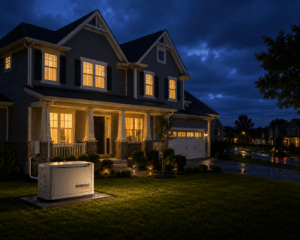
The Generac Guardian 22kW remains one of the most popular standby generators for large homes. Permanently installed outside the house, it automatically detects power outages and restores electricity within seconds using an automatic transfer switch.
Operating on natural gas or propane, it provides dependable long-duration backup for many whole-home applications.
Pros
- Automatic startup
- Whole-home protection
- Natural gas or propane operation
- Long runtime
- Remote monitoring
- Excellent reliability
Cons
- Higher installation cost
- Professional installation required
Best For
- Large homes
- Frequent outages
- Automatic backup
- Families needing uninterrupted power
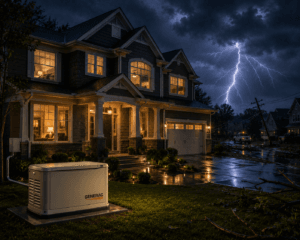
Choosing the Right Generator for a Large Home
Before purchasing a generator, consider:
- Running watts
- Starting watts
- Central air conditioning requirements
- Number of major appliances
- Fuel availability
- Runtime
- Transfer switch compatibility
- Automatic vs. manual operation
- Future expansion
Proper generator sizing is one of the most important decisions when protecting a large home during an extended outage.
Best Portable Generator
Westinghouse WGen11500DFc

Why We Picked It
The Westinghouse WGen11500DFc is one of the best portable generators for large homes thanks to its high power output, dual-fuel capability, remote electric start, and long runtime. It provides enough capacity to operate refrigerators, freezers, lighting, well pumps, furnaces, sump pumps, and many other household circuits when connected through a properly installed transfer switch.
Its combination of power, reliability, and value makes it a popular choice for homeowners who want substantial backup power without installing a permanent standby system.
Pros
- High power output
- Dual-fuel capability
- Remote electric start
- Long runtime
- Excellent surge capacity
- Reliable engine
Cons
- Heavy
- Louder than inverter generators
Best For
- Large homes
- Rural properties
- Extended outages
- Home backup
Best Inverter Generator
Champion 9000-Watt Tri-Fuel Inverter Generator

Why We Picked It
The Champion 9000-Watt Tri-Fuel Inverter Generator combines high output with clean inverter power, making it an excellent option for homeowners who want to power sensitive electronics while also running many essential household appliances.
Its tri-fuel capability provides additional flexibility during long outages by allowing operation on gasoline, propane, or natural gas (where available).
Pros
- Tri-fuel capability
- Clean inverter power
- Quiet for its size
- Electric start
- Fuel efficient
- Excellent surge capacity
Cons
- Premium price
- Heavy
Best For
- Large homes
- Sensitive electronics
- Home offices
- Quiet neighborhoods
Best Value Generator
Champion 7500-Watt Dual Fuel Generator

Why We Picked It
The Champion 7500-Watt Dual Fuel Generator delivers dependable emergency backup at an affordable price. While it may not power every circuit in a large home, it can comfortably operate many essential appliances including refrigerators, freezers, furnaces, lighting, internet equipment, and sump pumps.
Its dual-fuel capability adds flexibility while keeping operating costs reasonable.
Pros
- Affordable
- Dual-fuel capability
- Electric start
- Reliable engine
- Excellent customer support
- Strong overall value
Cons
- Lower capacity than premium generators
- Not ideal for powering every circuit simultaneously
Best For
- Budget-conscious homeowners
- Essential circuit backup
- Medium to large homes
- Emergency preparedness
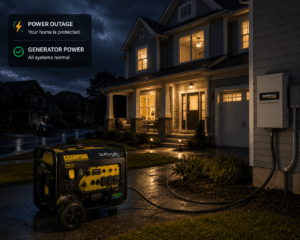
Generator Comparison
| Generator | Fuel Type | Automatic | Best For |
|---|---|---|---|
| DuroMax XP13000HXT | Tri-Fuel | No | Best Overall |
| Generac Guardian 22kW | Natural Gas / Propane | ✔ | Whole-Home Backup |
| Westinghouse WGen11500DFc | Gasoline / Propane | No | Best Portable |
| Champion 9000 Tri-Fuel Inverter | Tri-Fuel | No | Quiet Backup |
| Champion 7500 Dual Fuel | Gasoline / Propane | No | Best Value |
Large homes often benefit from standby generators in the 20–26 kW range for automatic whole-home protection, while high-output portable generators can provide excellent coverage for essential circuits when properly installed.
Fuel Options
Gasoline
Advantages:
- Widely available
- High power output
- Easy to refuel
Disadvantages:
- Limited shelf life
- Requires fuel stabilizer
- Must be rotated regularly
Propane
Advantages:
- Long shelf life
- Cleaner burning
- Lower maintenance
- Excellent emergency storage
Disadvantages:
- Slightly lower power output
- Requires propane tanks
Natural Gas
Advantages:
- Continuous fuel supply
- No refueling required
- Excellent for standby generators
Disadvantages:
- Requires natural gas service
- Not available in every location
Generator Sizing Tips
For larger homes, calculate the combined running and starting wattage of the appliances and systems you want to power.
Common loads include:
- Central air conditioning
- Furnace blower
- Refrigerator
- Freezer
- Well pump
- Sump pump
- Microwave
- Internet equipment
- Lighting
- Garage door opener
Adding a safety margin above your calculated load helps prevent overloads and provides room for future electrical needs.
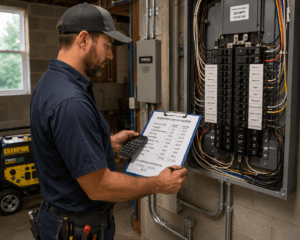
Which Generator Is Best?
Choose the DuroMax XP13000HXT If:
- You want maximum fuel flexibility
- You need high portable power
- Long outages are common
- You have many essential circuits
Choose the Generac Guardian 22kW If:
- You want automatic backup
- Whole-home protection is your priority
- You experience frequent outages
- You prefer a permanent solution
Choose the Westinghouse WGen11500DFc If:
- You want a powerful portable generator
- Dual-fuel capability is important
- Long runtime matters
- You need excellent overall value
Choose the Champion 9000-Watt Tri-Fuel Inverter Generator If:
- Quiet operation matters
- You have sensitive electronics
- You want clean inverter power
- Fuel flexibility is important
Choose the Champion 7500-Watt Dual Fuel Generator If:
- Budget is important
- You mainly want to power essential appliances
- You prefer a dependable dual-fuel generator
- You want an affordable backup solution
Features to Look For
Choosing a generator for a large home involves much more than selecting the highest wattage. Larger homes typically have greater electrical demands, multiple HVAC systems, more appliances, home offices, security systems, and additional circuits that require careful planning.
Here are the most important features to compare before purchasing a backup generator.
High Running and Starting Wattage
Large homes often require generators capable of handling several major appliances operating at the same time.
Common electrical loads include:
- Central air conditioning
- Electric furnace blower
- Refrigerators
- Freezers
- Well pumps
- Sump pumps
- Water heaters
- Garage door openers
- Home office equipment
- Lighting
Always calculate both:
- Running watts
- Starting (surge) watts
Buying a generator with extra capacity allows room for future electrical needs.
Dual-Fuel or Tri-Fuel Capability
Fuel flexibility becomes extremely valuable during extended outages.
Dual-Fuel Generators
Operate on:
- Gasoline
- Propane
Tri-Fuel Generators
Operate on:
- Gasoline
- Propane
- Natural gas
Benefits include:
- Greater emergency preparedness
- Easier fuel management
- Longer operating capability
- More backup options during fuel shortages
Many homeowners appreciate propane for its long storage life, while natural gas offers continuous fuel for standby systems where service remains available.
Automatic Transfer Switch
Standby generators use an automatic transfer switch (ATS).
Benefits include:
- Detects utility outages
- Starts the generator automatically
- Restores power within seconds
- Safely disconnects utility power
- Prevents dangerous back feeding
Automatic operation provides peace of mind, especially when no one is home.
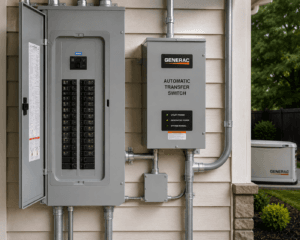
Long Runtime
Large homes often require generators capable of operating for many hours—or even days—during extended outages.
Compare:
- Fuel tank size
- Runtime at 25% load
- Runtime at 50% load
- Runtime at full load
Longer runtime reduces refueling frequency.
Remote Monitoring
Many premium standby generators include Wi-Fi or cellular monitoring.
Benefits include:
- Generator status notifications
- Maintenance reminders
- Automatic exercise reports
- Remote diagnostics
- Mobile app monitoring
This is especially useful for vacation homes or homeowners who travel frequently.
Electric Start
Portable generators for large homes should include electric start.
Advantages include:
- Push-button operation
- Faster startup
- Easier cold-weather starting
- Less physical effort
Remote electric start provides even greater convenience.
Carbon Monoxide (CO) Shutdown
Many portable generators now include carbon monoxide detection.
If dangerous CO levels are detected around the generator, the engine automatically shuts down.
Always operate portable generators outdoors in a well-ventilated location. Never operate a generator inside a garage, basement, crawl space, shed, or enclosed area. Keep it well away from doors, windows, and vents.
Low-Oil Shutdown
Low-oil shutdown automatically protects the engine from damage.
Benefits include:
- Longer engine life
- Reduced repair costs
- Greater reliability
This feature is particularly valuable during extended outages.
Common Buying Mistakes
Avoid these common mistakes when purchasing a generator for a large home.
Buying Too Small
One of the most common mistakes is underestimating your home’s electrical demand.
Include:
- HVAC systems
- Refrigerators
- Freezers
- Well pumps
- Water heaters
- Internet equipment
- Medical devices
- Future appliances
Choosing a generator with additional capacity helps prevent overloads.
Forgetting Air Conditioner Startup Watts
Central air conditioners require much more power during startup than while running.
Always verify:
- Running watts
- Locked rotor/starting amperage
- Soft-start compatibility (if installed)
Ignoring startup requirements is a common cause of generator overload.
Not Installing a Transfer Switch
Connecting a generator through a properly installed transfer switch or interlock kit improves safety and convenience.
Benefits include:
- Safe household power
- Easier operation
- Protection against backfeeding
- Ability to power multiple household circuits
Ignoring Fuel Storage
Before an outage occurs:
- Store fuel safely
- Rotate gasoline regularly
- Maintain propane supplies
- Test natural gas standby systems
Planning ahead reduces stress during emergencies.
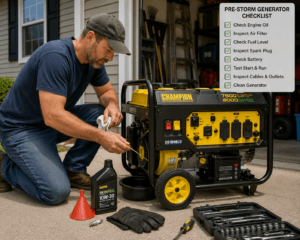
Skipping Maintenance
Routine maintenance greatly improves reliability.
Regularly:
- Change engine oil
- Replace air filters
- Inspect spark plugs
- Test batteries
- Exercise the generator monthly
- Inspect fuel lines
A well-maintained generator is far more likely to perform when you need it most.
Frequently Asked Questions
What size generator does a large home need?
It depends on the electrical loads you plan to operate.
Many large homes require 10,000 to 15,000 running watts for essential circuits, while whole-house standby generators commonly range from 20kW to 26kW for more complete home backup.
Can a portable generator power central air conditioning?
Yes.
Many high-output portable generators can power certain central air conditioning systems when properly sized and connected through a transfer switch or interlock kit.
Always verify your specific air conditioner’s starting and running wattage requirements.
Is a standby generator worth it for a large home?
For homeowners who experience frequent or extended outages, a standby generator offers major advantages:
- Automatic startup
- Whole-home protection
- Long runtime
- Greater convenience
- Increased home value
Is propane better than gasoline?
Both fuels work well.
Propane offers:
- Long shelf life
- Cleaner combustion
- Lower maintenance
Gasoline offers:
- Slightly higher power output
- Wide availability
Dual-fuel generators provide the flexibility to use either fuel.
How often should I exercise my generator?
Most manufacturers recommend running the generator about once a month. Regular exercise helps lubricate engine components, maintain battery health on electric-start models, and verify that the generator is ready before an emergency.
Can I power my entire home?
Yes, if your generator is properly sized and connected through an approved transfer switch or interlock system.
Whole-house standby generators are specifically designed for this purpose, while portable generators typically power selected circuits based on their capacity.
Final Thoughts
Large homes require dependable backup power to keep essential systems operating during outages. Choosing the right generator ensures your family remains safe and comfortable while protecting food, maintaining communications, and keeping important appliances running until utility service is restored.
For homeowners seeking maximum flexibility, the DuroMax XP13000HXT Tri-Fuel Generator remains one of the best overall portable options thanks to its impressive output and ability to operate on gasoline, propane, or natural gas. Those wanting automatic whole-home protection should strongly consider the Generac Guardian 22kW, while the Westinghouse WGen11500DFc provides excellent portable performance with dual-fuel capability. Homeowners who prioritize quieter operation and clean power will appreciate the Champion 9000-Watt Tri-Fuel Inverter Generator, and buyers looking for dependable value should consider the Champion 7500-Watt Dual Fuel Generator.
Before purchasing, calculate your home’s electrical requirements, identify the appliances you want to power during an outage, and choose a generator with enough capacity to meet both your current and future needs. Proper planning today can provide years of dependable backup power and peace of mind when severe weather strikes.