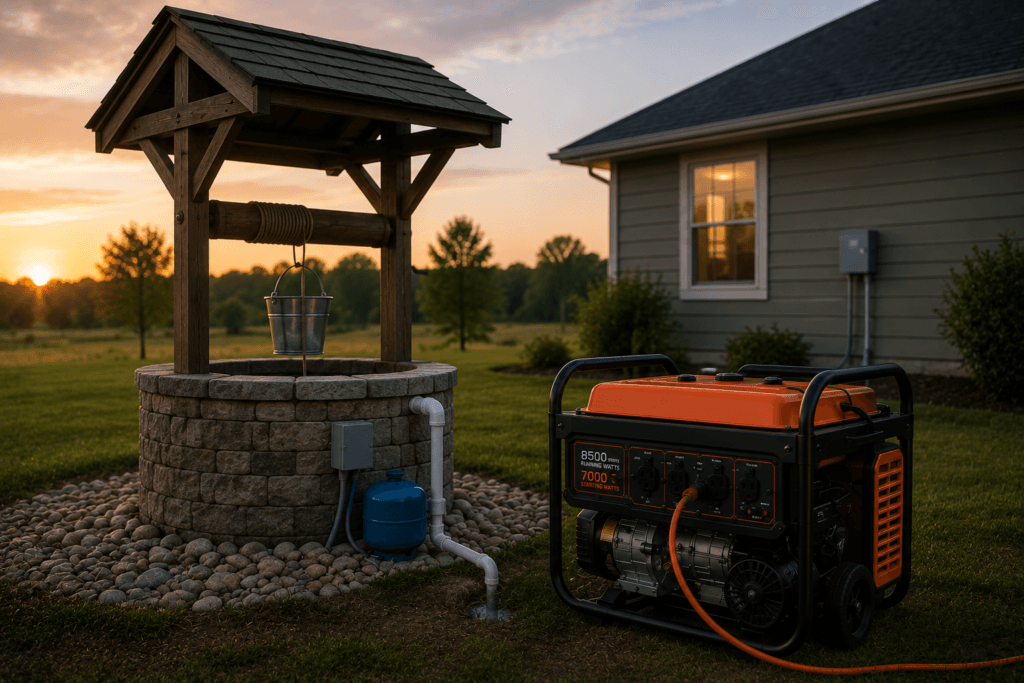
Solar Generator vs Portable Power Station: Which Backup Power Solution Is Better in 2026?
If you’re shopping for backup power, you’ve probably seen the terms solar generator and portable power station used interchangeably. While they’re closely related, they’re not exactly the same—and understanding the difference can help you choose the best solution for your home, RV, camping trips, or emergency preparedness plan.
A portable power station is a rechargeable battery that stores electricity and powers devices through AC outlets, USB ports, and DC outputs. A solar generator is typically a portable power station paired with compatible solar panels, allowing you to recharge the battery using sunlight instead of relying only on wall outlets or vehicle charging.
Both options are quiet, emission-free, and require very little maintenance compared to traditional gasoline generators. However, they also have limitations when it comes to running high-wattage appliances like central air conditioners, electric water heaters, and large well pumps.
In this guide, we’ll compare solar generators and portable power stations, explain their differences, discuss the pros and cons of each, recommend the best models in 2026, and help you decide which backup power solution is right for your needs.
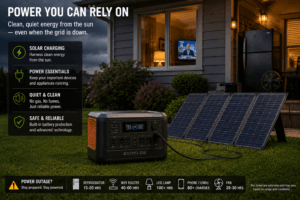
Quick Picks: Best Solar Generators & Portable Power Stations
| Category | Product | Best For |
|---|---|---|
| Best Overall | EcoFlow DELTA Pro 3 | Home backup power |
| Best Value | EcoFlow DELTA 2 | Most homeowners |
| Best Portable | Jackery Explorer 1000 v2 | Camping and travel |
| Best High Capacity | Goal Zero Yeti 6000X | Extended home backup |
| Best Budget | Anker SOLIX C1000 | Small appliance backup |
Solar Generator vs. Portable Power Station
Many people think these are two completely different products.
In reality:
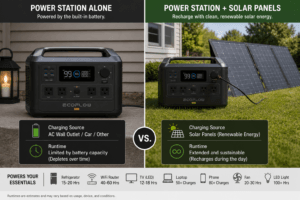
- A portable power station is the battery and inverter.
- A solar generator is usually that same portable power station plus compatible solar panels.
Without solar panels, the unit functions as a portable power station.
Add solar panels, and it becomes a solar-powered backup system.
Why Choose a Solar Generator?
Solar generators continue to grow in popularity because they provide clean, renewable backup power without gasoline, propane, or engine maintenance.
Advantages
- Quiet operation
- No gasoline required
- No engine maintenance
- No exhaust fumes
- Safe for many outdoor environments
- Recharge from solar panels
- Recharge from wall outlets
- Recharge from vehicle outlets
For homeowners wanting clean emergency backup power, solar generators are one of the easiest systems to own and operate.
Best Overall
EcoFlow DELTA Pro 3

Why We Picked It
The EcoFlow DELTA Pro 3 offers one of the best combinations of battery capacity, inverter power, expansion options, and charging speed available today. It can power refrigerators, freezers, lights, televisions, computers, and many additional household appliances during extended outages.
When paired with solar panels, it becomes a highly capable solar generator for long-term emergency preparedness.
Pros
- Large battery capacity
- Fast AC charging
- Solar charging compatible
- Expandable battery system
- Pure sine wave inverter
- Quiet operation
Cons
- Premium price
- Heavy compared to smaller units
Best For
- Home backup
- Power outages
- Emergency preparedness
- Off-grid cabins
- RV owners
Best Value
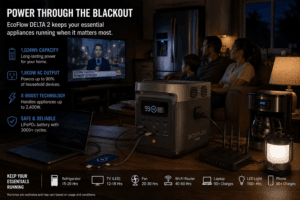
EcoFlow DELTA 2

Why We Picked It
The EcoFlow DELTA 2 delivers outstanding performance at a much lower price than larger whole-home battery systems. It offers fast charging, a high-quality inverter, and enough battery capacity to keep many essential devices operating during short and medium-length outages.
Pros
- Excellent value
- Fast charging
- Expandable battery
- Solar compatible
- Lightweight compared to larger models
Cons
- Smaller battery than premium models
- Not intended for whole-home backup
Best For
- Apartments
- Small homes
- Camping
- Emergency backup
- Everyday portable power
Choosing the Right Backup Power Solution
Before purchasing a solar generator or portable power station, consider:
- Battery capacity
- Inverter wattage
- Solar charging capability
- Expansion options
- Number of AC outlets
- USB charging ports
- Weight
- Recharge speed
- Warranty
Choosing the right system today helps ensure dependable backup power whenever utility power is unavailable.
Best Portable Power Station
Jackery Explorer 1000 v2

Why We Picked It
The Jackery Explorer 1000 v2 is one of the best portable power stations for homeowners, campers, and RV owners looking for lightweight, dependable backup power. It provides enough energy to run laptops, televisions, CPAP machines, lights, routers, and many small appliances while remaining easy to transport.
When paired with compatible solar panels, it becomes a compact solar generator capable of recharging from sunlight during extended outages.
Pros
- Lightweight
- Fast charging
- Pure sine wave inverter
- Solar charging compatible
- Quiet operation
- Easy to transport
Cons
- Limited battery capacity for large appliances
- Not designed for central air conditioning
Best For
- Camping
- RV travel
- Apartments
- Small emergency backup
- Outdoor recreation
Best High-Capacity Solar Generator
Goal Zero Yeti 6000X

Why We Picked It
The Goal Zero Yeti 6000X is designed for homeowners who need substantial battery capacity during extended power outages. It can power refrigerators, freezers, lights, communication equipment, and many household appliances for extended periods when paired with adequate solar panels.
Its expandable ecosystem makes it one of the best long-term solar backup systems available.
Pros
- Massive battery capacity
- Expandable system
- Excellent inverter
- Solar compatible
- Quiet operation
- Premium build quality
Cons
- Expensive
- Heavy
- Solar panels sold separately
Best For
- Home backup
- Off-grid cabins
- Emergency preparedness
- Long-duration outages
Best Budget Power Station
Anker SOLIX C1000

Why We Picked It
The Anker SOLIX C1000 offers an excellent balance of price, performance, and portability. It provides enough power for refrigerators, televisions, laptops, internet equipment, CPAP machines, and many other household essentials during short outages.
Its fast charging and durable battery technology make it one of the best values in its class.
Pros
- Affordable
- Fast charging
- Pure sine wave output
- Solar compatible
- Compact design
- Long battery lifespan
Cons
- Smaller capacity than premium models
- Limited runtime for larger appliances
Best For
- Budget-conscious buyers
- Camping
- Small homes
- Emergency preparedness
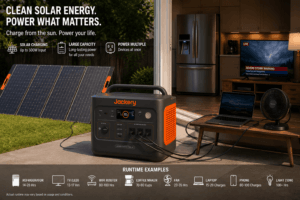
Solar Generator vs. Gas Generator
Solar Generator
Advantages
- Silent operation
- No gasoline required
- No exhaust emissions
- Minimal maintenance
- Safe for many outdoor environments
- Recharge using solar panels
Best For
- Indoor-safe battery use (the unit itself; solar panels remain outdoors)
- Camping
- RVs
- Small appliance backup
- Eco-friendly emergency power
Gas Generator
Advantages
- Much higher power output
- Longer runtime with refueling
- Better for heavy appliances
- Can power central air conditioners
- Better for whole-home backup
Best For
- Home backup
- HVAC systems
- Well pumps
- Extended outages
- Heavy electrical loads
Battery Capacity Guide
Battery capacity is usually measured in watt-hours (Wh).
| Battery Capacity | Best Use |
|---|---|
| 300–600 Wh | Phones, laptops, lights |
| 700–1,200 Wh | Refrigerators, TVs, CPAP machines |
| 1,500–2,500 Wh | Multiple appliances |
| 3,000–6,000+ Wh | Extended home backup |
Larger battery capacities generally provide longer runtimes but also increase weight and cost.
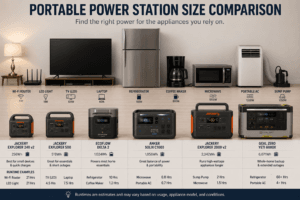
Portable Power Station Sizing Guide
Basic Emergency Kit
Recommended Capacity
500–1,000 Wh
Can often power:
- Phones
- Tablets
- LED lights
- Wi-Fi router
Home Essentials
Recommended Capacity
1,000–2,000 Wh
Often powers:
- Refrigerator
- Television
- Internet equipment
- CPAP machine
- Laptop
Extended Home Backup
Recommended Capacity
2,000–4,000 Wh
Suitable for:
- Refrigerator
- Freezer
- Lighting
- Electronics
- Small appliances
Whole-Home Battery Backup
Recommended Capacity
5,000+ Wh
Typically supports:
- Multiple appliances
- Longer outages
- Expanded battery systems
- Solar charging for continuous operation
Charging Options
Most portable power stations can recharge using:
- Standard wall outlet
- Solar panels
- Vehicle 12V outlet
- Portable generator
- EV charging station (on some models)
Having multiple charging options increases flexibility during emergencies.
Preparing for a Power Outage
To get the most from your backup power system:
- Fully charge your battery regularly
- Test it every few months
- Store it in a cool, dry location
- Keep compatible charging cables together
- Add solar panels if you expect long outages
- Prioritize essential appliances first
A little preparation helps ensure reliable backup power whenever the grid goes down.
Features to Look For
Whether you’re buying a solar generator or a portable power station, choosing the right features can make a big difference in performance, convenience, and long-term value.
Here are the most important features to consider before making your purchase.
Battery Capacity
Battery capacity is measured in watt-hours (Wh).
Larger batteries provide longer runtimes.
Typical ranges include:
- 300–600 Wh
- 1,000 Wh
- 2,000 Wh
- 3,000 Wh
- 6,000+ Wh
Choose a battery large enough to power your most important appliances for the length of outage you expect.
Pure Sine Wave Inverter
A pure sine wave inverter provides clean electricity similar to utility power.
This is recommended for powering:
- Computers
- Televisions
- CPAP machines
- Medical equipment
- Gaming systems
- Modern appliances
Most premium portable power stations now include pure sine wave inverters.
Fast Charging
Charging speed varies greatly between models.
Some units recharge in:
- Under 1 hour
- 1–2 hours
- 3–6 hours
- Overnight
Fast charging is especially useful if utility power briefly returns before another outage.
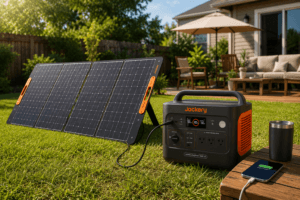
Solar Charging Capability
If you want renewable backup power, choose a model that supports solar charging.
Benefits include:
- Unlimited charging potential with enough sunlight
- Lower operating costs
- Reduced dependence on the electrical grid
- Excellent for camping and off-grid living
Expandable Battery Systems
Some premium power stations allow you to add extra battery packs.
Benefits include:
- Longer runtime
- Greater flexibility
- Future expansion
- Better long-term value
Expandable systems are especially useful for homeowners planning to increase their backup power capacity over time.
Multiple Charging Ports
Look for a variety of output options, including:
- AC household outlets
- USB-A ports
- USB-C Power Delivery ports
- 12V DC outlets
- Car charging outlets
Having multiple ports allows you to charge several devices simultaneously.
Display Screen
A quality display provides useful information such as:
- Battery percentage
- Remaining runtime
- Input wattage
- Output wattage
- Charging status
- Error notifications
A clear display makes power management much easier during outages.
Portable Design
If you plan to travel, camp, or move your unit frequently, consider:
- Weight
- Built-in wheels
- Carry handles
- Compact dimensions
Larger battery systems provide longer runtimes but are generally much heavier.
Common Buying Mistakes
Avoid these common mistakes when shopping for a solar generator or portable power station.
Buying Too Small
Many buyers only consider battery capacity.
Also consider:
- Inverter wattage
- Surge wattage
- Appliance startup requirements
- Future electrical needs
A larger inverter often provides much greater flexibility.
Confusing Battery Capacity With Power Output
Battery capacity (Wh) determines how long the unit can run.
Inverter wattage determines what it can run.
Both specifications are equally important.
Forgetting Solar Panels
Many products marketed as “solar generators” do not include solar panels.
Always verify whether panels are included or sold separately before purchasing.
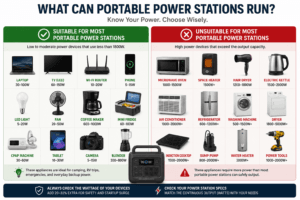
Expecting Battery Systems to Run Everything
Portable power stations are excellent for many appliances but have limitations.
High-power appliances such as:
- Central air conditioners
- Electric water heaters
- Electric dryers
- Electric ovens
may exceed the unit’s output capability or drain the battery very quickly.
Ignoring Recharge Time
Some battery systems recharge much faster than others.
When comparing models, check:
- AC charging speed
- Solar charging speed
- Vehicle charging speed
Faster charging improves convenience during repeated outages.
Not Planning for Extended Outages
If you expect outages lasting several days, consider:
- Expandable batteries
- Additional solar panels
- Backup gasoline generator
- Extra charging cables
Planning ahead greatly improves emergency preparedness.
Frequently Asked Questions
Is a solar generator the same as a portable power station?
Not exactly.
A portable power station is the battery and inverter. A solar generator typically refers to that same power station paired with compatible solar panels for recharging.
Can a solar generator power a refrigerator?
Yes.
Many portable power stations with at least 1,000–2,000 Wh of battery capacity can operate a refrigerator for several hours. Larger battery systems can provide much longer runtimes.
Can a portable power station run a microwave?
Many models with 1,500 watts or more of inverter output can power a microwave for short periods.
Can a portable power station run central air conditioning?
Most cannot.
Central air conditioners usually require much more starting and running power than typical portable power stations provide. Large whole-home battery systems or traditional generators are generally better suited for this application.
Are solar generators worth it?
Yes.
For homeowners wanting quiet, low-maintenance backup power with the ability to recharge using solar energy, solar generators can be an excellent investment.
How long do portable power stations last?
Most modern lithium iron phosphate (LiFePO₄) power stations are rated for 3,000–6,000 or more charge cycles, allowing many years of regular use before significant battery degradation.
Final Thoughts
Both solar generators and portable power stations offer reliable, quiet, and environmentally friendly backup power solutions. The best choice depends on how you plan to use the system and the types of appliances you need to operate during an outage.
For most homeowners, the EcoFlow DELTA Pro 3 stands out as one of the best overall options thanks to its impressive battery capacity, powerful inverter, fast charging, and expandable design. The EcoFlow DELTA 2 remains one of the best values for everyday home backup, while the Jackery Explorer 1000 v2 is an excellent choice for camping and travel. Homeowners needing long-duration backup should consider the Goal Zero Yeti 6000X, and budget-conscious buyers will appreciate the excellent performance of the Anker SOLIX C1000.
Before purchasing, calculate your total power requirements, determine how long you want your backup system to operate, and decide whether solar charging is important for your needs. A properly sized portable power station or solar generator can provide dependable emergency power while keeping your essential devices running safely and quietly.